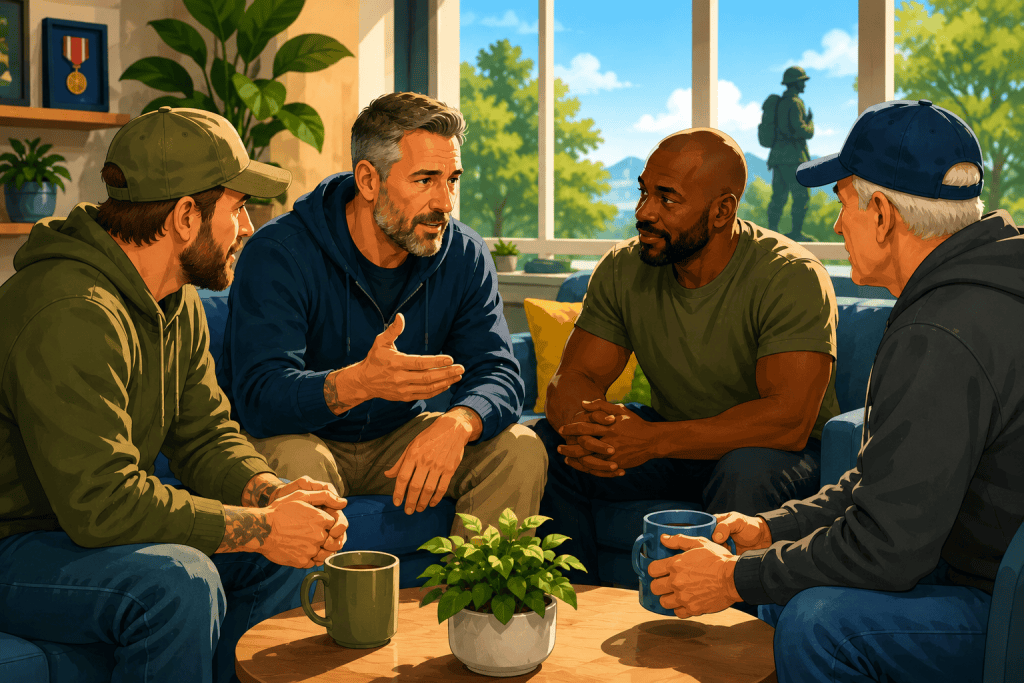
Leaving the Armed Forces does not always mean leaving the impact of service behind. For many veterans, the uniform comes off, but the memories, habits, injuries, losses, and emotional weight of service can stay for years. Some veterans adjust well after leaving. Others find that the hardest battles begin long after their military career has ended.
Veterans can face a unique set of mental health challenges. These may include trauma, anxiety, depression, post-traumatic stress disorder, Complex PTSD, survivor’s guilt, grief, moral injury, anger, addiction, relationship difficulties, loneliness, homelessness, and problems adjusting to civilian life. Some veterans may struggle immediately after discharge. Others may not experience serious symptoms until years later, when work slows down, relationships change, children leave home, retirement begins, or another life event brings buried memories to the surface.
This is why veterans need long-term mental health support. Short-term help can be valuable, especially in a crisis, but it is often not enough. Many veterans need ongoing, flexible, trauma-informed support that understands military culture and recognises that recovery is not always quick, simple, or linear.
Veterans do not need sympathy. They need services that understand them, stay with them, and help them rebuild their lives over time.
The Impact of Military Service Can Last for Years
Military service can shape a person deeply. It can create pride, discipline, purpose, identity, friendship, and belonging. But it can also expose people to experiences that most civilians will never face.
Veterans may have witnessed death, serious injury, violence, human suffering, or life-threatening situations. They may have served in combat zones, responded to traumatic incidents, lost friends, or carried responsibility under extreme pressure. Even those who did not serve on the front line may have been exposed to stress, danger, bullying, military sexual trauma, accidents, or repeated high-pressure environments.
The mind and body adapt to survive these situations. A serviceperson learns to stay alert, follow orders, suppress emotion, keep functioning, and put the mission first. These skills can be essential in service. But after leaving, the same survival responses can become difficult to live with.
A veteran may still scan for danger in crowded places. They may struggle with loud noises, unexpected touch, authority figures, conflict, or feeling trapped. They may find it hard to sleep, relax, trust others, or talk about what they have seen. They may feel emotionally numb or disconnected from family life.
These reactions can continue long after the danger has passed. Healing takes time, and veterans need support that does not disappear after a few sessions.
Transition to Civilian Life Can Be a Major Shock
Leaving the military is not just a career change. For many veterans, it is a complete change of identity.
In service, life often has structure, routine, clear expectations, teamwork, rank, purpose, and belonging. There is a shared language and culture. People around you understand the humour, pressure, discipline, and demands of military life.
Civilian life can feel very different. Suddenly, the structure is gone. The support network may be gone. The sense of purpose may feel weaker. The veteran may have to find work, manage housing, handle finances, reconnect with family, and adjust to a world that can feel unfamiliar or disconnected from their experiences.
Some veterans describe feeling like they have lost their tribe. Others feel misunderstood by civilians. They may struggle with workplaces that feel disorganised, slow, or lacking in loyalty. They may miss the sense of mission and brotherhood or sisterhood. They may feel isolated even when surrounded by people.
This transition can take years, not weeks. Long-term support helps veterans rebuild identity, confidence, purpose, and connection beyond the Armed Forces.
Trauma Does Not Always Appear Straight Away
One of the reasons long-term support is so important is that trauma does not always show itself immediately.
Some veterans leave service and appear to cope well for years. They work, raise families, stay busy, and keep pushing forward. But staying busy can sometimes hide pain rather than heal it. When life slows down, symptoms can emerge.
A veteran may begin having nightmares years after an event. They may start experiencing flashbacks after becoming a parent, losing a loved one, watching a news story, facing illness, or retiring from work. They may suddenly feel overwhelmed by memories they thought were buried.
This delayed impact can be confusing and frightening. A veteran may think, “Why now?” or “I should be over this.” They may feel ashamed because they coped for so long and now feel as though they are falling apart.
Long-term mental health support recognises that trauma can surface at different stages of life. Veterans need services they can return to when symptoms reappear, not services that assume recovery is complete after one short intervention.
Short-Term Support Often Does Not Match Complex Need
Short-term counselling or therapy can be useful. It can help stabilise someone, provide immediate coping tools, and reduce crisis risk. But for many veterans, mental health difficulties are complex.
A veteran may not only be dealing with PTSD. They may also be dealing with chronic pain, addiction, relationship breakdown, unemployment, debt, housing problems, grief, anger, shame, and isolation. These issues are often connected.
For example, trauma may lead to poor sleep. Poor sleep may lead to irritability. Irritability may damage relationships. Relationship breakdown may increase drinking. Drinking may worsen depression. Depression may increase isolation. Isolation may increase suicidal thoughts.
A short block of support may help one part of the problem, but not the whole picture.
Long-term support allows services to work with the veteran as a whole person. It gives time to build trust, understand the roots of distress, address practical problems, involve family where appropriate, and support recovery at a pace the veteran can manage.
Trust Takes Time
Many veterans find it difficult to ask for help. They may have spent years being trained to cope, endure, and keep going. They may see emotional pain as something to push through. They may worry that talking about mental health makes them weak or less respected.
Some veterans have had bad experiences with services. They may have felt dismissed, misunderstood, rushed, or passed from one organisation to another. Others may distrust authority or fear that opening up will lead to judgement, consequences, or loss of control.
Trust is not built in one appointment. It takes time, consistency, and respect.
Veterans are often more likely to engage when support is delivered by people who understand military culture, trauma, and the importance of direct, honest communication. Long-term support gives workers and counsellors time to build a relationship where the veteran feels safe enough to speak openly.
For some veterans, the first few contacts are not about deep therapy. They are about showing up, having a brew, attending a group, speaking to another veteran, or realising that the service is not going to give up on them.
That foundation matters.
Peer Support Can Be Life-Changing
Many veterans benefit from being around other veterans. Peer support can reduce shame and isolation because it allows people to speak with others who understand the culture and experience of service.
A veteran may not need to explain every detail. Another veteran may understand the humour, silence, pride, anger, and difficulty of asking for help. This shared understanding can make support feel less clinical and more human.
Peer support is not a replacement for professional mental health care, but it can be a powerful part of long-term recovery. Breakfast clubs, recovery colleges, veteran groups, outdoor activities, volunteering, and peer-led programmes can all help rebuild connection and purpose.
Long-term support gives veterans somewhere to belong, not just somewhere to attend for a limited number of sessions. It creates a community around recovery.
Families Need Support Too
Veteran mental health does not only affect the veteran. It can affect partners, children, parents, friends, and carers.
A veteran struggling with trauma may become distant, irritable, emotionally numb, overprotective, restless, or difficult to reach. They may avoid family events, struggle with noise, react strongly to conflict, or spend long periods alone. Families may feel confused, hurt, frightened, or exhausted.
Partners often become informal carers. Children may sense tension but not understand what is happening. Family relationships can come under enormous pressure, especially when mental health difficulties are combined with alcohol use, financial stress, or anger.
Long-term support should include families where appropriate. Families may need information, guidance, counselling, peer support, and reassurance. Helping the family understand trauma can reduce blame and improve communication.
When the family is supported, the veteran is more likely to be supported too.
Addiction and Mental Health Are Often Linked
Some veterans use alcohol, drugs, gambling, or other behaviours to cope with distress. This does not mean they are bad people. It often means they are trying to manage pain, memories, anxiety, sleeplessness, or emotional numbness.
Alcohol may seem to help in the short term by taking the edge off. But over time, it can worsen depression, anxiety, sleep problems, anger, and relationship difficulties. Substance use can also increase risk, especially when someone is feeling hopeless or suicidal.
Mental health and addiction often need to be treated together. If services only address the addiction without understanding the trauma, the veteran may feel judged or misunderstood. If services only address the trauma without addressing alcohol or drug use, recovery may be harder to sustain.
Long-term support allows time to work with both issues properly. It recognises that recovery is a process and that relapse should be met with support, not shame.
Moral Injury and Guilt Need Space
Some veterans carry experiences that are not only frightening but morally painful. They may feel guilt about things they did, did not do, witnessed, survived, or were ordered to do. This is sometimes called moral injury.
A veteran may struggle with questions such as:
“Why did I survive when others did not?”
“Could I have done more?”
“Was what happened right?”
“How do I live with what I saw?”
“Am I still a good person?”
These questions can be incredibly painful. They do not always respond quickly to simple coping techniques. They may require time, trust, skilled support, and a safe space to speak without judgement.
Long-term support gives veterans the opportunity to process guilt, grief, shame, and meaning at a deeper level. It helps them rebuild a sense of self that is not defined by the worst moments of their life.
Practical Problems Can Keep Mental Health Problems Going
Veteran mental health support should not only focus on symptoms. Practical problems can have a huge impact on wellbeing.
A veteran who is homeless, in debt, unemployed, isolated, or struggling with benefits may find it very difficult to engage in therapy. If someone does not know where they will sleep, how they will pay bills, or whether they can feed their family, emotional recovery becomes much harder.
Long-term support can connect veterans with advice, advocacy, housing support, employment help, benefits guidance, food support, education, volunteering, and community activities. These practical interventions can reduce stress and create stability.
Mental health recovery is not just about talking. It is also about helping people build safe, stable, meaningful lives.
Recovery Is Not a Straight Line
One of the biggest reasons veterans need long-term support is that recovery is rarely straightforward.
There may be progress, setbacks, good months, bad weeks, anniversaries, triggers, relapses, and new life challenges. A veteran may engage well for a while, withdraw, then return later. They may manage symptoms successfully, then be knocked back by a bereavement, job loss, health problem, or relationship breakdown.
Short-term services often struggle with this reality. They may close a case when a veteran improves, leaving the person with nowhere familiar to return when things become difficult again.
Long-term support understands that recovery can be up and down. It allows veterans to remain connected, even when they are not in crisis. This ongoing connection can prevent relapse and reduce the risk of problems escalating.
Early Intervention and Long-Term Support Work Together
Veterans need help early, before problems reach crisis point. But early intervention must be connected to long-term support.
It is not enough to see someone quickly, offer a few sessions, and then leave them to manage alone. For many veterans, the first stage is stabilisation. The next stage is trust. Then comes deeper work, reconnection, rebuilding confidence, improving relationships, and finding purpose.
A good veteran mental health pathway should allow people to move between levels of support depending on need. A veteran may need crisis help at one point, counselling at another, peer groups later, practical advice during a difficult period, and ongoing community connection to maintain recovery.
Long-term support does not mean keeping people dependent. It means giving them the right support for long enough to become more independent, stable, and connected.
Purpose Is Part of Recovery
Many veterans miss the sense of purpose they had in service. Purpose is not just about employment. It is about feeling useful, valued, and connected to something bigger than yourself.
Long-term support can help veterans rediscover purpose through volunteering, training, mentoring, peer support, outdoor activities, education, family roles, community work, or new careers.
When a veteran begins to feel needed again in a healthy way, recovery can deepen. They may move from being someone who receives support to someone who supports others. This can be incredibly powerful, especially when done safely and with the right boundaries.
Purpose helps people look forward. It gives structure, identity, and hope.
Veterans Deserve Services That Understand Them
Veterans do not need to be treated as broken. They need to be understood.
They need services that recognise military culture, trauma, pride, humour, loyalty, anger, silence, and the difficulty of asking for help. They need support that does not panic when they speak honestly. They need workers who understand that trust may take time and that progress may not look neat on paper.
They need services that can support the whole person, not just one diagnosis. That means mental health care, peer support, addiction support, family support, advice, advocacy, crisis prevention, and meaningful community connection.
Most of all, they need consistency. Many veterans have already lost enough. They should not have to keep retelling their story to different services, repeating their pain, and starting again.
Final Thoughts
Veterans need long-term mental health support because the impact of service can last long after military life ends. Trauma, transition, loss of identity, moral injury, addiction, family strain, isolation, and practical problems are rarely solved quickly.
Short-term support can help, but many veterans need more than a brief intervention. They need time to build trust, space to process difficult experiences, and ongoing support to rebuild their lives. They need services that understand not only trauma, but also military culture and the pride that can make asking for help so difficult.
Long-term support is not about creating dependence. It is about giving veterans the stability, tools, connection, and confidence to move forward. It is about making sure that those who served are not left to fight their hardest battles alone.
A veteran’s story does not end when they leave the Armed Forces. With the right support, they can find safety, purpose, connection, and hope again.
They stood up for others. Now they deserve services that stand by them.