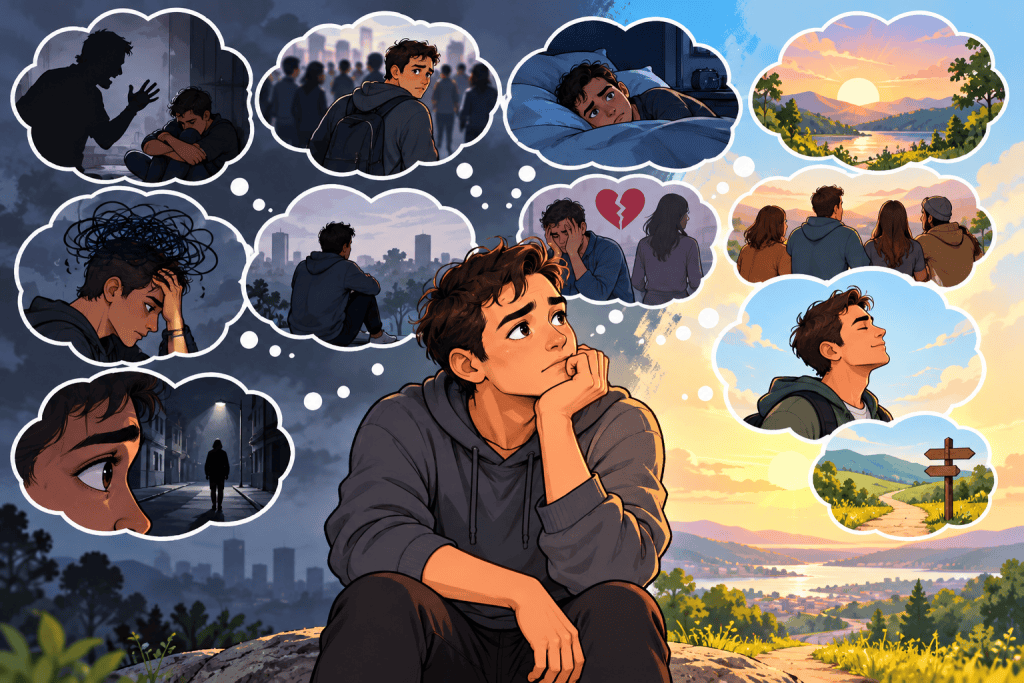
How Trauma Changes the Way We Experience Life
Have you ever experienced something that completely changed how you see yourself, other people or the world around you?
Perhaps you once felt confident and safe, but now you find yourself constantly looking for danger. Maybe you struggle to trust people, feel uncomfortable in situations you previously enjoyed or find yourself expecting something bad to happen.
You might even recognise that your fears don’t always match what is happening around you, yet your mind and body continue reacting as though something is wrong.
These experiences can sometimes be connected to psychological trauma.
Trauma doesn’t just affect our memories of the past. It can change how we interpret the present and what we expect from the future.
At Anxious Minds, we understand how traumatic experiences can affect mental health, relationships, self-confidence and everyday life.
For some people, trauma changes their sense of safety so deeply that familiar places, ordinary conversations and previously enjoyable activities begin to feel threatening.
Understanding why this happens is an important part of recognising trauma responses and beginning the process of recovery.
What Is Psychological Trauma?
Psychological trauma can develop after experiencing or witnessing something deeply frightening, distressing or overwhelming.
Traumatic experiences may include domestic abuse, sexual violence, childhood neglect, serious accidents, military combat, bullying, sudden bereavement or repeated exposure to threatening situations.
Trauma can result from a single event or develop through repeated experiences over time.
However, not everyone who experiences a potentially traumatic event develops long-term psychological difficulties.
People respond differently depending on their experiences, available support, circumstances and other factors.
For some, distress gradually reduces as they recover. Others may develop ongoing anxiety, emotional difficulties or post-traumatic stress disorder (PTSD).
According to the NHS, PTSD can involve intrusive memories, nightmares, avoidance, negative beliefs and feelings of being constantly on alert.
These symptoms help explain why trauma can change someone’s experience of the world long after the original danger has passed.
1. Trauma Can Make the World Feel Unsafe
One of the most significant effects of trauma is a change in someone’s sense of safety.
Before a traumatic experience, a person may have believed that most places and people were relatively safe.
Following trauma, that confidence may disappear.
They might begin questioning whether they can trust their surroundings, whether something terrible could happen again or whether they are genuinely safe.
For example, someone who has experienced an assault may feel anxious walking through familiar streets.
A survivor of domestic abuse may become uncomfortable when someone raises their voice.
A veteran who has experienced combat may find crowded environments, sudden noises or unpredictable situations difficult to manage.
These responses can occur because the brain has learned to associate certain situations or sensations with danger.
Although the threat may no longer exist, reminders of the experience can trigger powerful emotional and physical reactions.
2. The Brain Can Become Constantly Alert to Danger
One of the most common trauma-related experiences is hypervigilance.
Hypervigilance involves being unusually alert to possible threats.
Someone experiencing it may constantly monitor their surroundings, notice every noise or become uncomfortable when they cannot see an exit.
They might sit facing the door in restaurants, struggle to relax in crowds or feel nervous when someone approaches unexpectedly.
This heightened awareness can be exhausting.
The brain’s threat-detection systems play an important role in survival. Following trauma, these systems may become more sensitive to reminders of danger.
As a result, situations that appear ordinary to other people may trigger fear or anxiety.
The person may understand logically that they are safe while their body continues reacting as though danger is present.
Learning to recognise and manage these responses can be an important part of trauma recovery.
3. Trauma Can Change How You Trust Other People
Trust is essential for healthy relationships.
However, traumatic experiences involving betrayal, abuse, neglect or violence can make trusting others extremely difficult.
Someone who has been hurt by a person they depended on may begin questioning the intentions of people around them.
They might struggle to accept kindness, become suspicious of compliments or constantly look for signs that someone will let them down.
Even supportive relationships can feel uncomfortable.
A person may want emotional closeness but fear becoming vulnerable.
This can create a difficult cycle in which they desire connection while simultaneously pushing people away.
For survivors of repeated abuse or betrayal, learning to trust again may require time, patience and supportive relationships.
Trauma counselling can help people explore these experiences and begin developing a greater sense of emotional safety.
4. Trauma Can Change How You See Yourself
Trauma doesn’t only influence how someone views the outside world.
It can also change how they understand themselves.
People who have experienced trauma may develop feelings of shame, guilt, worthlessness or self-blame.
They might repeatedly question their actions during the traumatic event.
Some may think:
“Why didn’t I do something differently?”
“I should have seen what was happening.”
“Why couldn’t I protect myself?”
These thoughts can be particularly common among survivors of abuse, violence and other overwhelming experiences.
However, responses during traumatic situations are often automatic survival reactions.
Freezing, becoming compliant, disconnecting emotionally or being unable to respond as expected can all occur under extreme stress.
These reactions are not evidence of weakness or personal failure.
Understanding this can help people develop a more compassionate view of themselves.
5. The Past Can Begin to Feel Like the Present
Traumatic memories can sometimes be experienced differently from ordinary memories.
Someone may experience intrusive images, distressing thoughts, nightmares or flashbacks.
A smell, sound, location or conversation may unexpectedly remind them of what happened.
For example, a loud bang could trigger intense fear in someone who has experienced an explosion.
A particular tone of voice may bring back emotional memories of an abusive relationship.
During a flashback, the person may feel as though aspects of the traumatic experience are happening again.
This can be frightening and confusing, especially when the individual knows intellectually that the event is over.
The NHS identifies intrusive memories and flashbacks as important symptoms of PTSD.
Not everyone who experiences trauma develops flashbacks, but for those who do, professional support can help reduce their impact.
6. Trauma Can Make It Difficult to Relax
For some people, relaxation becomes surprisingly uncomfortable after trauma.
They may feel safer when they are busy, alert or constantly preparing for potential problems.
When things become quiet, their anxiety may increase.
They might struggle with sleep, feel restless during peaceful moments or become uncomfortable when they are not occupied.
This can happen because the body has become accustomed to heightened stress.
Someone may begin associating being alert with staying safe.
The challenge is that remaining in this state for long periods can contribute to exhaustion, irritability and emotional distress.
Learning to relax again often involves gradually developing a sense of safety, rather than forcing the body to become calm.
7. Trauma Can Affect Emotional Responses
Trauma can influence how strongly someone experiences emotions.
Some people become easily overwhelmed by fear, anger or sadness.
Others experience emotional numbness, feeling disconnected from their surroundings or unable to experience enjoyment.
Someone who once felt patient and relaxed may become irritable or frustrated.
Another person may withdraw emotionally because expressing feelings has become uncomfortable.
These changes can affect relationships, employment and everyday life.
For some individuals, ordinary disagreements may trigger unexpectedly strong reactions because they resemble previous threatening experiences.
Recognising the connection between past experiences and present emotional responses can help someone understand why they react differently.
It can also create opportunities to develop healthier ways of managing difficult feelings.
8. Trauma Can Change Your Expectations of the Future
A traumatic experience can influence what someone expects from life.
Before trauma, they may have felt optimistic about relationships, employment or future opportunities.
Afterwards, they may begin expecting disappointment, danger or loss.
They might avoid making long-term plans because they fear something will go wrong.
Positive experiences can become difficult to enjoy because they are constantly waiting for something negative to happen.
This is sometimes described as a sense of a shortened or uncertain future.
For example, someone may struggle to imagine growing older, maintaining a relationship or achieving future goals.
These feelings can contribute to anxiety, depression and hopelessness.
However, trauma recovery can help people gradually rebuild confidence in their future.
9. Trauma Can Affect Relationships and Social Connections
Trauma can make social relationships more complicated.
Some people withdraw from friends and family because they feel misunderstood or emotionally exhausted.
Others become highly sensitive to perceived rejection or criticism.
They may need frequent reassurance or struggle with boundaries.
For survivors of abusive relationships, recognising healthy behaviour can sometimes be difficult because previous experiences have influenced what feels familiar.
People may also develop a strong desire for control because uncertainty reminds them of situations where they felt powerless.
These difficulties do not mean someone is incapable of healthy relationships.
With appropriate support, people can develop stronger boundaries, improve communication and build relationships based on trust and mutual respect.
10. Avoidance Can Make the World Feel Smaller
Avoidance is a common response to trauma.
Someone may begin avoiding places, people or situations that remind them of what happened.
Initially, this can provide a sense of relief.
However, when avoidance becomes widespread, it can restrict everyday life.
A person may stop attending social events, avoid public transport, withdraw from employment opportunities or become reluctant to leave home.
Over time, their world may gradually become smaller.
Although avoiding genuinely dangerous situations is sensible, avoiding safe situations because they trigger traumatic memories can sometimes maintain fear.
Trauma-focused therapies can help people address these difficulties gradually and safely, without forcing them into overwhelming situations.
Why Trauma Affects Everyone Differently
Two people can experience similar events and respond in very different ways.
One person may recover with support from family and friends, while another may experience long-lasting psychological difficulties.
Factors that can influence recovery include previous experiences, the severity and duration of the trauma, available support, ongoing stress and whether the person remains exposed to danger.
Repeated childhood trauma can sometimes have a particularly significant impact because it occurs while emotional development and beliefs about relationships are forming.
However, it is important not to assume that everyone exposed to trauma will develop PTSD.
Many people demonstrate resilience and recover without developing a long-term mental health condition.
There is no single correct way to respond to trauma.
How Can You Begin to Feel Safe Again?
Recovery from trauma is possible, although it may take time.
The process often involves gradually rebuilding a sense of safety, understanding emotional responses and developing ways of managing distress.
Some approaches that may help include:
-
Recognising triggers: Understanding which situations, sensations or experiences activate distress.
-
Grounding techniques: Using the present environment to help manage flashbacks or feelings of disconnection.
-
Developing supportive relationships: Spending time with people who demonstrate consistency, respect and understanding.
-
Establishing routines: Creating predictable daily activities that can support emotional stability.
-
Practising self-compassion: Recognising that trauma responses are not personal failures.
-
Seeking professional support: Working with an appropriately trained practitioner to address persistent trauma-related difficulties.
Recovery does not mean forgetting what happened.
Instead, it often means reaching a point where memories of the past no longer dominate everyday decisions or emotional responses.
How Trauma Counselling Can Help
Professional therapy can help people understand how traumatic experiences have influenced their thoughts, feelings and behaviours.
For individuals experiencing PTSD, recommended evidence-based treatments include trauma-focused cognitive behavioural therapy (CBT) and, where appropriate, eye movement desensitisation and reprocessing (EMDR).
The National Institute for Health and Care Excellence (NICE) recommends specific trauma-focused interventions for adults experiencing PTSD or clinically significant PTSD symptoms.
These approaches can help people process traumatic memories, reduce avoidance and reconsider beliefs about themselves and the world.
General supportive counselling can also provide emotional support, although it should not automatically be considered a substitute for specialist trauma treatment when PTSD is present.
The most appropriate approach depends on the person’s experiences, symptoms and individual needs.
Supporting Someone Whose World Has Changed After Trauma
If someone you care about has experienced trauma, you may notice changes in their behaviour.
They might become withdrawn, anxious, irritable or unusually cautious.
Try not to interpret every change as rejection or a lack of trust.
Instead, listen without judgement and allow them to share their experiences at their own pace.
Avoid pressuring someone to discuss traumatic memories before they feel ready.
Respect their boundaries and recognise that rebuilding trust can take time.
Practical support, patience and consistency can make a meaningful difference.
It is also important to encourage professional help when symptoms are persistent, worsening or significantly affecting everyday life.
Trauma and Mental Health Support at Anxious Minds
At Anxious Minds, we recognise the profound impact trauma can have on someone’s life.
Through our mental health and counselling services across the North East, we support people experiencing emotional difficulties linked to traumatic events, abuse, bereavement, anxiety and depression.
Our charity provides affordable counselling at our centres in Wallsend and Blyth, alongside online and telephone support.
We also work with veterans and their families through our Veteran Recovery Colleges, recognising the difficulties that can follow military service, traumatic experiences and the transition into civilian life.
Our aim is to provide compassionate, accessible mental health support and help people develop greater confidence, emotional understanding and wellbeing.
Where someone requires specialist PTSD treatment, an appropriate clinical assessment and referral can help ensure they receive the care best suited to their needs.
Final Thoughts: Trauma Can Change Your World, but Recovery Can Change It Again
Trauma can affect how someone experiences almost every part of life.
It can change their sense of safety, their ability to trust, their relationships and their expectations of the future.
Someone who once felt confident may become fearful. Someone who previously enjoyed social situations may begin avoiding them. Someone who trusted easily may start questioning the intentions of others.
These changes can be confusing and exhausting.
But the way you experience the world after trauma does not have to remain the way you experience it forever.
With understanding, appropriate support and time, people can develop a renewed sense of safety and confidence.
Recovery may not mean returning to exactly who you were before the experience.
It can mean learning to live without fear controlling your everyday life and rediscovering the possibility of connection, enjoyment and hope.
At Anxious Minds, we believe nobody should have to face the effects of trauma alone.
Anxious Minds – Supporting Mental Health and Changing Lives Across the North East.
Visit www.anxiousminds.co.uk to find out more about our affordable counselling and mental health support services.