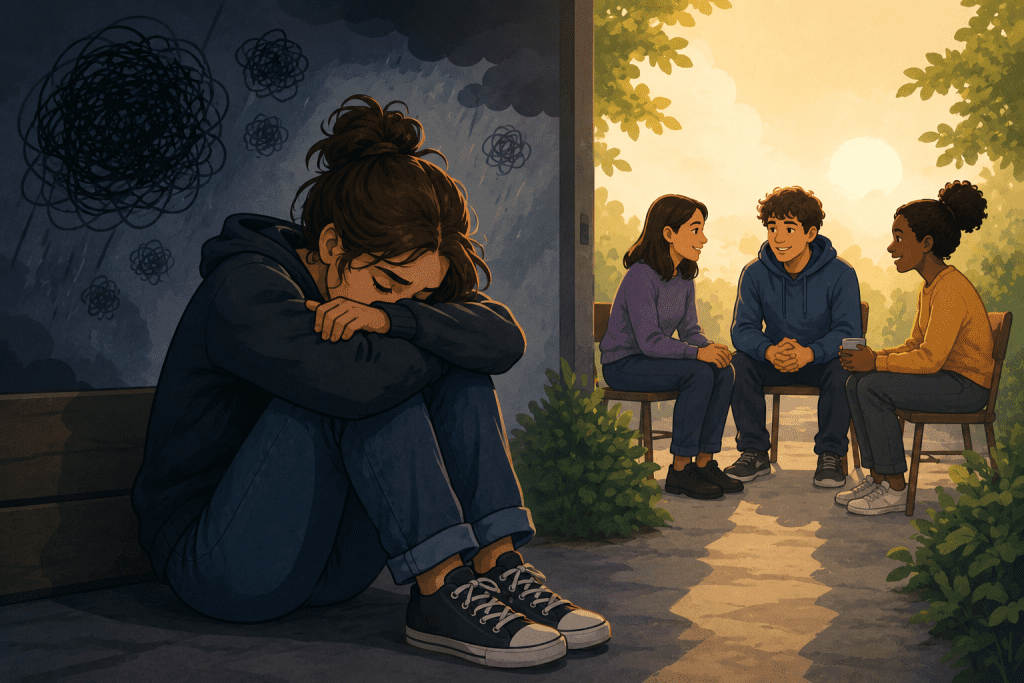
Asking for help should be simple. When someone is struggling with anxiety, depression, trauma, grief, addiction, stress or suicidal thoughts, reaching out should feel like the natural next step. But for many people, it does not feel simple at all. It feels frightening, embarrassing and even impossible.
One of the biggest reasons people do not ask for help is shame.
Shame is a powerful emotion. It tells people they are weak, broken, a burden, a failure, or not worthy of support. It convinces them that other people will judge them, reject them, laugh at them, or think less of them if they are honest about how they feel.
Shame keeps people silent. It makes them say “I’m fine” when they are not. It makes them cancel appointments, ignore messages, hide their pain and suffer alone. It can stop someone from asking for help until they reach crisis point.
Understanding shame is important because many people who are struggling are not refusing help because they do not care. They may be trapped by fear, embarrassment and the belief that they should be able to cope alone.
What Is Shame?
Shame is different from guilt. Guilt usually says, “I did something wrong.” Shame says, “There is something wrong with me.”
This difference matters. Guilt can sometimes lead to positive change. If someone feels guilty about hurting another person, they may apologise or try to make things right. Shame, however, often makes people hide. Instead of helping someone take action, shame makes them feel unworthy, exposed and afraid.
When someone is struggling with poor mental health, shame can become overwhelming. They may think:
“I should be stronger than this.”
“Other people have it worse.”
“I’m letting everyone down.”
“People will think I’m unstable.”
“I don’t want to be a burden.”
“What if no one understands?”
“What if they judge me?”
“What if asking for help proves I’ve failed?”
These thoughts can feel very real, even when they are not true.
Why Shame Is So Powerful
Shame is powerful because human beings need connection. We are wired to care about belonging, acceptance and being valued by others. Shame threatens that connection. It makes people feel that if others see the truth, they will be rejected.
For someone already feeling low, anxious or vulnerable, the risk of rejection can feel unbearable. So instead of speaking up, they hide what they are going through.
This can create a painful cycle. A person feels ashamed, so they stay silent. Because they stay silent, they feel more alone. The more alone they feel, the more convinced they become that something is wrong with them. The shame grows, and asking for help becomes even harder.
The longer this continues, the more isolated a person can become.
Shame and Mental Health
Shame can affect almost every area of mental health. It can make anxiety worse by increasing fear of judgement. It can deepen depression by feeding thoughts of worthlessness. It can make trauma harder to process because people may blame themselves for what happened. It can keep addiction hidden because people fear being labelled or rejected.
Shame can also stop people from accessing counselling, peer support, GP appointments, crisis services or community support. Someone may know they need help, but feel unable to take the first step.
They may worry that they will not know what to say. They may fear crying in front of someone. They may think their problems are not serious enough. They may believe they will be told to “just get on with it.” They may have had a bad experience in the past and now expect the same response again.
This is why mental health support must be compassionate, accessible and non-judgemental. People need to feel safe before they can be honest.
Why People Say “I’m Fine”
“I’m fine” is often a mask. People say it because it feels safer than telling the truth.
They may say “I’m fine” because they do not want to worry their family. They may say it because they are at work and do not want colleagues to know. They may say it because they are a parent or carer and feel they must hold everything together. They may say it because they have spent years believing that emotions should be hidden.
Sometimes people say “I’m fine” because they do not have the words to explain what is happening inside. Mental health struggles can be confusing. A person may feel empty, numb, panicked, exhausted or overwhelmed, but not know how to describe it.
Other times, people say “I’m fine” because they are testing the water. They may hope someone notices that they are not fine. They may want to be asked again, gently, by someone who really means it.
This is why listening matters. A simple, kind question can make a difference: “You don’t seem yourself. Do you want to talk?” Or, “You don’t have to pretend with me.”
The Fear of Being Judged
Judgement is one of the biggest fears behind shame. People may worry that others will see them differently if they admit they are struggling.
Men may fear being seen as weak. Parents may fear being seen as failing their children. Veterans and emergency service workers may fear being seen as unable to cope. Young people may fear being laughed at or misunderstood. Older adults may feel they were raised to keep problems private. Survivors of abuse may fear being blamed. People with addiction may fear being labelled.
These fears are powerful, especially when society has often sent the message that mental health problems should be hidden.
But struggling with mental health does not mean someone is weak. It means they are human. Life can be painful, stressful and overwhelming. Trauma, loss, poverty, loneliness, abuse, pressure and illness affect people deeply. Asking for help is not weakness. It is an act of courage.
Shame Makes People Wait Too Long
One of the most dangerous effects of shame is that it delays support. People often wait until they are at breaking point before they tell anyone how bad things have become.
They may wait until they cannot sleep, cannot work, cannot leave the house, cannot stop drinking, cannot stop crying, or cannot keep themselves safe. They may wait until a crisis forces them to ask for help.
This delay matters. Mental health support is often most effective when people receive help early. Early support can prevent problems from becoming more severe. It can help people understand what they are feeling, develop coping strategies, reduce isolation and avoid crisis.
No one should feel they have to be “bad enough” to deserve help. If something is affecting your daily life, relationships, sleep, work, mood or ability to cope, it is worth talking about.
Shame and Trauma
Shame is very common after trauma. People who have experienced abuse, violence, neglect, bullying, military trauma, domestic abuse, sexual abuse or emotional harm may blame themselves, even when what happened was not their fault.
They may think:
“I should have stopped it.”
“I should have known better.”
“I should be over it by now.”
“It was my fault.”
“No one will believe me.”
“I feel damaged.”
Trauma-related shame can be especially isolating. It can make people hide their experiences for years. Some people never tell anyone because they fear disbelief, judgement or rejection.
A trauma-informed response is essential. People need to be believed, respected and supported at their own pace. They need to know that their reactions are understandable responses to painful experiences, not personal failures.
Shame and Addiction
Addiction is another area where shame can be a huge barrier to help. Many people use alcohol, drugs, gambling, food or other behaviours to cope with emotional pain. Over time, the coping strategy can become another source of distress.
Shame can make someone hide their addiction, lie about it, minimise it or avoid support. They may feel disgusted with themselves. They may believe they have let everyone down. They may fear being judged as selfish or irresponsible.
But addiction is often linked to trauma, stress, depression, anxiety, loneliness or emotional pain. Recovery is much harder when people are shamed. Support, honesty, structure and compassion are far more effective than judgement.
People need to know that help is available and that asking for support is not a confession of failure. It is a step towards recovery.
How Shame Affects Families
Shame does not only affect individuals. It can affect whole families. In some families, mental health is not spoken about. People may be told to “get on with it,” “stop making a fuss,” or “keep family business private.”
This can teach children and adults to hide their feelings. Over time, silence becomes normal. People may struggle for years without knowing how to ask for help.
Breaking this pattern can be difficult, but it is possible. When one person speaks honestly, it can give others permission to do the same. A family conversation about mental health does not have to be perfect. It only needs to begin.
How to Challenge Shame
Challenging shame starts with naming it. Instead of accepting the thought “I am weak,” try saying, “This is shame talking.” Instead of “I am a burden,” try, “I am struggling and I deserve support.” Instead of “I should cope alone,” try, “Everyone needs help sometimes.”
It can also help to ask:
Would I judge someone else for feeling this way?
Would I tell a friend they are weak for asking for help?
What would I say to someone I love if they were struggling?
Is shame protecting me, or is it keeping me trapped?
Most people are far kinder to others than they are to themselves. Learning to offer yourself the same compassion can be a powerful step.
Taking the First Step
Asking for help does not have to mean telling your whole story straight away. You can start small.
You could say:
“I’m struggling and I don’t know what to do.”
“I don’t feel like myself.”
“I think I need support.”
“I’m finding things hard at the moment.”
“I’m not ready to explain everything, but I don’t want to be alone with it.”
You could speak to a trusted friend, family member, GP, counsellor, support worker, peer group, helpline or local mental health charity. You do not have to have the perfect words. You only need to open the door slightly.
If talking feels too hard, you could write it down, send a message, or ask someone to sit with you while you make a call.
How Others Can Help Reduce Shame
If someone opens up to you, your response matters. You do not need to have all the answers. You do not need to fix everything. Often, the most helpful thing you can do is listen calmly and without judgement.
Try saying:
“Thank you for telling me.”
“I’m glad you said something.”
“You don’t have to go through this alone.”
“That sounds really hard.”
“What would help right now?”
“I can help you find support.”
Avoid saying things like “just think positive,” “others have it worse,” “you need to toughen up,” or “why didn’t you say something sooner?” These comments can increase shame, even if they are not meant to hurt.
Kindness can make it easier for someone to take the next step.
Support Should Be Free From Judgement
Good mental health support recognises that shame is often part of the struggle. People need services where they feel welcomed, respected and safe. They need to know they will not be judged for being anxious, depressed, traumatised, addicted, overwhelmed or unsure.
Support should be local, accessible and compassionate. It should meet people where they are, not where others think they should be. Some people may need counselling. Others may need peer support, group work, practical advice, crisis prevention, or simply a safe place to talk.
Recovery begins with connection. Shame thrives in silence, but it loses power when people are met with understanding.
Final Thoughts
Shame stops people asking for help because it tells them they are not worthy of support. It tells them they should hide, cope alone and pretend everything is fine. But shame is not telling the truth.
Needing help does not make you weak. It does not make you a burden. It does not mean you have failed. It means you are human.
Everyone struggles at times. Everyone needs support. The earlier people feel able to ask for help, the more chance they have to recover, rebuild and feel less alone.
If shame is stopping you from reaching out, try to remember this: you do not have to wait until crisis point. You do not have to explain everything perfectly. You do not have to carry it alone.
Asking for help is not something to be ashamed of. It is one of the bravest steps a person can take.