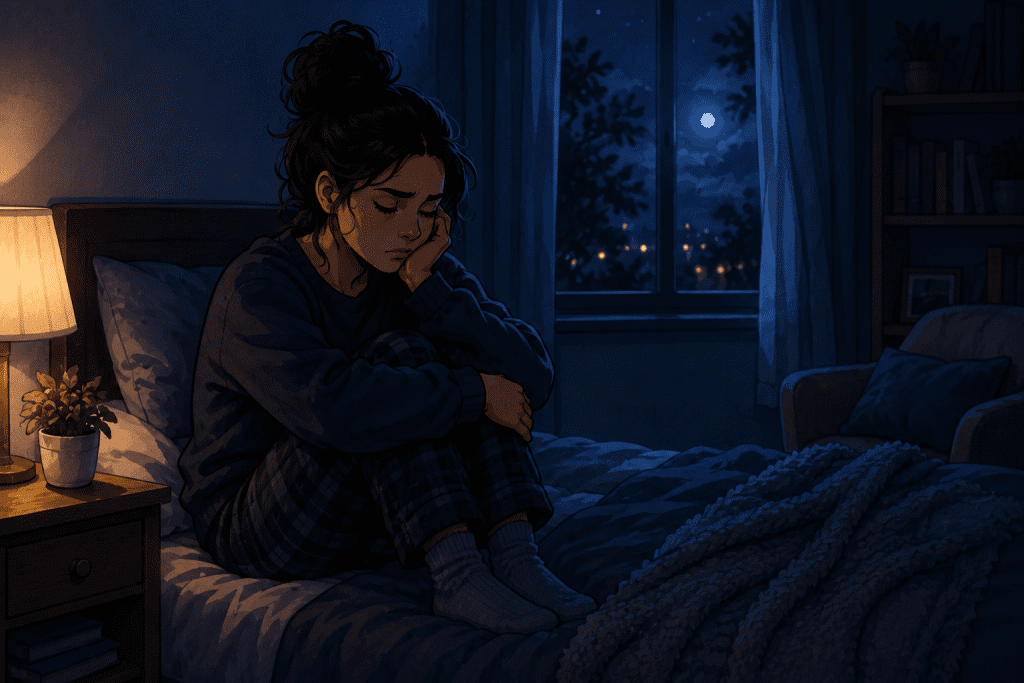
For many people, night-time is when difficult thoughts become louder. During the day, it may be possible to stay busy, speak to others, go to work, look after family, attend appointments, or distract yourself with daily responsibilities. But when the world becomes quiet, the mind can start to feel much noisier.
Anxiety can feel stronger. Depression can feel heavier. Grief can feel sharper. Worries that seemed manageable during the day can suddenly feel overwhelming. Some people find themselves lying awake replaying conversations, fearing the future, regretting the past, or feeling completely alone.
If this happens to you, it can be frightening. You may wonder why you feel worse at night, especially if you managed to get through the day. But night-time distress is very common. It does not mean you are failing. It does not mean you are weak. It usually means your mind and body are tired, overstimulated, under-supported, or finally quiet enough for buried emotions to surface.
Understanding why this happens can help you respond with more kindness and find ways to get through the night safely.
The Daytime Can Hide How We Really Feel
During the day, many people run on routine. They get up, answer messages, go to work, look after children, attend meetings, clean, cook, care for others and keep moving. Even when they are struggling, the structure of the day can help them function.
This can create the illusion that everything is okay. But being busy does not always mean you are coping well. Sometimes it simply means you are distracted.
At night, the distractions disappear. There are fewer tasks, fewer conversations and fewer external demands. This quiet can allow difficult emotions to rise to the surface. Thoughts that have been pushed aside all day can suddenly demand attention.
This is one reason people may feel worse at night. The feelings were not created by the night itself. They were already there, waiting for space.
Tiredness Makes Everything Feel Harder
Mental health often feels worse when we are tired. Lack of sleep affects mood, patience, concentration, emotional regulation and the ability to think clearly. At the end of a long day, your brain has worked hard. Your body may be exhausted. Your ability to cope may be lower.
This means problems can feel bigger at night than they did earlier. A worry that felt manageable at lunchtime may feel unbearable at midnight. A small mistake may feel like a disaster. A message you have not replied to may feel like proof that you are letting everyone down.
Tiredness can make thoughts more negative and less balanced. When your brain is exhausted, it is harder to challenge fears or see another perspective. This is why it is often unhelpful to make big decisions late at night. The night-time mind can be very convincing, but it is not always accurate.
A useful reminder is: “I do not have to solve my whole life tonight.”
Anxiety Often Increases at Night
Anxiety can become worse at night because there are fewer distractions from worry. When everything is quiet, the mind may start scanning for danger. It may ask:
What if something bad happens?
What if I cannot cope tomorrow?
What if I said the wrong thing?
What if I lose my job?
What if my health gets worse?
What if people leave me?
What if I never feel better?
An anxious brain wants certainty. But night-time often provides the opposite. You cannot easily make phone calls, get reassurance, sort practical problems, attend appointments or speak to services in the same way you can during the day. This can make worries feel trapped inside your head.
Anxiety can also affect the body. You may notice a racing heart, tight chest, restless legs, stomach discomfort, sweating, shaking or difficulty breathing. These symptoms can be frightening and may make you feel even more anxious.
If this happens, grounding and breathing exercises can help signal to your nervous system that you are safe in the present moment.
Depression Can Feel Heavier in the Dark
Depression can also feel worse at night. The darkness, silence and isolation can deepen feelings of sadness, hopelessness or emptiness. Some people feel more alone at night because others are asleep. They may feel there is no one to talk to and nowhere to go.
Depression often brings harsh thoughts. At night, these thoughts can become louder:
I am a burden.
Nothing will change.
I have failed.
No one understands.
I cannot keep going like this.
Everyone would be better off without me.
These thoughts are serious and should not be ignored. But it is important to remember that depression can distort thinking. It can make temporary feelings seem permanent. It can make support feel impossible, even when help is available.
If you ever feel at risk of harming yourself or feel unable to stay safe, seek urgent help immediately. Call 999, go to A&E, contact NHS 111, or reach out to a crisis line or trusted person. You do not have to wait until morning.
Night-Time Can Trigger Loneliness
Loneliness often feels stronger at night. During the day, even small interactions can help: a conversation in a shop, a message from a friend, a colleague at work, a support group, or simply being around other people. At night, those connections may disappear.
This can be especially difficult for people living alone, grieving, separated from family, caring for others, recovering from trauma, or feeling disconnected from their community. Night-time can make people feel as though everyone else has someone, while they are left alone with their thoughts.
Social media can make this worse. Scrolling at night may show images of other people appearing happy, successful or connected. Even when we know social media is only a snapshot, it can still feed feelings of comparison and loneliness.
If night-time loneliness is a pattern, it can help to plan connection earlier in the day. Send a message before evening. Arrange a phone call. Attend a group. Spend time somewhere local and supportive. Connection during the day can make the night feel less heavy.
The Brain Replays the Day
Many people lie awake replaying conversations and events. They think about what they said, what they should have said, what someone meant, or what they did wrong. This is sometimes called rumination.
Rumination is different from problem-solving. Problem-solving moves towards action. Rumination goes round in circles and usually makes people feel worse.
At night, rumination can become intense because there is little else to focus on. The mind may try to process unfinished emotional business from the day. If you were too busy to feel upset, angry or embarrassed earlier, those emotions may appear when you finally stop.
A helpful question is: “Am I solving this, or am I replaying it?” If you are replaying it, try writing the thought down and telling yourself: “This is something for tomorrow. I am allowed to rest now.”
Stress Hormones and the Body
Stress does not just affect thoughts. It affects the whole body. When you have been under pressure for a long time, your nervous system may stay alert even when you are trying to sleep. This can make it difficult to relax.
You may feel wired but tired. Your body is exhausted, but your mind is racing. You may feel jumpy, restless or unable to switch off. This is common for people experiencing chronic stress, trauma, burnout or anxiety.
The body may need time and repetition to feel safe again. A calming evening routine can help. This might include dimming lights, reducing screen time, having a warm drink, taking a shower, stretching, listening to calming music, journalling, or practising slow breathing.
The aim is to send your body the message: “The day is ending. I am safe enough to rest.”
Unprocessed Emotions Come Out at Night
Many people spend the day holding emotions in. They may hide their anxiety at work, stay strong for their children, support others, avoid crying, or push down anger and grief. This can be necessary sometimes. But emotions that are constantly pushed away often return when there is finally space.
Night-time can become the place where everything you have not processed catches up with you.
This does not mean you are doing something wrong. It means your emotions need attention. If feelings keep coming up at night, it may be a sign that you need more support during the day.
Talking to someone, writing things down, attending counselling, joining a support group, or creating space to process emotions earlier can reduce the pressure that builds by bedtime.
Alcohol, Caffeine and Screens Can Make Things Worse
What we do in the evening can affect how we feel at night. Caffeine late in the day can increase anxiety and make sleep harder. Alcohol may feel relaxing at first, but it can disrupt sleep and worsen low mood or anxiety later in the night.
Screens can also affect the mind. Scrolling through news, arguments, distressing content or social media before bed can leave the brain overstimulated. Even when the content is not upsetting, constant scrolling can prevent the mind from settling.
If you feel worse at night, it may help to experiment with a calmer evening routine. This does not mean you need to be perfect. Start small. Put your phone down 20 minutes earlier. Avoid difficult conversations right before bed. Choose calming content. Reduce caffeine later in the day. Notice what makes your night-time mood better or worse.
Why Problems Feel Bigger at Night
Night-time can magnify problems because you are tired, alone, less distracted and less able to take practical action. Your mind may present worries as urgent, even when they are not.
This is why a simple rule can help: do not trust every thought you have after midnight.
That does not mean your feelings are not real. Your feelings matter. But the conclusions you reach when exhausted may not be fair or accurate.
Instead of trying to fix everything, focus on getting through the next hour safely and calmly. Rest first. Problem-solve later.
What Can Help When You Feel Worse at Night?
If night-time is difficult, it helps to have a plan before the difficult feelings arrive.
Try creating a simple night-time support plan:
Keep a glass of water by your bed.
Write down calming reminders.
Have a grounding exercise ready.
Keep crisis numbers somewhere visible.
Prepare a playlist, podcast or relaxing sound.
Write worries in a notebook instead of holding them in your head.
Agree with a trusted person that you can message if you are struggling.
Avoid making major decisions late at night.
Remind yourself that feelings can pass, even when they feel intense.
You could also use the 5-4-3-2-1 grounding technique. Name five things you can see, four things you can feel, three things you can hear, two things you can smell and one thing you can taste. This helps bring the brain back into the present moment.
Slow breathing can also help. Try breathing in gently for four seconds, holding for two, and breathing out slowly for six. Repeat this for a few minutes. The longer out-breath can help calm the nervous system.
Build Support Into the Day
One of the best ways to reduce night-time distress is to build support into daytime life. If you only deal with emotions at night, they can become overwhelming. Try to create small moments of support earlier.
This might include:
Speaking honestly to someone you trust
Going for a walk
Attending a group or drop-in
Booking counselling
Writing down worries before evening
Reducing isolation
Eating regularly
Getting daylight
Creating a routine
Asking for practical help
Contacting a local mental health charity
You do not have to do all of these. One small change can make a difference.
When to Seek Help
You should consider seeking support if you regularly feel worse at night, cannot sleep, feel overwhelmed by anxiety or depression, rely on alcohol or substances to cope, feel isolated, or have thoughts of harming yourself.
You do not have to wait until crisis point. If your mental health is affecting your daily life, relationships, work, sleep or ability to cope, it is worth talking to someone.
Support could come from a GP, counsellor, therapist, support worker, local mental health charity, peer group or crisis service. Asking for help is not a failure. It is a step towards feeling less alone.
Final Thoughts
People often feel worse at night because the world becomes quiet, distractions disappear and tiredness makes emotions harder to manage. Anxiety, depression, grief, trauma, loneliness and stress can all feel stronger in the dark.
But night-time feelings, no matter how powerful, do not define you. They are signals that you need care, rest, support and understanding.
You do not have to solve your life at midnight. You do not have to face difficult thoughts alone. Start with one small action: breathe, ground yourself, write the worry down, drink some water, reach out to someone safe, or remind yourself that morning can bring a different perspective.
The night can feel heavy, but feelings can change. Support is available. And you are not alone.