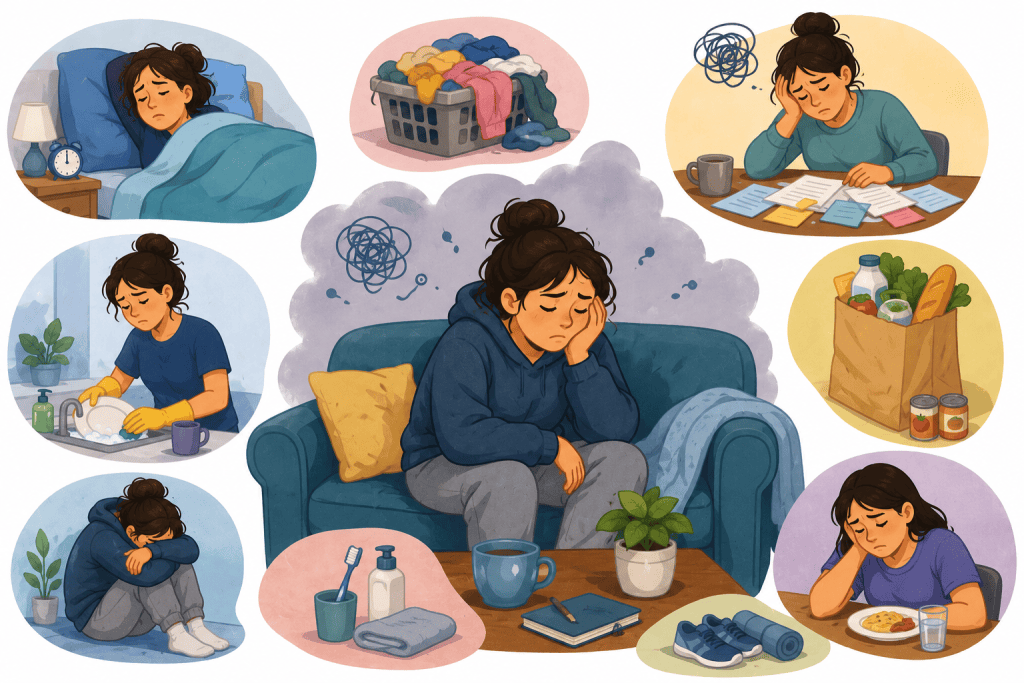
Depression is often misunderstood as simply feeling sad. In reality, it can affect almost every part of a person’s life, including their energy, concentration, motivation, sleep, confidence and ability to complete even the simplest daily tasks.
For someone living with depression, getting out of bed, taking a shower, preparing food, replying to a message or leaving the house can feel overwhelming. These tasks may look small from the outside, but to the person experiencing depression, they can require an enormous amount of mental and physical effort.
This is not laziness. It is not weakness. It is not a lack of willpower.
Depression can change how the brain and body function, making ordinary activities feel much harder than they once did. Understanding why this happens can help reduce shame and encourage people to seek support.
Depression Can Drain Your Energy
One of the most common symptoms of depression is fatigue.
This is not always the same as ordinary tiredness. A person may sleep for many hours and still wake up feeling exhausted. Their body may feel heavy, their limbs may ache and even standing up can feel difficult.
Depression can make it feel as though the body has run out of energy.
Tasks such as washing dishes, changing clothes or walking to the shops may require the same effort that a much larger task would normally demand. The person may know what needs to be done, but feel physically unable to begin.
This can lead to frustration and self-criticism.
They may think:
“Why can’t I just get on with it?”
“Why is everything so difficult?”
“Other people manage, so why can’t I?”
These thoughts can make the depression worse. The person may feel guilty for not doing enough, even though they are already struggling with an illness that affects their energy and ability to function.
Motivation Can Disappear
Depression can reduce motivation, making it hard to begin tasks.
A person may understand that taking a shower, eating a meal or going outside could help them feel better, but knowing this does not automatically create the motivation to act.
The brain may struggle to connect the task with any sense of reward.
Before depression, cleaning the house might have brought satisfaction. Meeting a friend might have felt enjoyable. Completing work might have created pride.
During depression, these rewards may feel absent.
The person may think, “What is the point?” even when they know the task is important.
This lack of motivation can be deeply confusing. People may accuse themselves of being lazy, but depression often affects the brain systems involved in drive, pleasure and decision-making.
The desire to do something and the ability to begin it are not always the same.
Everything Can Feel Overwhelming
Depression can make small tasks feel much bigger than they are.
A sink full of dishes may not look like a simple job. It may feel like a huge, impossible project.
The person may begin thinking about every step involved:
- Stand up
- Walk to the kitchen
- Fill the sink
- Find the washing-up liquid
- Wash the dishes
- Dry them
- Put them away
When someone is already emotionally and physically exhausted, even a short task can feel like too many steps.
This is sometimes known as executive dysfunction. It can affect planning, organisation, decision-making and the ability to move from one stage of a task to another.
The person may know exactly what needs to happen but still feel unable to start.
Breaking tasks into smaller steps can help. Instead of “clean the kitchen”, the first goal might simply be “wash one cup”.
Small steps may not look significant to others, but they can be meaningful progress.
Concentration Becomes More Difficult
Depression can affect concentration and memory.
A person may struggle to read, follow conversations, watch television or complete work. They may read the same paragraph several times without understanding it.
They may forget appointments, lose track of what they were doing or find it difficult to make simple decisions.
Choosing what to wear, what to eat or which task to begin may feel exhausting.
This can make everyday life more stressful.
A person may fall behind at work, miss important messages or forget household responsibilities. They may then feel ashamed or anxious about these difficulties.
Depression can create a cycle in which concentration problems lead to mistakes, and mistakes increase feelings of worthlessness.
It is important to remember that these difficulties are symptoms of depression, not proof that someone is incapable.
Self-Care Can Feel Like Too Much
When depression becomes severe, basic self-care can become difficult.
A person may struggle to:
- Shower
- Brush their teeth
- Change clothes
- Wash their hair
- Eat regular meals
- Take medication
- Keep their home tidy
These are often the tasks people feel most ashamed about.
They may worry that others will judge them for not looking after themselves. They may avoid visitors or cancel appointments because they do not feel presentable.
But when someone is living with depression, self-care can require more energy than they have available.
Taking a shower may involve getting undressed, adjusting the temperature, washing, drying, choosing clothes and getting dressed again. To someone with very little energy, this can feel like a major challenge.
Compassion is more helpful than criticism.
Sometimes the goal may need to be smaller. Washing their face, changing one item of clothing or using mouthwash may be a more manageable starting point.
Doing something small is better than doing nothing.
Decision-Making Can Become Exhausting
Depression can make decisions feel extremely difficult.
The person may struggle with simple choices such as what to eat, whether to answer a phone call or what order to complete tasks in.
This can happen because depression affects concentration, confidence and mental energy.
The person may worry about making the wrong decision. They may overthink every option until they feel stuck.
For example, deciding what to eat may involve questions such as:
“Do I have the energy to cook?”
“What if I choose the wrong thing?”
“Is it healthy enough?”
“Do I even feel hungry?”
Eventually, the person may avoid making a decision altogether.
Reducing choices can help. Having a simple routine, a short meal list or a few prepared options can reduce the amount of mental effort required.
Depression Can Affect Sleep
Sleep problems are common in depression.
Some people sleep too much. Others struggle to sleep at all. Some wake repeatedly during the night or wake very early and cannot get back to sleep.
Poor sleep can make everyday tasks even harder.
Without enough rest, concentration, mood and physical energy may become worse. The person may feel exhausted throughout the day but unable to sleep properly at night.
They may also spend long periods in bed because it feels like the safest or easiest place to be.
This can affect routine and make it harder to separate day from night.
A disrupted sleep pattern can create a cycle. The more the person sleeps during the day, the harder it may be to sleep at night. The worse their sleep becomes, the less energy they have for daily tasks.
Rebuilding a routine can help, but it may need to happen gradually.
Food and Cooking Can Feel Difficult
Depression can affect appetite.
Some people lose interest in food. Others eat more because food provides temporary comfort.
Cooking can feel especially difficult because it involves planning, shopping, preparation and cleaning.
A person may know they need to eat but feel unable to prepare anything.
They may skip meals, rely on snacks or eat the same simple food repeatedly.
This can lead to low energy, which makes the depression and fatigue worse.
Simple foods can be helpful during difficult periods. Ready meals, soup, cereal, sandwiches, fruit or yoghurt may not feel perfect, but eating something is often more important than preparing an ideal meal.
People experiencing depression do not need criticism about what they eat. They need practical, manageable support.
Social Contact Can Feel Exhausting
Depression can make communication feel difficult.
Replying to a message may seem simple, but the person may not know what to say. They may worry that they will sound negative or that they will be a burden.
They may leave messages unanswered for days or weeks.
This can create guilt, which makes replying even harder.
The person may also avoid social situations because they do not have the energy to talk, smile or pretend that everything is fine.
They may worry that others will notice something is wrong.
Although they may withdraw, this does not always mean they want to be alone. They may still want connection but feel unable to manage it.
A gentle message such as, “You do not need to reply, but I am thinking of you,” can feel supportive without creating pressure.
Work Can Become Much Harder
Depression can affect attendance, concentration, productivity and confidence.
Tasks that were once manageable may begin to feel confusing or exhausting. The person may struggle to meet deadlines, remember information or participate in meetings.
They may become worried that colleagues will notice.
This can create additional stress, especially if the person fears losing their job or being judged.
Some people continue working while hiding severe depression. They may use all their energy to get through the working day and then have nothing left when they return home.
This can explain why someone appears capable at work but struggles to cook, clean or socialise afterwards.
Functioning in one area does not mean they are not struggling.
The Home Can Become Difficult to Manage
Household tasks can quickly build up during depression.
Laundry piles may grow. Dishes may remain unwashed. Letters may go unopened. Rubbish may not be taken out.
As these tasks build up, the person may feel more overwhelmed.
The home can then become a visible reminder of how much they are struggling. This may increase shame and hopelessness.
They may feel they must complete everything at once, which makes starting even harder.
A better approach can be to focus on one small area.
Clear one chair.
Wash one plate.
Open one letter.
Put one item of rubbish in the bin.
These steps may seem tiny, but they can help reduce the sense of chaos and create momentum.
Guilt Makes Tasks Even Harder
Depression often comes with strong feelings of guilt.
A person may feel guilty for not keeping up with responsibilities, not being available to friends or not contributing enough at home.
They may believe they are letting people down.
This guilt can reduce motivation further.
Instead of thinking, “I will do one small task,” they may think, “I should have done all of this already.”
The word “should” can create pressure and self-criticism.
Compassionate language is more helpful.
Instead of, “I should clean the whole house,” the person might say, “I am struggling today, so I will do one manageable thing.”
This does not mean giving up. It means working with the amount of energy that is available.
Depression Can Remove Pleasure
One of the most painful symptoms of depression is the loss of pleasure.
Activities that once brought joy may feel empty or pointless. This is sometimes called anhedonia.
A person may stop enjoying music, hobbies, food, relationships or time outdoors.
This can make everyday tasks more difficult because there is no emotional reward at the end.
They may clean the house but feel no sense of achievement. They may meet friends but feel disconnected. They may complete work but feel nothing.
This can create the belief that nothing will ever feel good again.
However, pleasure can return gradually as recovery begins. Often, people need to continue taking small actions before the positive feelings return.
Why “Just Get On With It” Does Not Help
People with depression are often given simple advice:
“Just get out of bed.”
“Go for a walk.”
“Think positively.”
“Keep busy.”
These suggestions may be well meant, but they can feel dismissive.
The person may already know these things could help. The difficulty is finding the energy and motivation to do them.
Depression is not solved by willpower alone.
Supportive language is more helpful:
“Would it help if I came with you?”
“Can I make you something to eat?”
“Shall we do one small task together?”
“What feels manageable today?”
Practical support can reduce pressure and help the person take the first step.
Small Steps Really Matter
When everyday tasks feel difficult, small goals can make life more manageable.
Instead of planning an entire day, focus on the next ten minutes.
Instead of cleaning the whole room, clear one surface.
Instead of cooking a full meal, eat something simple.
Instead of going for a long walk, stand outside for a few minutes.
Small steps count.
Depression often tells people that anything less than complete success is failure. This is not true.
Getting out of bed is progress.
Taking medication is progress.
Answering one message is progress.
Opening the curtains is progress.
Recovery is often built through small, repeated actions.
How Others Can Help
Friends and family may want to help but feel unsure what to do.
The best support is often practical and non-judgemental.
This might include:
- Preparing a meal
- Helping with shopping
- Sitting with the person while they complete a task
- Offering a lift to an appointment
- Sending a message without expecting a reply
- Helping to make a simple plan
- Listening without trying to fix everything
It is important not to take over completely unless necessary. Supporting someone to do what they can helps maintain confidence and independence.
When to Seek Support
If depression is affecting daily life, professional support can help.
A GP can discuss symptoms and treatment options. Counselling, therapy, medication, peer support and community services may all play a role in recovery.
It is especially important to seek support if the person is:
- Struggling to care for themselves
- Unable to eat or sleep properly
- Missing work or education
- Withdrawing from everyone
- Feeling hopeless
- Thinking about self-harm or suicide
No one should have to wait until they reach crisis point before asking for help.
You Are Not Lazy
Depression can make ordinary tasks feel incredibly difficult.
This does not mean someone is lazy, weak or failing.
It means they are living with a condition that affects energy, motivation, concentration and hope.
Recovery takes time.
Some days will be better than others. Progress may feel slow, but every small step matters.
You do not have to complete everything at once. You do not have to prove that you are struggling. You do not have to face depression alone.
With understanding, practical help and the right support, everyday life can begin to feel manageable again.