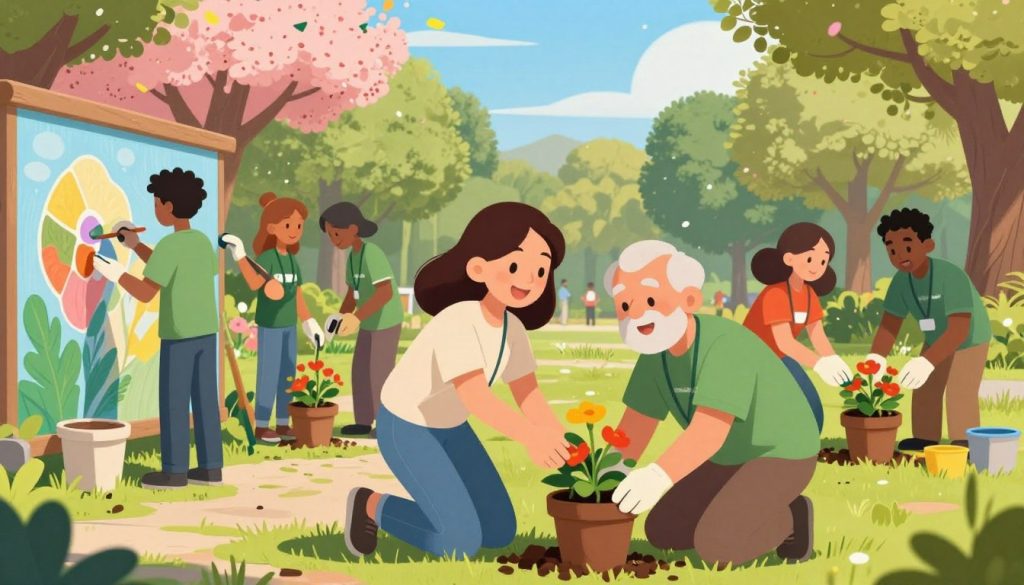
Many people search for ways to improve their lives, yet the most effective solution often lies in helping others. Engaging with your local community is a powerful catalyst for personal growth. When you choose to volunteer, you step outside your comfort zone and gain a fresh perspective on your own capabilities.
The simple act of giving back helps individuals overcome deep-seated self-doubt. By dedicating your time to a meaningful cause, you begin to recognise your true value. This process fosters a positive self-image that naturally radiates into your professional and personal life.
Ultimately, volunteering provides a renewed sense of purpose that is hard to find elsewhere. As you tackle new challenges, you develop essential skills and build lasting connections. This journey not only benefits those you assist but also serves as a vital foundation for your own long-term success and happiness.
The psychological link between altruism and self-worth
When you choose to volunteer, you unlock a powerful psychological mechanism that boosts your confidence. Engaging in selfless acts does more than just help others; it fundamentally changes how we view our own capabilities and value.
This process creates a positive feedback loop. By contributing to the community, you reinforce the belief that you have something meaningful to offer the world.

Understanding the helper’s high
Scientists often describe the positive emotional state experienced after helping others as the helper’s high. This phenomenon occurs because altruistic actions trigger the release of endorphins in the brain.
These natural chemicals act as mood elevators, providing a sense of euphoria and calm. When you volunteer your time, your body rewards you with a sustained improvement in your overall mood.
This biological response is a key reason why many people feel a renewed sense of purpose. It serves as a natural boost to your self-worth, making you feel more capable and connected to those around you.
How giving back shifts your perspective
Beyond the immediate chemical rewards, service work helps you gain a fresh outlook on life. It allows you to shift your focus away from personal stressors and towards the needs of others.
When you volunteer, you often find that your own challenges feel more manageable. This shift in perspective is a powerful tool for building resilience during difficult times.
By stepping outside your own bubble, you develop a greater sense of empathy and patience. This transformative experience helps you realise that you possess the strength to make a tangible difference in the lives of others.
Why you should volunteer to boost your professional confidence
You might be surprised to learn how much your professional confidence grows when you dedicate time to helping others. Stepping away from your daily desk routine allows you to test your abilities in fresh, dynamic settings. This shift in environment often reveals hidden talents that you may not have noticed in a traditional office.
Gaining practical experience in a low-pressure environment
One of the primary benefits of volunteering is the ability to experiment with new tasks without the heavy weight of corporate pressure. When you engage in volunteer work, you are often encouraged to try different roles that fall outside your usual job description. This freedom allows you to learn from mistakes in a safe space, which is essential for building long-term professional resilience.
Building a professional network through charitable volunteer work
Engaging in charitable volunteer work connects you with a diverse range of people who share your values. These interactions often lead to meaningful professional relationships that you might never encounter in your standard workplace. By working alongside others on a common mission, you naturally build a network based on mutual respect and shared goals.
The value of mentorship in volunteer organisations
Many volunteer organisations offer unique access to experienced leaders who are willing to share their wisdom. Seeking out mentorship within these groups provides you with personalised guidance that can significantly accelerate your career development. Learning from those who have already navigated similar paths helps you gain the clarity needed to advance your own professional journey with confidence.
Overcoming social anxiety through community service
Social anxiety often thrives in isolation, yet it can be dismantled through the power of collective action. Engaging in community service provides a gentle, structured way to interact with others without the pressure of traditional social settings.
Stepping outside your comfort zone in a supportive setting
When you choose to participate in volunteer work, you enter an environment designed for kindness and mutual support. These spaces are often non-judgmental, allowing you to test your social boundaries at your own pace.
By focusing on a task rather than your own internal nerves, you naturally shift your attention outward. This shift in focus is a powerful tool for managing anxiety and building lasting self-assurance.
Practising communication skills with diverse groups
Participating in charitable volunteer work exposes you to a wide variety of people from different walks of life. This diversity helps you practise your communication skills in a real-world context that feels safe and purposeful.
You will find that consistent interaction with new faces helps to normalise social exchanges. Over time, these small, positive experiences build the confidence needed for more complex everyday conversations.
The role of shared goals in reducing social barriers
Working toward a common objective acts as a bridge between individuals who might otherwise never meet. When everyone is focused on the same community service mission, the usual social hierarchies and anxieties tend to fade away.
This sense of belonging is incredibly healing for those who feel isolated. By contributing to volunteer work, you become part of a team where your presence is valued and your efforts make a tangible difference.
Ultimately, charitable volunteer work transforms the way you perceive your own social capabilities. You learn that you have much to offer, which is the most effective antidote to social doubt.
Developing new skills in diverse volunteer environments
Engaging in community work offers a unique pathway to sharpen your professional toolkit. By stepping outside your usual routine, you expose yourself to fresh tasks that demand creative thinking and adaptability. These experiences often serve as a catalyst for personal and career development.
Identifying transferable skills from volunteer projects
When you participate in various volunteer projects, you naturally acquire abilities that are highly sought after by employers. You might find yourself leading a team, managing a budget, or solving complex logistical problems on the fly. These are classic examples of transferable skills that translate perfectly into any workplace.
It is helpful to document these moments as you go. Recognising that your work in a local food bank or a charity shop involves strategic planning allows you to articulate your value clearly. You are not just giving your time; you are actively building a portfolio of professional competencies.
The impact of learning on self-efficacy
The process of continuous learning through volunteering has a profound effect on your belief in your own capabilities. As you master new tasks, your sense of self-efficacy grows, providing you with the confidence to tackle even larger obstacles. This internal shift is often the most rewarding part of the journey.
When you see the direct results of your efforts, you begin to trust your judgement more deeply. This empowerment stems from the realisation that you can handle unfamiliar situations with grace and efficiency. It transforms how you view your potential in both your personal and professional life.
Adapting to new challenges in volunteer positions
To maintain steady growth, it is essential to embrace the variety found in different volunteer positions. Each role brings its own set of hurdles, from coordinating large events to mentoring younger members of the community. Staying flexible and open to these changes ensures that your skill set remains sharp and relevant.
Adapting to change is a vital trait in the modern world. By consistently pushing your boundaries in these roles, you become more resilient and better prepared for future career transitions. Ultimately, the willingness to learn in diverse settings is what truly sets a dedicated volunteer apart.
Finding the right volunteer opportunities for your personal growth
You can unlock significant personal growth by carefully selecting volunteer initiatives that align with your unique interests. When your heart is truly in the work, you are far more likely to stay committed and see real progress in your self-development journey.
Matching your passions with volunteer initiatives
Start by reflecting on what truly excites you, whether it is environmental conservation, animal welfare, or supporting local education. Choosing meaningful work ensures that your time spent in community service feels like a rewarding investment rather than a chore.
Look for volunteer positions that allow you to utilise your existing strengths while also challenging you to learn something new. This balance keeps you engaged and helps you build confidence in your abilities over time.
Assessing the time commitment and your personal goals
Before you sign up, be honest about how much time you can realistically offer each week. It is better to start with a small, manageable commitment than to overextend yourself and risk burnout.
Consider your long-term objectives, such as gaining new skills or meeting new people. By aligning your volunteer opportunities with these goals, you create a sustainable path that supports your personal growth without disrupting your daily life.
How to approach local volunteer organisations
Once you have identified a cause that inspires you, reach out to local volunteer organisations with a clear and friendly message. You might send an email or visit their website to express your genuine interest in their mission.
Be prepared to discuss what you hope to gain from the experience and how you can contribute to their team. Most groups are delighted to welcome new members who show enthusiasm and a willingness to help, so do not be afraid to take that first step.
Embracing the journey of self-discovery through service
Your path to personal growth often begins when you step outside your own world to help others. Engaging with a local volunteer organisation allows you to see your own life through a fresh lens. This process turns simple acts of kindness into profound moments of self-realisation.
You might explore various volunteer opportunities to find where your unique talents shine brightest. Whether you support the British Red Cross or assist at a local food bank, these experiences shape your character. Each of these volunteer projects provides a safe space to test your limits and build lasting resilience.
Commitment to meaningful volunteer initiatives fosters a deeper sense of purpose. You gain more than you give when you dedicate your time to a cause. Start your journey today by seeking out roles that challenge your perspective. Helping others remains the most effective way to discover your true potential and lead a more fulfilled life.