

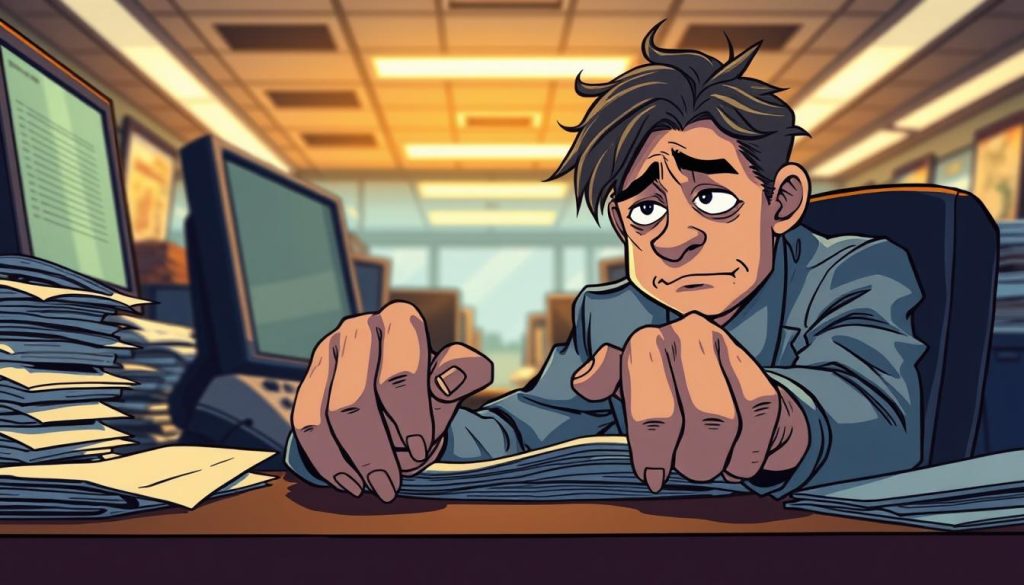
Burnout is a big problem in the UK’s workforce. Many workers feel too much pressure, which affects their wellbeing. It’s important for employers and staff to understand burnout to keep their health safe.
Long-term work pressure can cause serious health problems. The Health and Safety Executive (HSE) knows this. They have rules for employers to handle work-related stress.
Too much stress can harm your body and mind. You might have trouble sleeping, feel anxious, or be very tired. It can also make it hard to focus or feel connected to your job.
Knowing about burnout and its causes helps make workplaces safer. This article looks into what burnout is and how to spot its signs. We also talk about ways to lower stress and build strength. By learning about preventing burnout, workers and employers can make work places healthier.
Defining Occupational Stress Syndrome
Occupational stress syndrome is a condition recognised by the World Health Organisation. It happens when work pressures are too much for someone to handle. It’s important for workers, employers, and health professionals to understand this.
This term describes feeling physically and emotionally drained because of work. It helps companies see when they need to help their staff, not just push them harder.

The Physiological Response to Prolonged Pressure
Chronic workplace stress makes your body’s stress system always on. This leads to high levels of cortisol, a stress hormone, all day and night.
Long-term stress changes your body in many ways:
- Cortisol levels mess with sleep and your immune system
- Heart rate and blood pressure stay high
- Muscles in your neck and shoulders get tight
- Your digestive system gets worse
- There’s more inflammation in your blood
These changes happen slowly as stress builds up over time in tough work settings.
Distinguishing Stress from Clinical Burnout
Workplace stress means you’re too into your job. You feel committed but overwhelmed. This can get better with rest and support.
Burnout is different. It’s when you feel completely disconnected from your job. Burned-out people have used up all their emotional energy and don’t care about work anymore.
| Characteristic | General Stress | Burnout |
|---|---|---|
| Engagement Level | Over-engaged with work | Emotionally detached |
| Energy Status | Depleted but recoverable | Completely exhausted |
| Emotional State | Anxious and overwhelmed | Cynical and hopeless |
| Response to Rest | Improves with breaks | Persists despite rest |
Knowing the difference helps spot occupational stress syndrome early. This means we can act quickly to help people before they reach burnout.
Understanding Burnout: When Stress Becomes Too Much
Burnout is a state of exhaustion that happens when work demands are too high. It’s important to know when stress turns into burnout. This is not just feeling tired. It’s a deeper issue that affects your health, job, and personal life.
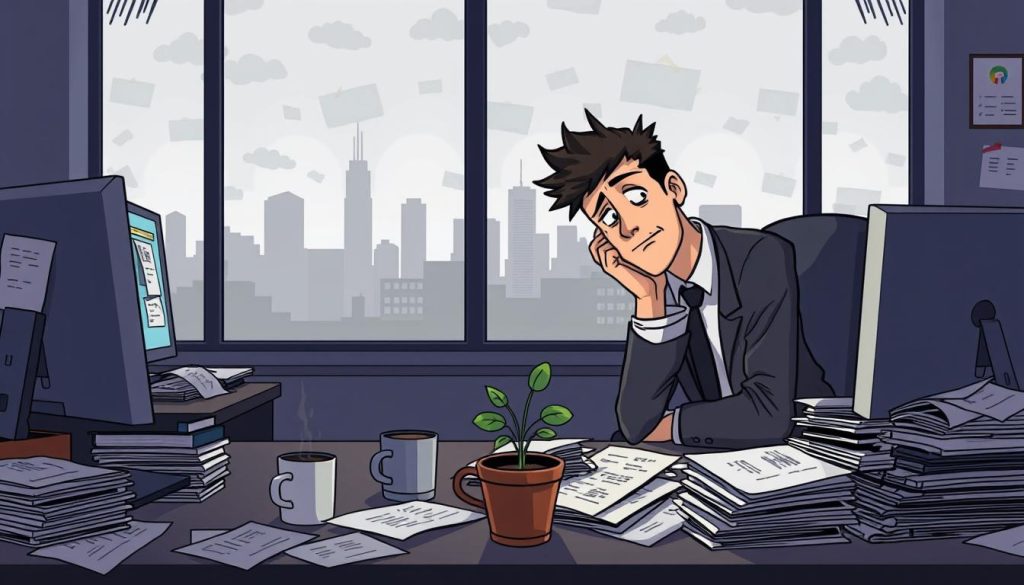
Burnout doesn’t happen suddenly. It builds up over time as you face constant demands without enough rest. Your body and mind get overwhelmed, making it hard to meet expectations. Spotting burnout early can help prevent it from getting worse.
There are key signs that show burnout is different from normal stress:
- Persistent exhaustion that rest does not resolve
- Reduced effectiveness and productivity at work
- Emotional detachment from colleagues and tasks
- Feelings of helplessness and cynicism
- Diminished sense of personal accomplishment
In the UK, burnout is seen as a major cause of long-term sickness. When you’re experiencing burnout, your immune system weakens. Stress hormones like cortisol stay high, causing physical problems. Your brain function drops, making it hard to make decisions. Poor sleep quality adds to the problem.
Spotting burnout early is key. Acting fast can stop it from leading to serious health issues. By addressing burnout early, you protect your job, relationships, and overall well-being.
Recognising Emotional Exhaustion Symptoms
Spotting burnout signs is key. Look out for changes in how you feel and think. These signs can sneak up on you, making it hard to notice early.
Going from stressed to burnt out is a journey. You might feel less energetic, less motivated, and less well overall. Knowing these signs helps you act fast.
Physical Manifestations of Compassion Fatigue
Compassion fatigue hits hard on those who help others a lot. It’s when you can’t feel empathy anymore because you’re always seeing others’ pain.
Look out for these physical signs:
- Persistent fatigue and sleep disturbances
- Frequent headaches and muscle tension
- Weakened immune system and increased illness
- Digestive problems and changes in appetite
- Elevated blood pressure and heart palpitations
Cognitive Declines and Mental Fog
As burnout grows, your mind gets cloudier. You might find it hard to focus, remember things, and make decisions. This fog makes it tough to do your job well.
Watch for these mental signs:
- Reduced ability to focus on complex tasks
- Difficulty remembering important information
- Slower processing speeds and reaction times
- Poor judgment in professional situations
- Increased mistakes and overlooked details
| Symptom Category | Physical Indicators | Cognitive Indicators | Duration Pattern |
|---|---|---|---|
| Early Stage | Occasional tiredness, mild tension | Temporary concentration lapses | Intermittent, several weeks |
| Developing Stage | Regular exhaustion, sleep issues, frequent infections | Noticeable memory problems, slower thinking | Consistent, several months |
| Advanced Stage | Chronic fatigue, persistent pain, weakened immunity | Severe mental fog, poor decision-making, confusion | Ongoing, requires intervention |
Spotting these signs early helps you get help fast. This stops burnout from getting worse and keeps you well for the long term.
The Impact of Chronic Workplace Stress
Millions of UK workers face chronic workplace stress every year. This ongoing stress has big effects on whole organisations. Without enough support, employees’ wellbeing suffers, and so does the company’s finances.
The UK economy loses billions each year because of stress. Staff turnover goes up when stress is common. People leave to find less stressful jobs, costing businesses a lot to replace them.
Workplace stress hurts team morale and teamwork. People become less open and less willing to help each other. Communication and trust suffer, and creativity drops.
Several things cause chronic workplace stress:
- Too much work without clear deadlines
- Not enough guidance from managers
- Unclear job roles and expectations
- Little chance for career growth
- Poor work-life balance
- Not enough resources for tasks
Dealing with chronic workplace stress is key for businesses. Companies that care about their employees’ wellbeing do better financially. Investing in stress management pays off.
Identifying Professional Burnout Signs
Spotting burnout at work means watching for changes in how people act. Burnout changes how someone performs and interacts with others. Catching it early helps teams and keeps everyone working well.
Changes in Workplace Performance
One big sign of burnout is when work quality goes down. People who are burned out can’t do their tasks as well. They might miss deadlines or struggle with tasks they used to handle easily.
Look out for these signs:
- Missed deadlines on routine assignments
- Increased errors in work output
- Reduced productivity levels compared to past months
- Difficulty concentrating on complex projects
- Avoidance of challenging responsibilities
As burnout gets worse, even simple tasks can feel too hard.
Interpersonal Withdrawal and Cynicism
People who are burned out often pull away from others. They might not join team meetings or work together as much. This can hurt how well the team works together.
They also start to feel negative about their job and colleagues. This can make things tense and lower team performance.
Watch for these signs:
- Reduced participation in team discussions
- Negative comments about work and colleagues
- Reluctance to attend social workplace events
- Dismissive attitude towards company initiatives
- Decreased willingness to help team members
Spotting these signs early lets managers help. Dealing with burnout quickly helps everyone stay happy and productive.
Prioritising Mental Health at Work
Creating a workplace that values employee wellbeing is essential, not just nice to have. Companies that focus on mental health see better productivity, less time off, and keep their staff longer. It starts with a culture where everyone feels safe to talk about their problems.
It takes real effort to break down the stigma around burnout and mental health. When leaders talk openly about work pressures, staff are more likely to ask for help early. This stops small stress issues from becoming big problems.
The ACAS (Advisory, Conciliation and Arbitration Service) has guidelines for mental health at work. They suggest:
- Regular mental health awareness training for all staff members
- Access to confidential counselling services and support programmes
- Clear communication channels for reporting workplace concerns
- Flexible working arrangements where feasible
- Regular check-ins between managers and team members
Creating a supportive environment means investing in real help for workers. Providing employee assistance programmes, mental health professionals, and wellness initiatives shows you value your team. It’s not just about what they do, but who they are.
A strong team needs ongoing care for their mental wellbeing. Companies that invest in these systems create places where people can grow, do their best, and stay mentally healthy at work.
Implementing Burnout Prevention Strategies
Preventing burnout needs action at both personal and work levels. The best strategies mix setting limits with self-care. This helps employees keep their wellbeing and job satisfaction high.
Establishing Healthy Boundaries
Protecting your mental health at work starts with setting boundaries. This means not checking work emails outside work hours. It’s also about not feeling guilty about saying no to too much work.
Talking to your manager about your workload is key. Be clear about how long tasks will take. This helps avoid overcommitting.
- Switch off work notifications after hours
- Schedule specific times for email checking
- Communicate workload concerns early
- Take full lunch breaks away from your desk
- Use holiday time without guilt
Utilising Stress Management Techniques
Stress management is vital for handling daily pressures. Mindfulness, like breathing exercises, calms your mind. Try doing this for ten minutes each morning.
Time-blocking is also effective. Set aside hours for work, meetings, and breaks. This helps you stay focused and productive.
| Technique | Duration | Benefits |
|---|---|---|
| Mindfulness meditation | 10-15 minutes daily | Reduces anxiety, improves focus |
| Time-blocking | Applied throughout day | Increases organisation, decreases overwhelm |
| Physical exercise | 30 minutes, 4 times weekly | Releases tension, boosts mood |
| Journalling | 15 minutes before bed | Processes emotions, improves clarity |
Regular exercise is essential. It lowers stress hormones and boosts mood. Activities like walking, swimming, or yoga are great for stress relief.
Achieving Sustainable Work-Life Balance
To achieve a sustainable work-life balance, you need to take action and have realistic expectations. With remote and hybrid work, the line between work and home is blurred. This calls for a new way to manage your time and energy in all areas of life.
Setting clear boundaries is key to achieving work-life balance. You must define your working hours and stick to them, even if your office is at home. This helps protect your personal time, preventing burnout and ensuring long-term career success.
Personal recovery time is vital for your mental and physical health. Without enough rest, your productivity drops and stress builds up. Treating this time as an investment in your work performance is essential.
Here are some practical strategies to consider:
- Have a dedicated workspace separate from where you relax
- Take regular breaks during your workday
- Stop work notifications outside work hours
- Do things that make you happy
- Keep up with regular exercise and sleep
When you balance work and personal wellbeing, you stay focused and productive. Your mental health is protected, and your career benefits. This balance leads to a healthier lifestyle, helping you cope with future work pressures.
Conclusion
Spotting burnout signs early is key to avoiding serious health issues. Workplace stress can sneak up on anyone, affecting both body and mind. Catching these signs early means you can act fast.
This involves noticing emotional exhaustion, physical tiredness, and work habits changes. Being aware is the first step to protecting yourself.
Employees and employers must team up for a healthier workplace. Workers should know their limits and speak up when stressed. Employers should support mental health and encourage breaks.
When both sides aim for the same goal, change is possible. A better work environment benefits everyone.
The strategies shared in this article help reduce stress at work. Setting boundaries, managing stress, and balancing work and life are doable. These steps require effort but are worth it.
Investing in your wellbeing boosts work performance and health at home. This long-term investment is rewarding.

