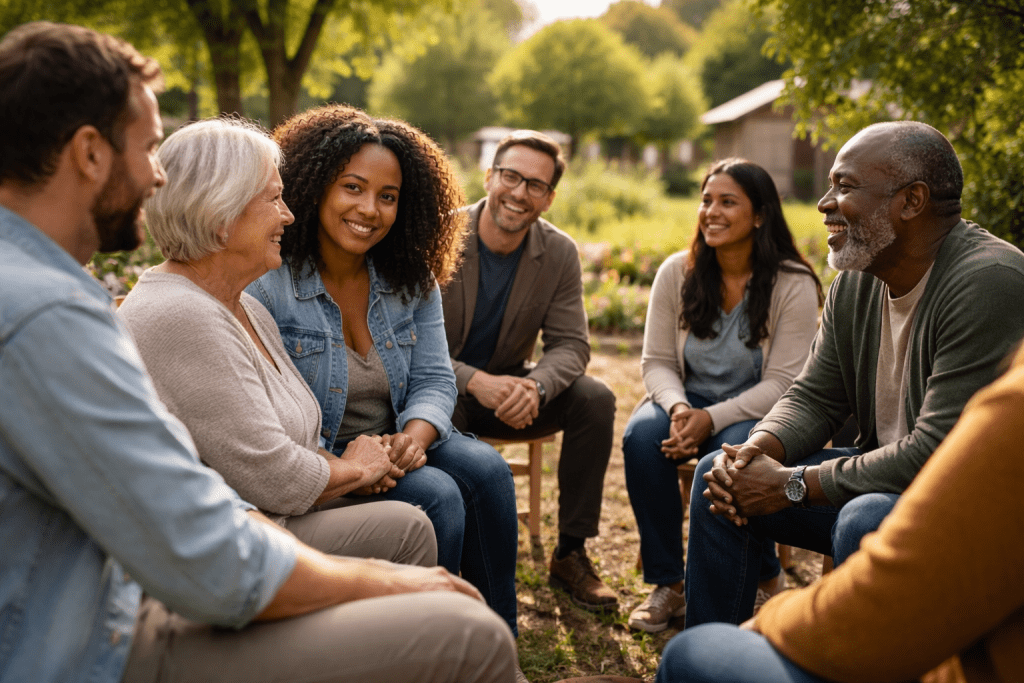
Mental health recovery rarely happens in isolation. While professional support, therapy, and medication can be vital, community often plays an equally powerful and sometimes overlooked role. For people experiencing anxiety, depression, trauma, or long-term mental health challenges, feeling connected to others can be a crucial part of healing.
This article explores the power of community in mental health recovery, highlighting why connection matters, how peer and community support makes a difference, and why charities and community organisations are uniquely placed to foster hope, resilience, and belonging.
Whether you are part of a charity, peer support service, or awareness campaign or someone seeking reassurance this piece aims to reflect the human value of community in compassionate, ethical ways.
Why Community Matters for Mental Health
Human beings are inherently social. Feeling seen, heard, and valued by others is fundamental to emotional wellbeing. When people experience mental health difficulties, that sense of connection is often disrupted.
Community helps to:
- Reduce loneliness and social isolation
- Normalise mental health experiences
- Build trust and safety
- Offer encouragement during difficult periods
- Restore a sense of purpose and identity
For many people, recovery is not about “fixing” themselves, but about reconnecting with others, with meaning, and with hope.
Isolation: A Hidden Barrier to Recovery
Loneliness is both a cause and consequence of poor mental health. People experiencing anxiety, depression, or trauma may withdraw from others due to shame, fear, exhaustion, or stigma. Over time, isolation can deepen distress and delay recovery.
Community-based support counters this by offering:
- Low-pressure social contact
- Safe spaces where people feel accepted
- Opportunities to share experiences without judgement
- Reassurance that no one is alone in their struggles
Simply knowing that someone understands or has been there too can be profoundly healing.
The Unique Value of Peer Support
Peer support is a cornerstone of many community mental health services. It brings together people with lived experience, creating relationships based on empathy rather than hierarchy.
What Makes Peer Support Powerful?
Peer support works because it is:
- Relational – based on shared understanding
- Empowering – focused on strengths, not deficits
- Hope-inspiring – showing that recovery is possible
- Non-clinical – complementing, not replacing, professional care
For many individuals, peer spaces feel safer than traditional services, particularly for those who have felt misunderstood or marginalised within systems.
Community as a Protective Factor
Strong communities do more than support recovery they can also help prevent mental health crises.
Protective benefits include:
- Earlier identification of distress
- Reduced pressure on emergency services
- Increased help-seeking behaviour
- Greater resilience during life transitions or trauma
When communities are informed, inclusive, and compassionate, they become environments where people are more likely to ask for help early, rather than reaching crisis point.
The Role of Charities and Voluntary Organisations
Charities and community organisations are often at the heart of mental health support in the UK. They provide accessible, local, and culturally sensitive services that statutory systems alone cannot meet.
What Community Mental Health Charities Offer
- Peer support groups and drop-in sessions
- One-to-one listening and befriending services
- Outreach to underserved or isolated groups
- Psychoeducation and wellbeing workshops
- Safe spaces rooted in trust and dignity
These services often operate with limited funding, yet their impact is profound not just in outcomes, but in human connection.
Community and Identity in Recovery
Mental health difficulties can erode a person’s sense of self. Community helps people reconnect with who they are beyond their diagnosis or distress.
Through shared activities, volunteering, and mutual support, individuals may rediscover:
- Confidence and self-worth
- Skills and interests
- A sense of contribution
- Belonging and identity
Recovery is not only about symptom reduction it is about living a meaningful life, and community plays a vital role in making that possible.
Inclusion, Accessibility, and Belonging
For community support to be effective, it must be inclusive. Mental health recovery looks different for everyone, shaped by culture, identity, disability, trauma, and social circumstances.
Ethical community support involves:
- Trauma-informed approaches
- Cultural sensitivity and representation
- Accessibility for people with disabilities
- Safe spaces for marginalised communities
- Listening to lived experience voices
When people feel they truly belong, healing becomes more achievable.
Community Support and Funding: Why It Matters
Funding community mental health services is not just a financial decision it is a social and ethical one. Investment in community support:
- Reduces long-term costs to health systems
- Improves quality of life outcomes
- Strengthens local resilience
- Saves lives through early intervention
Awareness campaigns and funding appeals play a vital role in sustaining these services and ensuring they remain available to those who need them most.
How Individuals Can Engage with Community Support
Community is not only something organisations provide it is something people co-create.
Individuals can engage by:
- Joining peer support groups
- Volunteering with local charities
- Attending community wellbeing activities
- Sharing experiences safely and respectfully
- Supporting mental health campaigns
Every act of connection, however small, contributes to a wider culture of care.
Recovery Happens Together
Mental health recovery is deeply personal, but it is rarely solitary. Community offers understanding where words fall short, hope when confidence is low, and strength when individuals feel overwhelmed.
For charities, peer support services, and awareness campaigns, the message is clear: community matters. By nurturing connection, inclusion, and compassion, we create spaces where recovery is not only possible it is shared.
If you or someone you support is struggling, reaching out to community-based mental health services can be a meaningful first step. And if you are in a position to support these services through funding, volunteering, or advocacy your involvement could make a lasting difference.
Recovery happens together.