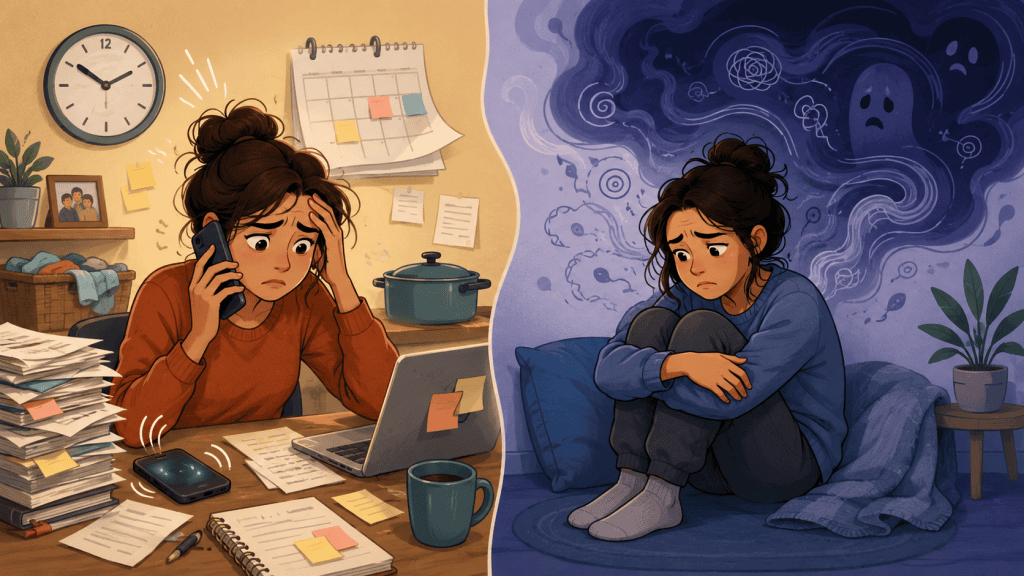
Stress and anxiety are often spoken about as though they are the same thing. Someone may say they feel stressed before a meeting, anxious about money or overwhelmed by everything happening in their life.
Although stress and anxiety can feel very similar, there are important differences between them.
Both can affect your thoughts, emotions, behaviour and physical health. Both can leave you feeling tense, exhausted, distracted or unable to relax. However, they may have different causes, patterns and ways of being managed.
Understanding the difference between stress and anxiety can help you recognise what you are experiencing and decide when it may be time to seek support.
What Is Stress?
Stress is the body’s natural response to pressure, responsibility, change or demand. It usually develops because of something specific that is happening in your life.
Common causes of stress include:
- Pressure at work
- Financial difficulties
- Relationship problems
- Caring responsibilities
- Health concerns
- Bereavement
- Moving home
- Exams and deadlines
- Family conflict
- Lack of sleep
- Unemployment
- Having too many responsibilities
Stress is not always harmful. In small amounts, it can motivate you, improve your concentration and help you respond quickly to challenges.
For example, feeling stressed before an exam may encourage you to revise. Feeling under pressure before a presentation may help you prepare carefully and remain focused.
However, when stress becomes intense, constant or long-lasting, it can begin to affect your mental and physical wellbeing.
What Are the Symptoms of Stress?
Stress can affect everyone differently. Some people become irritable or impatient, while others feel tearful, withdrawn or emotionally exhausted.
Common physical symptoms of stress include:
- Headaches
- Muscle tension
- Jaw clenching
- Tiredness
- Difficulty sleeping
- Digestive problems
- Chest tightness
- Faster heartbeat
- Sweating
- Changes in appetite
- Restlessness
- Frequent minor illnesses
Stress can also affect your thoughts and concentration.
You may find it difficult to make decisions, remember information or complete everyday tasks. Your thoughts may feel rushed, and small problems can begin to feel much bigger than they normally would.
Emotionally, stress may cause frustration, anger, sadness, low motivation or a sense that you are losing control.
One of the main features of stress is that it is usually connected to an identifiable pressure. You may feel stressed because you have too much work, because you are struggling financially or because someone you care about is unwell.
When the stressful situation improves or ends, the symptoms will often begin to reduce.
What Is Anxiety?
Anxiety is a feeling of fear, worry or unease. Like stress, it is a normal human response and can sometimes be helpful.
Anxiety forms part of the body’s threat-detection system. It prepares us to react to possible danger through the fight, flight or freeze response.
For example, feeling anxious while walking alone in an unfamiliar place may help you remain alert and aware of your surroundings.
However, anxiety can become a problem when the fear or worry is intense, difficult to control, continues for a long time or appears when there is no immediate danger.
Unlike stress, anxiety does not always have one clear external cause.
You may continue to feel anxious even when the stressful situation has passed. You may also understand logically that you are safe while still feeling physically and emotionally threatened.
What Are the Symptoms of Anxiety?
Anxiety can affect the body in powerful ways.
Common physical symptoms of anxiety include:
- A racing or pounding heartbeat
- Shortness of breath
- Chest pain or tightness
- Dizziness
- Shaking
- Sweating
- Feeling hot or cold
- Nausea
- Stomach problems
- Tingling sensations
- Dry mouth
- Muscle tension
- Restlessness
- Difficulty sleeping
Anxiety can also affect your thoughts.
You may repeatedly imagine that something bad is going to happen, even when there is little evidence that it will.
Common anxious thoughts may include:
“What if I make a mistake?”
“What if I lose control?”
“What if people judge me?”
“What if this feeling never goes away?”
“What if there is something seriously wrong with me?”
These thoughts can feel very convincing, particularly when your body is already experiencing strong physical symptoms.
Anxiety may also lead to avoidance. You may begin avoiding places, situations, people or responsibilities because they make you feel uncomfortable.
Avoidance can bring temporary relief, but it may make anxiety stronger over time. Each time you avoid something, your brain may interpret your behaviour as evidence that the situation really was dangerous.
What Is the Difference Between Stress and Anxiety?
The main difference between stress and anxiety is usually the cause.
Stress is generally a response to a current pressure, challenge or demand. Anxiety may continue after the stressful situation has passed, or it may occur without an obvious cause.
For example, imagine that you have an important job interview.
You may feel stressed because you need to prepare, decide what to wear, arrange transport and think about how you will answer difficult questions.
Once the interview is over, the pressure may begin to reduce.
Anxiety may continue after the interview. You might replay every answer, worry that you embarrassed yourself or become convinced that you will not get the job.
You may still feel anxious several days later, even though there is nothing else you can do about the situation.
Stress often says: “I have too much to deal with.”
Anxiety often says: “Something bad is going to happen.”
However, the difference is not always simple. Stress and anxiety can overlap, and long-term stress can contribute to the development of anxiety.
Stress vs Anxiety at a Glance
Stress is usually linked to an identifiable problem or pressure. Anxiety may not always have a clear cause.
Stress may reduce when the situation changes. Anxiety can continue even when there is no longer an immediate problem.
Stress often involves feeling overloaded, frustrated or exhausted. Anxiety often involves fear, dread, persistent worry and a sense of danger.
Both stress and anxiety can cause physical symptoms, sleep problems, poor concentration and changes in behaviour.
Can Stress Cause Anxiety?
Ongoing stress can contribute to anxiety.
When you experience repeated pressure without enough time to rest and recover, your nervous system may remain in a heightened state of alert.
You may begin to feel tense even during quiet moments.
For example, someone experiencing months of workplace pressure may initially feel stressed only during working hours. Over time, they may begin worrying about work during evenings, weekends and holidays.
They may wake during the night thinking about deadlines or feel anxious whenever they receive an email notification.
Eventually, the anxiety may continue even when no immediate work problem is happening.
This is why it is important to respond to stress before it becomes overwhelming or long-lasting.
How Stress and Anxiety Affect Everyday Life
Both stress and anxiety can affect your relationships, employment, education, confidence and physical health.
You may become more irritable with the people you care about. You may find it difficult to listen, communicate or remain patient.
You might cancel plans because you feel exhausted or overwhelmed. Over time, this can lead to loneliness and isolation.
At work, you may struggle to concentrate, make decisions or complete tasks. You may procrastinate because you do not know where to begin.
Some people try to manage stress or anxiety through alcohol, drugs, gambling, overeating or other behaviours that provide temporary relief.
Unfortunately, these coping methods can create additional problems and may make symptoms worse over time.
Stress and anxiety can also interfere with sleep. You may struggle to fall asleep because your mind is busy, or wake early with a strong sense of dread.
Poor sleep can then make it harder to regulate your emotions, solve problems and cope with pressure, creating a difficult cycle.
When Does Anxiety Become an Anxiety Disorder?
Feeling anxious does not automatically mean that you have an anxiety disorder.
Anxiety becomes more concerning when it is persistent, intense and significantly affects your quality of life.
You may benefit from professional mental health support when anxiety:
- Is difficult to control
- Continues for weeks or months
- Feels out of proportion to the situation
- Causes frequent physical symptoms
- Leads you to avoid important activities
- Affects your sleep, work or relationships
- Causes panic attacks
- Prevents you from doing things you want or need to do
- Makes you feel constantly unsafe or on edge
Recognised anxiety conditions include generalised anxiety disorder, panic disorder, social anxiety disorder, health anxiety, specific phobias and obsessive-compulsive disorder.
Only a qualified healthcare professional can assess and diagnose a mental health condition. However, you do not need to wait for a formal diagnosis before asking for help.
How to Manage Stress
Managing stress often involves addressing the source of the pressure as well as calming the body’s stress response.
Start by identifying what is creating the most pressure.
Writing your worries down may help you separate the problems you can influence from those outside your control. Large problems can also feel more manageable when they are broken into smaller steps.
Helpful ways to manage stress may include:
- Setting realistic priorities
- Taking regular breaks
- Improving your sleep routine
- Reducing unnecessary commitments
- Talking to someone you trust
- Asking for practical help
- Spending time outdoors
- Exercising regularly
- Eating balanced meals
- Limiting alcohol and excessive caffeine
- Practising breathing exercises
- Setting healthy boundaries at work and home
Stress management is not about being perfectly calm all the time. It is about creating enough space for your body and mind to recover.
How to Manage Anxiety
Anxiety may require a slightly different approach because the threat can feel real even when there is no immediate danger.
One helpful step is to recognise anxiety as a body response rather than proof that something terrible is happening.
Slow breathing can help reduce physical arousal. Try breathing gently through your nose and breathing out slowly, making the outward breath slightly longer.
Grounding exercises may also help. Focus on what you can see, hear, feel, smell and touch in the present moment.
This can bring your attention away from frightening predictions and back to what is happening around you.
It may also be helpful to question anxious thoughts.
Ask yourself:
“What evidence supports this fear?”
“Is there another possible explanation?”
“Am I treating a possibility as though it is a certainty?”
“What would I say to a friend who was having this thought?”
Avoiding every anxiety-provoking situation can strengthen anxiety. Gradual and supported exposure may help the brain learn that discomfort is manageable and that feared outcomes do not always happen.
Counselling and psychological therapies can also help you understand your anxiety, identify patterns and develop healthier ways of coping.
When Should You Seek Help for Stress or Anxiety?
You do not have to wait until stress or anxiety reaches crisis point before seeking support.
Consider speaking to a GP, counsellor or mental health professional if your symptoms are getting worse, lasting for a long time or affecting your everyday life.
Professional support may be especially important if you are:
- Experiencing frequent panic attacks
- Struggling to work or complete daily tasks
- Becoming increasingly isolated
- Using alcohol or substances to cope
- Feeling unable to control your thoughts
- Avoiding more and more situations
- Feeling hopeless or unable to cope
Seeking help is not a sign of weakness or failure.
Stress and anxiety are common responses to difficult experiences, and the right support can help you feel more in control.
If you feel you may harm yourself or someone else, or you cannot keep yourself safe, contact the emergency services or seek urgent mental health support.
Stress and Anxiety Can Both Improve
Stress and anxiety can feel overwhelming, but both can improve with the right support.
Stress is usually connected to a specific pressure and may reduce when the situation changes or when practical support becomes available.
Anxiety may continue after the pressure has passed or may appear without an obvious external cause. It often involves persistent fear, physical symptoms, worrying thoughts and avoidance.
Stress and anxiety can also exist together. Long-term stress may make anxiety more likely, while anxiety can make everyday responsibilities feel more stressful.
Recognising the signs early can make it easier to take action.
You do not need to dismiss your feelings, compare yourself with other people or wait until everything becomes unbearable before reaching out.
Whether you are experiencing stress, anxiety or both, your feelings are valid. With the right information, coping strategies and professional support, it is possible to feel calmer, rebuild confidence and move forward.
Frequently Asked Questions
Is stress the same as anxiety?
No. Stress is usually a response to a specific pressure or demand, while anxiety may continue after the pressure has passed or appear without an obvious cause. However, both can occur at the same time.
How can I tell whether I am stressed or anxious?
You may be experiencing stress when your symptoms are connected to a clear problem, such as work, money or family pressure. Anxiety may involve ongoing fear or worry that continues even when there is no immediate problem to solve.
Can stress turn into anxiety?
Long-term or overwhelming stress can contribute to anxiety. When the body remains under pressure for a prolonged period, the nervous system can become more sensitive to possible threats.
Can anxiety cause physical symptoms?
Yes. Anxiety can cause a racing heartbeat, shaking, sweating, dizziness, chest tightness, nausea, muscle tension, tingling sensations and shortness of breath.
How long should stress or anxiety last?
There is no fixed timescale. Temporary stress and anxiety may reduce when a difficult situation improves. Seek professional support when symptoms continue, become more intense or begin affecting your work, relationships, sleep or everyday life.
Can counselling help with stress and anxiety?
Counselling can provide a confidential space to explore the causes of stress and anxiety. It can also help you understand your thoughts, recognise patterns and develop healthier coping strategies.
Should I speak to my GP about anxiety?
Speak to your GP when anxiety is persistent, difficult to control or affecting your quality of life. A GP can assess your symptoms, discuss treatment options and refer you to appropriate services when needed.