


Your mental health affects how you see each day. Simple steps can change your life for the better. This article shares easy, research-backed ways to strengthen your mind.
Life today is full of stress and challenges. Many face worries and low moods. But, you don’t need complex fixes. Small, regular changes can greatly improve your mood.
We’ve found effective, simple methods that fit into your busy life. These strategies help you handle tough times and build lasting strength. They’re easy to follow and work in real life.
Mental wellbeing is key to a good life. It helps you deal with daily stress or seek personal growth. Discover how simple changes can bring real, lasting benefits to your life.
Understanding the Importance of Mental Health Improvement Techniques
Mental wellbeing is key to a healthy life. NHS data shows 1 in 4 people in the UK face mental health issues yearly. This highlights how common mental challenges are.
Spotting mental strain early lets you act fast. Many ignore signs, thinking they can handle it alone. This can lead to long-term suffering and a lower quality of life.
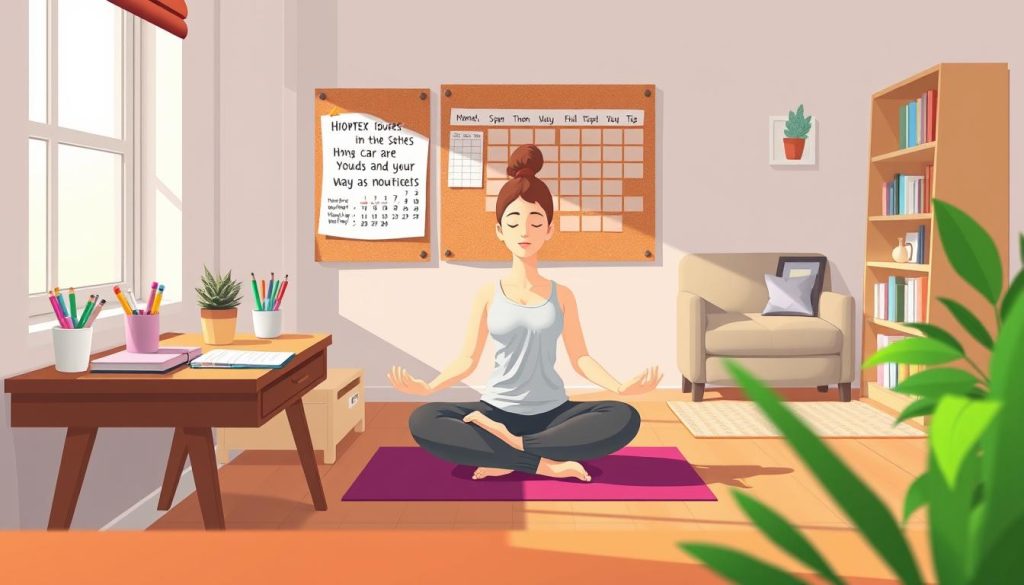
Recognising the Signs of Mental Fatigue
Mental fatigue builds up slowly, often without clear signs. Spotting these early helps you act quickly.
- Persistent tiredness despite enough sleep
- Difficulty focusing on tasks
- Feeling emotionally distant from things you love
- Increased irritability or mood swings
- Physical signs like headaches or muscle tension
- Stepping back from social activities
These signs mean your mind needs help. Spotting them is the first step to getting better.
The Benefits of Proactive Mental Care
Acting early stops long-term mental decline. Proactive mental health care shields your wellbeing.
| Proactive Approach | Benefits | Timeline |
|---|---|---|
| Early stress recognition | Prevents burnout | Immediate help |
| Regular self-care | Boosts emotional strength | 2-4 weeks for noticeable effects |
| Seeking professional help when needed | Deals with issues before they get worse | Prevents serious problems |
| Regular wellbeing checks | Keeps mental balance | Stable ongoing |
Spending time on mental health now stops big problems later. Proactive care boosts your confidence and resilience to face challenges.
Simple Ways to Improve Your Mental Wellbeing
Starting to feel better mentally is all about making small, steady changes. Your surroundings and habits greatly influence your mood and how you handle problems. By tweaking your daily routine, you lay the groundwork for lasting mental health improvements.
Improving your mental wellbeing doesn’t mean you need to change everything at once. It’s about taking small, doable steps that fit into your life. These steps should be easy to add to your routine, helping you build up without feeling too much stress.

- Create a calm space in your home where you can rest and reflect
- Limit exposure to negative news and social media scrolling
- Spend time outdoors in natural light whenever possible
- Connect with people who support and uplift you
- Set realistic daily goals that you can actually achieve
- Drink adequate water and eat nourishing foods
- Get sufficient sleep each night
These habits help shape your mental world. By working on different areas of your life at once, you grow stronger and more emotionally stable. Start with one or two habits that you find appealing. Once they become second nature, add another to your routine.
Taking care of your mental health is like caring for someone you love. Small actions each day can lead to big changes over time.
Prioritising Daily Wellbeing Practices for Long-term Stability
Building a strong emotional health foundation needs daily commitment. Consistent routines support your mental stability, even in tough times. The Mental Health Foundation suggests 30 minutes of physical activity daily for better emotional balance.
Make daily wellbeing practices automatic habits, not forced tasks. Starting your day with purpose sets a positive tone. These habits help manage stress, process emotions, and keep balance in a busy world.
Establishing a Consistent Morning Routine
Your morning sets the tone for the day. A structured routine gives your mind clarity and purpose. Start with these key steps:
- Wake at a consistent time each day
- Spend 10 minutes in gentle stretching or movement
- Eat a nutritious breakfast
- Set three realistic goals for your day
- Spend 5 minutes in quiet reflection
This routine takes about 30 minutes, fitting the Mental Health Foundation’s daily activity advice. Consistency is more important than being perfect.
The Value of Reflective Journaling
Writing down your thoughts helps separate you from overwhelming emotions. Reflective journaling lets you see patterns, celebrate achievements, and find what truly matters.
Take 10 minutes each evening to write freely. Focus on these areas:
- Three positive moments from today
- One challenge you faced and how you handled it
- Emotions you experienced
- Tomorrow’s intention
This simple practice builds self-awareness and emotional intelligence over time. Your journal tracks your growth and healing.
How to Boost Mental Wellness Naturally
Boosting mental wellness naturally doesn’t need to be expensive or complicated. Simple changes in your lifestyle can greatly improve your mood and emotional balance. Nature provides powerful tools to enhance your mental state without the need for drugs.
Spending time in green spaces is highly effective. Studies from the University of Exeter show that parks and gardens can lower blood pressure and reduce anxiety. Even short periods near trees and plants can calm your nerves and clear your mind.
Your surroundings greatly affect your mental state. A clean, organised living space reduces stress and improves clarity. Natural light helps regulate sleep, which boosts your mood and brain function.
Here are some natural ways to improve your mental wellness:
- Walk barefoot in grass or soil for grounding benefits
- Cultivate indoor plants in your home or workspace
- Open windows to increase fresh air circulation
- Spend at least 20 minutes daily in outdoor spaces
- Practise deep breathing exercises near natural environments
Small changes to your environment can make a big difference in your mental health. These natural methods complement other wellness practices, building a strong foundation for emotional resilience.
Strategies to Improve Emotional Health
Building a stronger emotional foundation is about facing life’s challenges with grace. It’s about changing how we think and treating ourselves with kindness. These skills help us handle stress and recover from setbacks.
This section will show you how to boost your emotional resilience. You’ll learn to be kinder to yourself, making it easier to face life’s ups and downs.
Developing Resilience Against Daily Challenges
Resilience is about bouncing back from tough times. Life throws obstacles, but how we react shapes our emotional health. It’s about seeing challenges as chances to learn, not as failures.
Here are some practical tips:
- Spot negative thinking patterns that worsen challenges
- Swap those thoughts for more balanced, realistic views
- Focus on what you can control, not what you can’t
- Keep a journal of times you’ve overcome hurdles to see your strength
- Divide big problems into smaller, easier steps
Practising Self-Compassion and Kindness
Self-compassion is treating yourself with kindness, just as you would a friend. Many of us are too hard on ourselves, adding to our emotional pain.
Here’s how to be kinder to yourself:
- Notice when you’re being too hard on yourself
- Speak to yourself gently, acknowledging your efforts
- Remember, struggling is a common human experience, not a personal failure
- Use positive affirmations when things get tough
- Make time for rest and activities that make you feel good
“Self-compassion is not self-indulgence. It is self-preservation.”
These strategies help improve your emotional health by building inner strength. They reduce stress and anxiety by easing the pressure we put on ourselves.
Incorporating Mindfulness into Everyday Mental Wellness Habits
Mindfulness helps you stay present and lessens the impact of unwanted thoughts. It makes your mind stronger against stress and pressure. You don’t need special tools or a lot of time to start.
Mindfulness is about noticing what’s happening now without judging. Instead of worrying about the future or past, you focus on your breath and surroundings. This simple change can change how you face daily problems.
Getting Started with Mindfulness Practices
You don’t need a lot to start mindfulness. Begin with just five minutes a day and grow your practice. Here are easy ways to add mindfulness to your day:
- Focus on your breath for two to three minutes
- Notice five things you see, four things you touch, three things you hear, two things you smell, and one thing you taste
- Eat one meal slowly, enjoying the flavours and textures
- Take a mindful walk, noticing your surroundings
- Do a body scan, focusing on each part of your body
Adding these habits to your day trains your brain to stay calm under pressure. With time, mindfulness becomes a natural part of dealing with life’s challenges.
The Role of Physical Activity in Mental Wellbeing Strategies
Physical activity is a key mental wellbeing strategy for everyone. It benefits your mind as much as your body. Whether you like walking, swimming, cycling, or dancing, regular exercise improves your emotional and mental state.
The British Heart Foundation says regular movement lowers stress hormones like cortisol. This helps you handle daily stress better. Exercise also releases endorphins, which make you feel happy and calm.
Exercise supports your mental health in many ways. It strengthens your heart, boosts energy, and improves sleep. Better sleep means clearer thinking and emotional balance during the day.
The Connection Between Movement and Mood
Regular exercise quickly changes your mood. Just 30 minutes can make a big difference. It increases blood flow to your brain, improving focus and reducing anxiety. Exercise is a natural way to relieve stress and escape daily pressures.
- Walking releases tension and clears your mind
- Running builds confidence and emotional strength
- Swimming provides gentle, full-body relaxation
- Yoga combines movement with mindfulness practice
- Dancing brings joy and social connection
Choosing Sustainable Exercise Routines
The best exercise routine is one you enjoy. Sustainability is more important than intensity. Choose activities that fit your lifestyle and preferences. Start small to build lasting habits. Three 20-minute sessions a week are better than occasional intense workouts.
| Activity Type | Duration | Mental Benefits | Difficulty Level |
|---|---|---|---|
| Brisk Walking | 30 minutes | Stress relief, mood boost | Low |
| Swimming | 45 minutes | Anxiety reduction, relaxation | Medium |
| Cycling | 40 minutes | Energy increase, focus | Medium |
| Yoga | 50 minutes | Mindfulness, emotional balance | Low to Medium |
| Strength Training | 60 minutes | Confidence, resilience | Medium to High |
Make a realistic schedule that fits your life. Exercise with friends for extra motivation. Track your progress to stay motivated. Remember, any movement is better than none. Incorporating physical activity into your daily routine boosts emotional wellbeing and stability.
Enhancing Psychological Wellbeing Through Social Connection
Human beings are fundamentally social creatures. Our connections with others shape how we feel, think, and behave. Building meaningful relationships is one of the most powerful ways to enhance psychological wellbeing. When we spend quality time with people we care about, our brains release chemicals that reduce stress and boost mood.
Isolation and loneliness can seriously damage mental health. Research shows that people with strong social bonds experience lower rates of anxiety and depression. Loneliness, on the other hand, affects our physical health and emotional state. Social support acts as a protective shield against life’s difficulties.
Building your support network does not require having hundreds of friends. Quality trumps quantity. A few close relationships where you feel understood and valued make a real difference. These connections provide space to share your worries, celebrate wins, and simply feel accepted.
Ways to Strengthen Your Social Bonds
- Reach out to friends or family members regularly through phone calls or video chats
- Join clubs or community groups based on your interests
- Volunteer with organisations that matter to you
- Attend local events or classes in your area
- Schedule face-to-face meetings, even brief coffee chats
Investing time in relationships requires effort, yet the rewards for your mental health are substantial. Social connection does not just feel good—it genuinely protects and strengthens your emotional resilience during challenging times.
Managing Stress to Maintain Mental Balance
Stress is a common issue for many. It comes from daily life and can harm your mental health. Simple tips can help you manage stress and feel better.
Managing stress involves two main steps. First, identify what causes your stress. Then, learn ways to calm your nerves. This way, you can control your emotions.
Identifying Common Stress Triggers
Stress triggers are things that make you feel anxious or overwhelmed. These can vary from person to person. What stresses one might not affect another.
Common stress triggers include:
- Work deadlines and performance pressure
- Relationship conflicts and communication issues
- Financial worries and money concerns
- Health anxieties and physical pain
- Major life changes and transitions
- Sleep deprivation and fatigue
Try keeping a stress diary for a week. Write down when you feel stressed and what happened before. This helps you understand your personal triggers.
Techniques for Calming the Nervous System
Your nervous system needs calming strategies to relax. These simple tips work fast and need no special equipment.
| Technique | Method | Duration |
|---|---|---|
| Deep Breathing | Breathe in for four counts, hold for four, breathe out for four | 5-10 minutes |
| Progressive Muscle Relaxation | Tense and release each muscle group from toes to head | 10-15 minutes |
| Grounding Technique | Notice five things you see, four you feel, three you hear, two you smell, one you taste | 5 minutes |
| Body Scan Meditation | Focus attention on each body part and release tension | 15-20 minutes |
Practice these techniques daily, not just when stressed. Regular practice helps your nervous system relax more easily. Start with what feels natural to you.
“Stress is the trash of modern life. We all generate it, but if you don’t dispose of it properly, it will pile up and overtake your life.” – Terri Guillemets
Start today. Pick one stress trigger and one calming technique to try. Small steps lead to big changes in your mental balance.
Creating a Supportive Environment for Mental Health
Your surroundings affect your mood every day. The places you are in and what you watch online impact your mental health a lot. Making your environment supportive means choosing what you keep and what you throw away. This helps reduce stress and improves your emotional wellbeing.
Your physical space needs care. A messy room can make you feel stressed and anxious. By getting rid of things you don’t need, you make room for peace and clarity. This process, called decluttering, helps your mind feel lighter.
Your digital life is also important. Social media feeds full of bad news can make you tired. By unfollowing accounts that upset you and following ones that uplift you, you can change your mood.
Steps to Build Your Supportive Space
- Remove items you no longer use or enjoy
- Organise your living area into clear zones
- Add plants or natural elements for freshness
- Review and adjust your social media follows weekly
- Create a calm colour scheme in your bedroom
- Keep your workspace free from distractions
Environmental Changes and Their Impact
| Environmental Factor | Mental Health Benefit | Implementation Time |
|---|---|---|
| Decluttered bedroom | Better sleep quality and reduced anxiety | 2–3 hours |
| Natural lighting | Improved mood and energy levels | Ongoing |
| Curated social media | Less comparison and increased positivity | 30 minutes weekly |
| Organised workspace | Enhanced focus and reduced stress | 1–2 hours |
| Green plants in home | Calmer atmosphere and air purification | Ongoing |
Design your environment with purpose. Small changes can make a big difference in how you feel. When your surroundings are peaceful and organised, your mind will follow. Spend time on this now, and you’ll see benefits for years.
Seeking Professional Guidance for Personal Growth
Self-help strategies are great for your mental health. Realising you need more help is a sign of strength. It shows you’re aware of your needs. Professional advice can give you the tools to move forward.
Knowing when to ask for help and what options are out there is empowering. The right support can change how you view mental health. It can also speed up your personal growth.
When to Consult a General Practitioner
Your GP is your first stop for mental health issues. They can check your situation, talk about treatment, and refer you to specialists if needed. The General Medical Council guides GPs on referring to talking therapies.
Book a GP appointment if you feel:
- Constant sadness or emptiness for over two weeks
- Lost interest in things you used to enjoy
- Changes in sleep or appetite
- Can’t focus at work or school
- Feeling overwhelmed or having panic attacks
- Thinking about harming yourself or suicide
Your GP will talk about your feelings in confidence. They can help you find the best way forward.
Exploring Therapeutic Options
The UK has many therapies for different needs and preferences:
| Therapeutic Approach | What It Involves | Best For |
|---|---|---|
| Cognitive Behavioural Therapy (CBT) | Changes negative thoughts and behaviours | Anxiety, depression, phobias |
| Counselling | Talks through problems with a trained counsellor | Grief, stress, relationship issues |
| Psychotherapy | Looks at deep patterns and unconscious influences | Long-standing emotional issues |
| Mindfulness-Based Therapy | Uses mindfulness with therapy techniques | Stress, anxiety, depression prevention |
Many NHS services are free. Your GP can help you find the best therapy for you.
Conclusion
Your mental wellbeing is a lifelong journey that needs dedication and care. You’ve learned many ways to boost your emotional health. From daily routines to regular exercise, every step counts.
Building a strong foundation takes time and patience with yourself. The strategies from earlier work best when used together. Start with one or two habits that feel right for you.
Add more as you gain confidence. Small, consistent actions lead to real change over time. Your mind and body will thank you for these efforts.
Don’t hesitate to seek professional help when needed. A GP or therapist can offer valuable support. This support, along with your daily practices and relationships, strengthens your mental health journey.
You deserve to feel balanced and content in your daily life.

