
Our mental wellbeing changes over time, affected by life’s ups and downs. If you notice a change in how you feel or act, it’s not a failure. It’s actually a crucial first step towards caring for yourself.
This guide is for anyone in the UK worried about their mental health or someone they care for. We’ll look at common mental health warning signs and the signs of depression and anxiety.
It’s very common to face tough times. Spotting these signs is a positive step. Knowing what you’re going through can be the first reassuring step. It helps you feel better and find the right support, like your GP, a trusted friend, or other services.
Understanding Mental Health and Wellbeing
Mental health is more than just ‘good’ or ‘bad’. It’s a complex mix of how we feel and think. It changes like our physical health, depending on what’s happening in our lives.
What Constitutes Good Mental Health?
Good mental health isn’t always feeling happy. It’s about being strong and handling different emotions well. It’s like having the right tools to deal with life’s ups and downs.
Signs of good mental health include:
- Being able to handle a full range of emotional symptoms well
- Having good relationships and feeling close to others
- Dealing with stress and changes without feeling overwhelmed
- Feeling purposeful and enjoying daily activities
- Being confident in making decisions and solving problems
This helps us work well, help our communities, and reach our goals.
The Spectrum of Mental Wellbeing
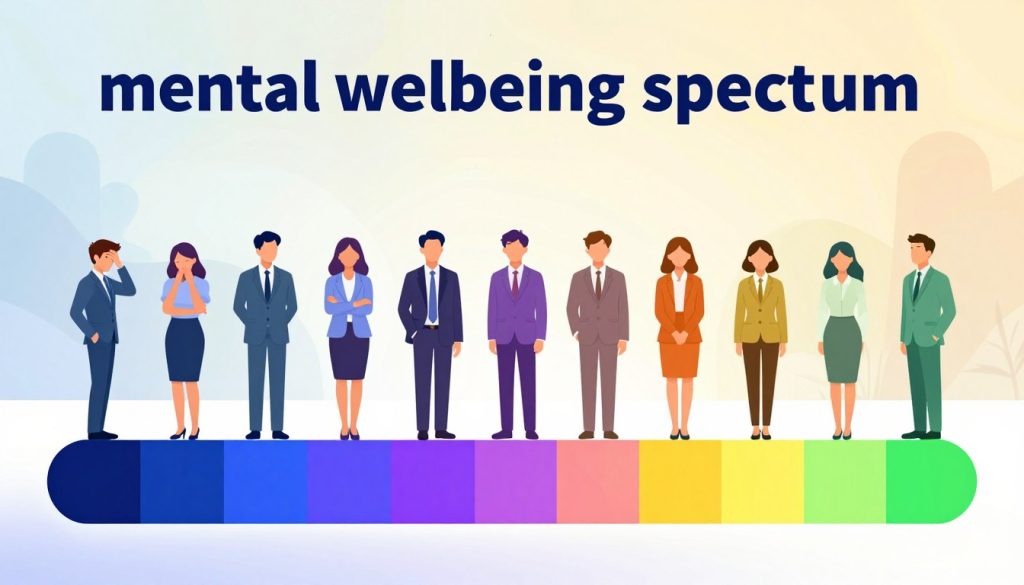
Mental health is on a scale or mental wellbeing spectrum. At one end, people thrive, feeling strong and positive. In the middle, many face normal stress and mood swings. At the other end, some really struggle with their mental health.
Your spot on this mental wellbeing spectrum can change every day. It’s influenced by stress, life events, sleep, and physical health. Knowing where you are helps you see when you’re doing well and when you might need help.
This view makes it okay that we all have ups and downs. It helps us move away from negative labels and towards a deeper understanding of our mental state.
Why Recognising the Signs Matters
Noticing changes in your mental state is key for several reasons. Spotting early signs of mood or thinking changes can help prevent bigger problems.
Understanding the mental wellbeing spectrum lets you take charge. If you notice emotional symptoms like sadness, anger, or worry, it’s a sign. It means it’s time to use coping strategies or get help.
Ignoring these signs can let problems get worse. It can harm our relationships, work, and even our physical health. By learning to spot these signs early, we build our mental strength. We become active in keeping our mental health in check, rather than just going along with it.
This basic knowledge helps us identify specific symptoms. We’ll look at these in the next sections.
Identifying the Signs and Symptoms of Poor Mental Health
Many people feel their mood change from time to time. But, some symptoms can mean deeper mental health issues. This part talks about emotional signs that show you might need help.

Persistent Low Mood or Sadness
Feeling down sometimes is normal. But, if sadness lasts for weeks, it’s a big sign. It’s not just feeling a bit sad for a day.
Things you used to enjoy might not bring you joy anymore. The world might seem dull and boring. This feeling can make everyday tasks hard.
These low mood symptoms are key signs of depression. They shouldn’t be seen as laziness or a short phase.
Excessive Anxiety, Worry or Fear
Anxiety is a natural response to danger. But, when worry is too much and lasts too long, it’s a problem. This kind of anxiety can really hold you back.
It makes you worry about things that are unlikely to happen. For some, this leads to sudden, intense fear, known as anxiety attacks signs. It’s important to know when worry is normal and when it’s not.
Physical Manifestations of Anxiety
The mind and body are closely linked. Anxiety can make your body react, even when there’s no danger.
You might feel your heart racing, have trouble breathing, or feel dizzy. Sweating, trembling, or feeling like you’re choking are also signs. These are your body’s way of telling you something’s wrong.
Irritability, Anger and Frustration
Irritability is often overlooked as a sign of poor mental health. It’s seen as a bad temper or a flaw. But, it can be a sign of stress, anxiety, or depression.
When you’re stressed, you get angry more easily. Small things can make you snap. This can hurt your relationships and make you feel guilty and angry again.
Emotional Numbness or Flatness
At the other end, you might feel numb or empty. It’s like your emotions are turned off. You might not feel anything, positive or negative.
You might feel disconnected from others or unable to cry when you should. This numbness is not a good thing. It’s a sign that your emotions are overwhelmed.
These emotional signs are important. They tell you about your mental and emotional state. Recognising them is a big step towards understanding yourself.
Cognitive Symptoms: Changes in Thinking Patterns
Cognitive symptoms are key but often missed in mental health struggles. Emotional changes are easier to spot, but how our brain works is just as important. Depression and anxiety can really mess with our thinking.
This creates a cycle where bad thinking makes us feel worse, and feeling bad makes thinking harder. Spotting changes in how we think is a big step in understanding our mental health.
Difficulty Concentrating or Making Decisions
One big cognitive symptom is difficulty concentrating. You might find your mind drifting off during meetings or struggle to follow TV shows. It’s not just boredom; it’s a brain problem.
Being indecisive is another issue. Simple choices like what to wear or eat can seem impossible. This is because our minds are tired and scared of making the wrong choice, which lowers our confidence.
Intrusive, Racing or Negative Thoughts
Anxiety can make our minds a stage for unwanted thoughts. Intrusive thoughts are sudden, scary ideas that feel out of control. Racing thoughts are constant worries that won’t let you relax.
Many people also have a negative outlook on life. This means they naturally see things as bad, ignoring the good. It’s like their brain is always looking for the worst.
Memory Problems
Many people complain about “brain fog.” This includes forgetting why they went into a room or missing appointments. It’s not about being dumb; it’s about our brains being too busy with emotions.
Stress can hurt our memory by affecting the hippocampus, the brain’s memory centre. This is why bad mental health often makes us forget things more easily.
Loss of Motivation and Hopelessness
Loss of motivation and hopelessness are very tough. These are big signs of depression. Motivation is about starting and keeping up with plans, not just being lazy.
When we lose motivation, even simple things like taking care of ourselves feel too hard. Feeling hopeless means we think things will never get better. This makes us even less active, creating a hard cycle to break.
Seeing these cognitive symptoms—from difficulty concentrating to losing hope—is key. They show our mental health needs help, not that we’re failing.
Behavioural Changes to Watch For
Behavioural changes show when someone’s emotional struggles affect their daily life. Unlike thoughts or feelings, these actions are visible to others. Spotting these changes can help identify when someone needs support.
Withdrawal from Social Activities and Relationships
Withdrawing from social life is a big warning sign. It’s not just needing some alone time. It means always cancelling plans, avoiding calls, and not wanting to go out.
They might stay home alone and lose interest in staying connected. This can make them feel lonely, making it hard to break the cycle.
Changes in Sleep Patterns
Sleep problems are linked to mental health. Stress and emotional pain can disrupt our sleep. Noticing a lasting change is important.
Insomnia and Restlessness
This means trouble falling asleep, waking up a lot at night, or getting up early. Even when tired, worries can keep them awake. This leads to feeling tired and irritable during the day.
Excessive Sleeping
On the other hand, some sleep a lot, more than ten hours, but still feel tired. They might also nap a lot during the day. This is how their body and mind try to escape bad feelings.
Changes in Appetite or Weight
Changes in eating habits can signal distress. Some lose their appetite and lose weight unintentionally. Others might eat too much and gain weight.
These changes often happen without a diet or health reason. They show how emotional state affects our basic bodily routines.
Increased Use of Alcohol or Substances
Using alcohol, drugs, or even medication to cope is a serious behavioural change. It might start as a way to deal with feelings, quiet thoughts, or help sleep. But it can quickly become a dependency problem.
This can add another health concern on top of the emotional struggle.
Neglect of Personal Responsibilities and Care
When someone is overwhelmed, they might stop doing daily tasks. This can show up as:
- Missing deadlines or calling in sick to work a lot.
- Letting household chores, bills, and admin pile up.
- Ignoring personal hygiene, like showering less or wearing the same clothes.
This neglect is not laziness. It shows their emotional struggle is taking all their energy, leaving no time for basic self-care or duties.
Physical Signs Linked to Mental Health
Mental health issues don’t always show up as thoughts and feelings. They can hide in common physical problems. This mind-body connection is strong. Stress, anxiety, or feeling down can cause real body sensations without a clear reason.
Unexplained Aches and Pains
Stress often causes persistent discomfort with no clear cause. You might get headaches, a stiff neck, or muscle aches. These pains usually don’t get better with usual treatments.
They often come from muscle tension. This is a natural response to stress. When stressed, muscles stay tight, leading to pain and stiffness.
It’s crucial to think about stress as a cause. This is especially true if tests show no injury or condition.
Low Energy and Constant Fatigue
Feeling constantly tired is a sign your mental health might need help. This tiredness lasts even after a good night’s sleep. It’s not just normal tiredness; it’s a deep, unshakeable fatigue that makes simple tasks hard.
This exhaustion is often linked to depression and anxiety. Stress hormones use up a lot of energy, leaving you feeling drained.
If rest doesn’t help, it’s time to look into emotional reasons for your tiredness.
Digestive Issues
The gut is called the ‘second brain’ because of its link to emotions. Stress and anxiety can mess with digestion. This leads to stomach cramps, bloating, or bowel changes.
For many, this makes existing gut problems like IBS worse. The brain and gut talk to each other through the nervous system. Stress can slow down or speed up digestion, causing discomfort.
Noticing a pattern is important. If digestive problems happen when you’re stressed, it shows the mind-body connection.
Social and Interpersonal Symptoms
Our relationships and performance at work or school can show how well we’re doing mentally. When we’re not feeling good, it can affect how we interact with others and handle daily tasks. This part looks at how problems can spread, hurting family ties, work life, and our sense of connection.
Strained Relationships with Family and Friends
When mental health starts to slip, it can strain our close relationships. Feeling irritable, down, or exhausted can make us snap or pull away. We might cancel plans, stop reaching out, or seem uninterested in things we used to love.
These social withdrawal signs aren’t about rejecting others. They’re signs of a battle inside. Feeling too tired to socialise or getting anxious over small things can lead to misunderstandings and fights. This can make everyone feel isolated and upset.
Difficulty at Work or in Education
At work or school, problems can also show up. Signs of work stress symptoms include being less productive, struggling to focus, and missing deadlines.
A person might shy away from team projects, argue more with colleagues, or miss school. In school, a once engaged student might stop participating, see their grades drop, or want to quit. These issues often come from not being able to focus and feeling hopeless, making it hard to do well at work or school.
The table below outlines common interpersonal and performance-related symptoms, their typical manifestations, and their potential impact.
| Symptom Area | Common Signs | Impact on Daily Life |
|---|---|---|
| Family & Friends | Increased irritability, frequent cancellation of plans, emotional withdrawal, heightened conflict. | Erosion of trust and support; feelings of guilt and isolation for all involved. |
| Work/Education | Missed deadlines, reduced quality of work, avoidance of teamwork, increased absenteeism. | Risk to job security or academic standing; financial stress; loss of professional confidence. |
| Social Connections | Loss of interest in social hobbies, feeling drained by interaction, pervasive sense of loneliness in a crowd. | Shrinking social circle; reinforced belief that one is misunderstood or alone. |
Feelings of Loneliness and Isolation
Feeling lonely, even when surrounded by people, is a big symptom. It’s not just about being alone; it’s feeling disconnected. A person can be at a family event or in a busy office but still feel isolated, like there’s a barrier between them and others.
This feeling often goes hand in hand with other social withdrawal signs, creating a cycle. Feeling isolated leads to more withdrawal, which makes the loneliness worse. Spotting this emotional numbness or feeling alone in a crowd is key, as it shows how our social and emotional health is doing.
Understanding these social and interpersonal symptoms is crucial. They’re not just side effects but key signs of poor mental health, showing we need kindness, support, and maybe professional help.
Recognising Signs in Specific Conditions
Mental health challenges often show up in certain ways. Symptoms can group together to form clear patterns for common conditions. Knowing these patterns can help you understand what you or someone else might be going through.
This section talks about the main signs of three common issues: depression, anxiety disorders, and burnout. Spotting these signs is a key first step before looking for support.
Common Symptoms of Depression
Depression is more than just feeling sad. It’s a long-lasting feeling of sadness that affects every part of life. A key sign is anhedonia, which is losing interest in things you once enjoyed.
This sadness can also make you feel very tired, even after sleeping well. People with depression often feel hopeless about the future. They might also have changes in appetite, sleep problems, and trouble concentrating.
These symptoms last for at least two weeks and really upset you. They show a big change from how you used to be.
Common Symptoms of Anxiety Disorders
Anxiety disorders are when you worry too much and can’t stop. This worry is bigger than the situation really is. It can be about health, work, or social stuff.
Physically, you might feel tense. This can show as a fast heartbeat, tight muscles, restlessness, or feeling dizzy. Sometimes, this worry can turn into panic attacks, which are intense fear episodes with bad physical symptoms like chest pain or trouble breathing.
The big difference from normal worry is how intense, long-lasting, and how much it affects your daily life. People often try hard to avoid things that make them anxious.
Signs of High Stress and Burnout
High stress that leads to burnout makes you feel emotionally, physically, and mentally drained. It’s common in work settings. Spotting burnout signs early is key to preventing it.
The main sign is feeling completely drained, even after resting. You might also start to feel cynical or detached from your job. Feeling like you’re not making a difference is another sign.
Other signs include getting irritable, doing worse at work, and feeling dread about it. Burnout is a gradual process where constant stress uses up your inner resources.
| Condition | Key Emotional & Cognitive Signs | Key Physical & Behavioural Signs | Suggested Initial Action |
|---|---|---|---|
| Depression | Persistent low mood, hopelessness, loss of interest (anhedonia), negative thoughts. | Low energy, changes in sleep/appetite, social withdrawal, slowed movements. | Schedule a conversation with your GP to discuss your feelings. |
| Anxiety Disorders | Excessive, uncontrollable worry, feeling ‘on edge’, racing thoughts, fear of losing control. | Muscle tension, restlessness, panic attacks, avoidance of triggering situations. | Practice grounding techniques and seek an assessment for therapeutic options. |
| High Stress & Burnout | Emotional exhaustion, cynicism, feeling ineffective, reduced sense of accomplishment. | Chronic fatigue, headaches, irritability, neglect of personal needs. | Implement firm boundaries, prioritise rest, and explore workplace support. |
Seeing symptoms laid out like this can help you figure out which pattern feels most familiar. If you see several signs from one column, it might mean you have a specific condition. Remember, these conditions can happen together. Your next step is to use this recognition to find the right help, like NHS mental health support through your GP or helplines.
When and How to Seek Help
If you’re seeing signs and symptoms that feel familiar, it’s time to take action. Recognising you need help is a brave step. This section will guide you on how to find support in the UK.
Talking to Your GP
Your General Practitioner (GP) is the first step to NHS mental health services. Many find talking about it hard, but being prepared helps.
Before you go, write down your symptoms, how long you’ve had them, and how they affect your life. Just say, “I’ve been struggling with my mental health.”
Your GP can talk about NHS talking therapies like Cognitive Behavioural Therapy (CBT). They might also check if physical health issues are affecting you.
Reaching Out to Friends and Family
Talking to someone you trust can really help. Pick someone who listens well and makes you feel safe.
You don’t have to say everything at once. Start with, “I’m finding things a bit tough at the moment and wanted to talk about it.” Sharing can make your bond stronger and help others support you.
If you’re scared of their reaction, remember you’re in control. It’s okay to share as much or as little as you want. You can ask them just to listen.
Utilising Helplines and Online Resources
For quick, anonymous help, mental health helplines in the UK are always there. They offer a listening ear without judgment.
Online, you can find lots of information, self-help guides, and forums. They help you understand you’re not alone.
The table below lists key organisations for support when you need to know when to seek help for mental health concerns.
| Service Name | Contact Details | Primary Support Offered | Availability |
|---|---|---|---|
| Samaritans | 116 123 (free) | Confidential emotional support for anyone in distress. | 24/7, 365 days a year |
| Mind Infoline | 0300 123 3393 | Information on mental health, treatment options, and local support. | Mon-Fri, 9am-6pm |
| Shout | Text SHOUT to 85258 | Crisis text service for immediate support via messaging. | 24/7 |
| CALM (Campaign Against Living Miserably) | 0800 58 58 58 (UK) or webchat | Support specifically for men, but open to anyone. | 5pm-midnight, 365 days a year |
| NHS Every Mind Matters | Online resources only | Official NHS self-help tips, advice, and personalised action plans. | Online anytime |
Using these resources is a sign of taking charge. They can be a first step, alongside talking to a GP or loved ones. The best step is the one you can take today.
Conclusion
Recognising the signs of poor mental health is key. This article has covered various symptoms, from emotional changes to physical ones. Knowing these signs helps us act early.
Feeling sad or anxious for a long time is a big sign. Irritability mental health symptoms, like snapping at loved ones, are also important. These are your mind’s way of asking for help.
Seeking help shows strength, not weakness. A big step is talking to your GP about mental health issues. They can guide you, diagnose, and help find treatment.
Recovery starts with awareness. Reaching out to friends or using helplines builds a support network. You’re not alone in this.
With the right support and self-compassion, you can manage your wellbeing. Recognising these signs leads to positive change and a healthier future.