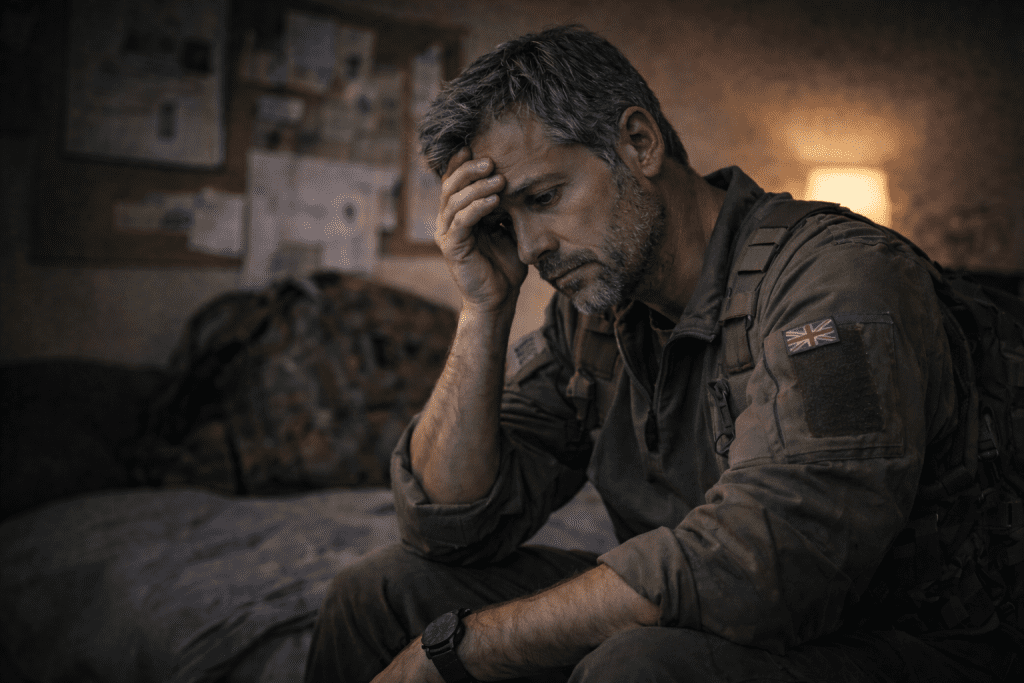
Eddie was 44 years old when he showed a kind of bravery that rarely comes with medals or applause.
From the outside, his life looked steady. He worked. He showed up. He did what was expected of him. People described him as calm, reliable, solid. What they couldn’t see was that Eddie was living with post-traumatic stress memories that didn’t stay in the past, moments that returned without warning, and a nervous system that never truly stood down.
The danger was over, but his body didn’t know that. Loud noises sent his heart racing. Sleep was fractured by vivid dreams and sudden waking. Crowded places felt threatening. He stayed alert, scanning rooms, measuring exits, carrying tension he couldn’t explain without feeling exposed.
PTSD didn’t announce itself loudly. It crept into daily life. Short tempers. Withdrawal. Exhaustion. A constant sense that something bad was about to happen. Eddie told himself to get on with it. He’d survived worse. Others had it harder. So he pushed the memories down and carried on.
But trauma has a way of demanding attention. Over time, the effort of holding it together became overwhelming. The nights grew longer. The isolation deeper. He felt detached from the people he loved, like he was watching life from behind glass.
The bravest moment didn’t come in a crisis. It came quietly when Eddie admitted to himself that he couldn’t outrun what he was carrying. Saying “I’m not okay” felt risky. Vulnerable. Like stepping into the unknown without armour.
Healing was not a straight line. Some days felt hopeful. Others felt heavy. Therapy meant revisiting moments he’d tried for years to forget. Learning to feel safe again took time. Strength, he discovered, wasn’t about control it was about allowing support, even when it felt uncomfortable.
Gradually, the past loosened its grip. Not erased, not forgotten but understood. He learned that his reactions weren’t weakness. They were survival responses from a system that had done its best to protect him.
Today, he speaks openly so others living with PTSD know this: you are not broken. Your body learned to survive, and now it’s learning to rest. Asking for help is not a failure it’s an act of courage every bit as real as any moment of physical bravery.
We tell stories like his because PTSD doesn’t always look like fear on the surface. Sometimes it looks like someone carrying on, day after day, while fighting battles no one else can see. Courage isn’t always about facing danger. Sometimes, it’s about facing what stays with you afterward and choosing to heal.
The name and photo have been changed but the story is so true for many people
Please help and support us