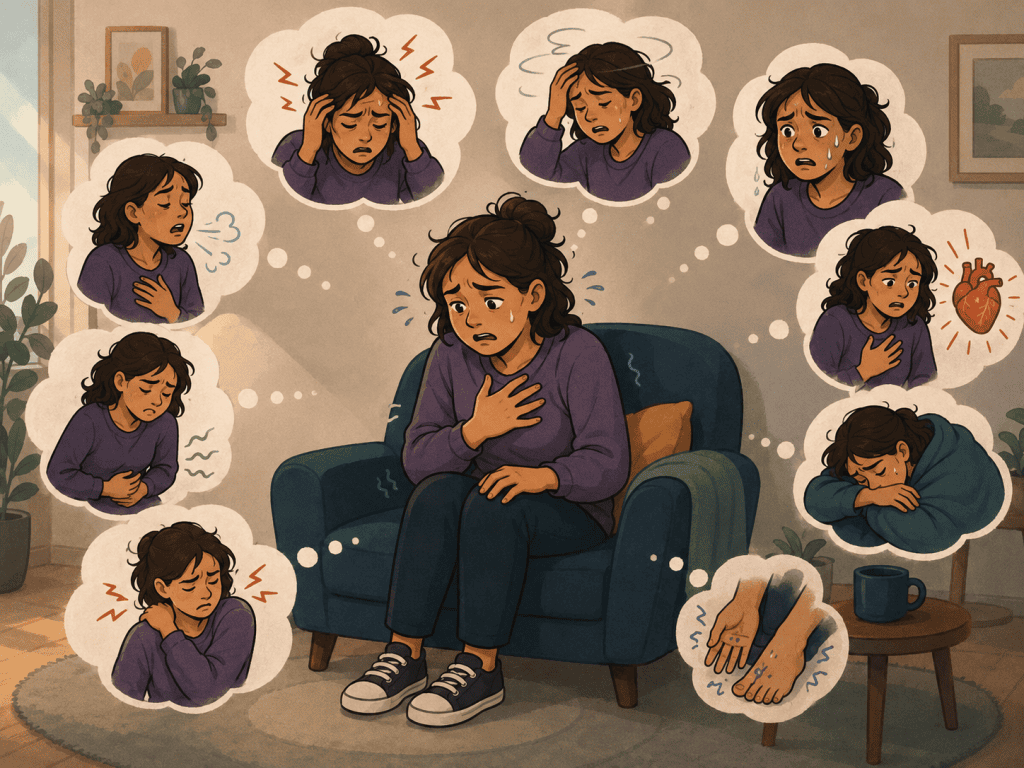
Anxiety is often thought of as something that happens in the mind. People imagine worry, fear, overthinking, panic, or racing thoughts. But anxiety does not only affect how we think. It can affect the whole body.
For many people, the physical symptoms of anxiety are the most frightening part. A racing heart, tight chest, dizziness, shaking, sweating, stomach pain, headaches, shortness of breath, or feeling sick can make someone believe something is seriously wrong with their body. Some people even attend A&E or call emergency services because anxiety symptoms can feel so intense.
It is important to say this clearly: anxiety can create very real physical symptoms. They are not imagined. They are not “all in your head.” Anxiety affects the nervous system, breathing, muscles, digestion, sleep, hormones, and energy levels. When the body believes it is under threat, it reacts.
Understanding why anxiety causes physical symptoms can make them feel less frightening. It can also help people recognise what is happening and take steps to calm the body as well as the mind.
Anxiety Is the Body’s Alarm System
Anxiety is part of the body’s natural survival system. When the brain senses danger, it prepares the body to respond. This is often called the fight, flight, or freeze response.
In a real emergency, this response can be helpful. If you need to move quickly, protect yourself, or react to danger, your body releases stress chemicals such as adrenaline. Your heart beats faster. Your breathing changes. Your muscles tense. Your senses become sharper. Blood moves towards the parts of the body needed for action.
The problem is that anxiety can trigger this same alarm system even when there is no immediate physical danger.
The “threat” might be a memory, a worry, a bill, an argument, a meeting, a crowded place, a health concern, a traumatic experience, or even a thought about what could go wrong. The body responds as if danger is happening now.
That is why anxiety can feel so physical. The body is trying to protect you, but the alarm has become too sensitive.
Racing Heart and Palpitations
One of the most common physical symptoms of anxiety is a racing or pounding heart. Some people describe it as their heart beating out of their chest. Others feel skipped beats, fluttering, or thumping sensations.
This happens because adrenaline tells the heart to pump faster. The body is preparing to send more oxygen and blood to the muscles in case you need to fight or run away.
Although this can feel frightening, a racing heart is a common anxiety and panic symptom. NHS guidance lists a racing heartbeat, sweating, trembling, shortness of breath, tingling, and feeling sick among symptoms that can happen during panic attacks.
However, it is always sensible to seek medical advice if chest pain is new, severe, persistent, or different from anything you have experienced before. Anxiety can cause chest symptoms, but it is important not to assume everything is anxiety without checking when something feels medically concerning.
Tight Chest and Shortness of Breath
Many people with anxiety experience a tight chest or feel as though they cannot get enough air. They may breathe quickly, yawn repeatedly, sigh often, or feel like they are choking.
This can happen because anxiety changes breathing patterns. When the body is on high alert, breathing often becomes faster and shallower. Some people over-breathe without realising it. This can lead to symptoms such as light-headedness, tingling, chest tightness, and feeling detached from the world around them.
The feeling of not being able to breathe can then make someone more anxious, which makes the breathing even faster. This creates a cycle.
A helpful starting point is to slow the out-breath. You might try breathing in gently through the nose for four seconds, then breathing out slowly for six seconds. The longer out-breath can help tell the nervous system that the danger has passed.
Dizziness and Feeling Light-Headed
Dizziness is another common physical symptom of anxiety. It may feel like the room is spinning, your legs are weak, or you might faint. Some people feel unsteady, spaced out, or disconnected from their surroundings.
This can be caused by changes in breathing, muscle tension, adrenaline, and the way blood flow changes during the stress response. When someone is anxious, they may also become very focused on body sensations. The more they notice dizziness, the more frightening it feels.
Dizziness can make people avoid certain places, such as supermarkets, buses, busy streets, or social events. They may worry they will collapse or lose control. Over time, this avoidance can make anxiety stronger.
Grounding techniques can help. Try placing both feet firmly on the floor, naming five things you can see, and gently reminding yourself: “This is anxiety. It feels uncomfortable, but it will pass.”
Sweating, Shaking, and Trembling
Sweating and shaking are signs that the body is full of nervous energy. When adrenaline is released, the muscles become ready for action. This can cause trembling hands, shaky legs, twitching, or a feeling of internal shaking.
Sweating happens because the body is preparing to cool itself down during action. Even if you are sitting still, your body may behave as though you are about to run.
These symptoms can be embarrassing, especially in public. People may worry that others can see them shaking or sweating. This worry can then increase anxiety and make the symptoms worse.
It can help to remember that most people are far less focused on us than we think. Anxiety makes us feel exposed, but others often do not notice the symptoms as much as we fear.
Stomach Problems and Nausea
Anxiety and the digestive system are closely connected. Many people experience stomach pain, nausea, diarrhoea, constipation, bloating, indigestion, or a loss of appetite when they are anxious.
This happens because the body slows or changes digestion during the threat response. If the brain thinks you are in danger, digestion becomes less of a priority. Energy is redirected towards survival.
This is why people may feel sick before an exam, meeting, interview, appointment, or difficult conversation. It is also why long-term anxiety can contribute to ongoing digestive discomfort.
The Mental Health Foundation notes that anxiety can interfere with daily life and lead to physical symptoms such as heart palpitations, stomach upsets, and shortness of breath.
Gentle routines can help support the stomach during anxious periods. Eating small, regular meals, drinking water, reducing too much caffeine, and practising slow breathing before meals may make symptoms easier to manage.
Muscle Tension and Aches
Anxiety often causes muscles to tighten. People may clench their jaw, raise their shoulders, tighten their neck, grip their hands, or hold tension in the back and stomach. Over time, this can lead to headaches, jaw pain, shoulder pain, backache, or general aches.
The body may be bracing for danger even when you are trying to relax.
Some people only notice the tension after it has been there for hours. They may wake up with jaw pain, feel exhausted after a day of worrying, or experience tension headaches.
A simple body scan can help. Start at your feet and slowly move upwards, noticing where you are holding tension. Gently release your jaw, drop your shoulders, unclench your hands, and soften your stomach. You may need to do this several times a day.
Headaches and Pressure
Headaches are common when someone is anxious or stressed. They can be linked to muscle tension, poor sleep, dehydration, eye strain, changes in breathing, or long periods of worry.
Some people describe pressure around the forehead, temples, or back of the head. Others feel a heavy or tight sensation.
Anxiety can also make people worry about headaches, which can increase fear and tension. If someone becomes highly focused on symptoms, every sensation may feel alarming.
While anxiety can contribute to headaches, medical advice should be sought if headaches are sudden, severe, unusual, linked with other concerning symptoms, or persistent. It is always okay to get checked.
Tingling, Numbness, and Pins and Needles
Tingling in the fingers, lips, face, arms, or legs can happen during anxiety, especially during panic. This can be very frightening because people may worry something serious is happening.
One reason tingling occurs is over-breathing. When breathing becomes too fast or shallow, carbon dioxide levels in the blood can change, creating tingling or pins and needles. Muscle tension can also contribute.
Mind lists physical experiences during panic attacks including a racing heartbeat, dizziness, feeling hot or cold, sweating, trembling, nausea, chest or stomach pain, struggling to breathe, shaky legs, and feeling disconnected from your body or surroundings.
When tingling happens, try to slow your breathing and focus on your surroundings. Remind yourself that panic symptoms rise, peak, and pass, even when they feel intense.
Feeling Hot, Cold, or Flushed
Anxiety can affect body temperature. Some people feel hot, flushed, or sweaty. Others feel cold, shivery, or chilled. Some move between both.
This happens because the nervous system affects blood flow, sweating, and temperature regulation. During panic or high anxiety, the body is not calmly balanced. It is in emergency mode.
Feeling hot or cold can be uncomfortable, but it is usually part of the body’s stress response. Taking off a layer, sipping water, opening a window, holding something cool, or wrapping up warmly can help you feel more settled.
Fatigue and Exhaustion
Anxiety can be exhausting. Even if someone has not done much physically, their body may feel drained. This is because being on high alert uses energy.
Constant worry, poor sleep, muscle tension, digestive problems, panic symptoms, and overthinking can leave the body worn out. Many people with anxiety describe feeling tired but wired. They are exhausted, but they cannot relax.
This can lead to frustration. Someone may ask, “Why am I so tired when I haven’t done anything?” But anxiety is not doing nothing. The body has been working hard internally.
Rest matters. So does reducing pressure where possible. Short breaks, gentle movement, routine, calming activities, and support from others can help the nervous system recover.
Sleep Problems
Anxiety can make sleep difficult. Some people struggle to fall asleep because their mind becomes busy at night. Others wake up early, have nightmares, or wake during the night with panic symptoms.
At night, there are fewer distractions, so worries can feel louder. The body may also remain in a state of alertness, making it difficult to switch off.
Poor sleep then makes anxiety worse the next day. It can increase irritability, worry, physical tension, and difficulty coping. This creates another cycle.
A calming bedtime routine can help. Try reducing caffeine later in the day, limiting scrolling before bed, writing worries down before sleeping, keeping the bedroom as restful as possible, and using slow breathing when you lie down.
Why Anxiety Symptoms Feel So Scary
Physical symptoms of anxiety can feel frightening because they often appear suddenly and intensely. A person may think:
“Am I having a heart attack?”
“Am I going to faint?”
“Am I losing control?”
“Is something seriously wrong with me?”
“Why does my body feel like this?”
These fears are understandable. Anxiety symptoms are real body sensations. But fear of the symptoms can make them stronger. The person feels a racing heart, becomes scared, releases more adrenaline, and the heart races more.
This is one reason panic attacks can feel so overwhelming. The body’s alarm system reacts to the symptoms themselves.
Understanding the anxiety cycle can help reduce fear. The symptoms may be uncomfortable, but they are often the body’s way of responding to perceived danger.
When to Seek Medical Advice
Although anxiety can cause many physical symptoms, it is important not to dismiss everything as anxiety. You should seek medical advice if symptoms are new, severe, persistent, worsening, or unusual for you.
This is especially important with chest pain, breathing difficulties, fainting, severe headaches, unexplained weight loss, ongoing stomach problems, or symptoms that do not feel connected to anxiety.
Getting checked does not mean you are overreacting. It means you are taking your health seriously. Once medical causes have been considered, it can become easier to understand and manage anxiety-related symptoms.
What Can Help Calm the Body?
Managing anxiety is not just about changing thoughts. It is also about helping the body feel safe.
Helpful steps may include:
Slow breathing with a longer out-breath
Gentle movement such as walking or stretching
Reducing caffeine if it worsens symptoms
Eating regularly
Keeping a simple sleep routine
Using grounding techniques
Talking to someone you trust
Writing down worries
Spending time outside
Seeking counselling or professional support
The Mental Health Foundation suggests coping strategies for anxiety such as focusing on breathing, getting moving, keeping a diary, challenging thoughts, and seeking support with practical worries such as money problems.
Small steps matter. You do not need to fix everything at once. The aim is to slowly teach the nervous system that it does not have to stay on high alert all the time.
Final Thoughts
The physical symptoms of anxiety can be frightening, confusing, and exhausting. A racing heart, tight chest, dizziness, nausea, shaking, sweating, headaches, stomach problems, tingling, and fatigue can make people feel as though something is seriously wrong.
But these symptoms often come from the body’s alarm system. Anxiety activates the fight, flight, or freeze response, releasing stress chemicals and preparing the body for danger. When that alarm becomes too sensitive, the body can react strongly even when there is no immediate threat.
The symptoms are real. The distress is real. But they can be understood, managed, and reduced with the right support.
If anxiety is affecting your daily life, relationships, work, sleep, or health, you deserve help. Speaking to your GP, a counsellor, a mental health charity, or a trusted support service can be an important first step.
You are not weak. You are not imagining it. Your body is trying to protect you — and with support, it can learn to feel safe again.