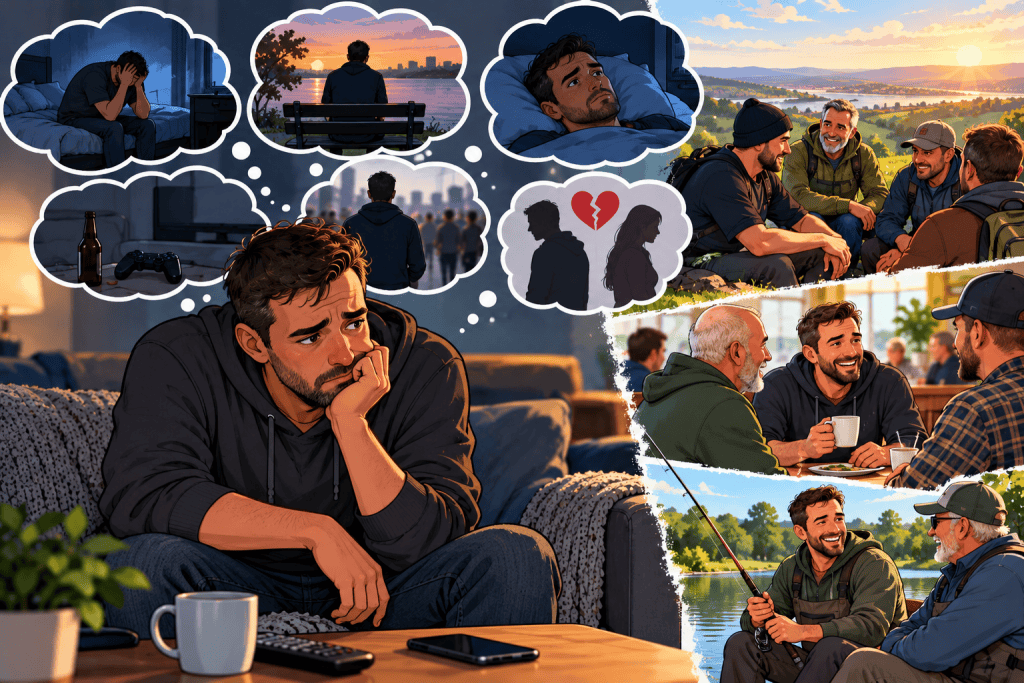
The Silent Struggle of Male Loneliness
There is a growing concern about loneliness among men, yet it remains one of the least openly discussed issues affecting men’s mental health.
Across the UK, many men are living increasingly isolated lives. Some live alone, others are surrounded by family or colleagues, and many appear to be functioning perfectly well.
Yet behind closed doors, they may be struggling with a deep sense of disconnection.
They might go days without a meaningful conversation, have nobody they feel comfortable discussing their problems with or feel they have lost the friendships that once gave them a sense of belonging.
For some men, loneliness develops gradually. Friendships fade, relationships end, employment circumstances change, and social opportunities become less frequent.
Others have spent years feeling emotionally isolated, even while maintaining relationships and meeting everyday responsibilities.
At Anxious Minds, we understand that loneliness isn’t simply about being physically alone. It’s about feeling disconnected, unsupported or unable to share your experiences with someone who understands.
Although loneliness affects people of every gender, some men face particular barriers to recognising it, discussing their feelings and seeking support.
Understanding these barriers is essential if we want to improve men’s mental health and prevent social isolation from becoming a lifelong struggle.
How Serious Is Loneliness in the UK?
Loneliness is increasingly recognised as a major public health concern.
The latest annual Community and Engagement Survey, published by the UK Government in August 2026, found that 7% of adults in England reported feeling lonely often or always during 2025/26.
The same survey found that 6% of males and 7% of females reported frequent loneliness. This distinction matters: men are not necessarily lonelier than women overall, but their experiences and barriers to seeking help can be different.
7%
Adults in England often or always lonely, 2025/26
6%
Men reporting frequent loneliness, 2025/26
Source: UK Government, Community and Engagement Survey 2025/26.
The World Health Organization also reported in June 2025 that approximately one in six people worldwide experience loneliness. Its research highlights the consequences of social disconnection for both physical and mental health.
These findings demonstrate that loneliness is not simply an individual difficulty. It is a wider social and public health issue requiring greater awareness and community action.
1. Men Are Often Expected to Be Strong and Independent
One important factor contributing to male loneliness is the expectation that men should remain emotionally strong and independent.
From an early age, some boys receive messages suggesting that showing vulnerability is a weakness.
They may be encouraged to remain tough, solve problems themselves and avoid discussing difficult emotions.
Statements such as “man up” or “boys don’t cry” can influence how men understand emotional expression.
Over time, some learn to hide sadness, anxiety and loneliness rather than seeking support.
This can create a damaging situation where someone desperately needs connection but feels uncomfortable admitting it.
UK Government research published in June 2026 identified stigma as a particular concern for boys and young men, suggesting that loneliness may sometimes be underreported because of embarrassment or expectations around masculinity.
Being able to discuss loneliness should never be seen as a weakness. Human connection is a basic emotional need.
2. Male Friendships Can Disappear Over Time
Many men develop strong friendships during school, military service, university or early employment.
These relationships often grow naturally through shared experiences.
However, as life progresses, maintaining friendships can become more difficult.
Work responsibilities increase, people move away, relationships change and family commitments take priority.
Men who previously spent time together every week may eventually communicate only occasionally.
Sometimes these friendships gradually disappear without anyone deliberately ending them.
For men who rely heavily on shared activities to maintain friendships, losing access to those activities can also mean losing important social connections.
Without regular opportunities to meet people, rebuilding friendships can feel increasingly difficult.
3. Relationship Breakdown Can Leave Men Isolated
Separation and divorce can significantly affect someone’s social life.
For some men, their partner may have been the person they relied on most for emotional support.
When the relationship ends, they may lose not only their partner but also shared friendships, family connections and established routines.
This can be particularly difficult for men who have few close friendships outside their relationship.
They may suddenly find themselves living alone, spending evenings without company and struggling to rebuild a social network.
Relationship breakdown can also bring financial pressures, housing difficulties and emotional distress, making social connection even harder.
Support during these transitions can help reduce the risk of prolonged isolation.
4. Employment Changes Can Reduce Social Contact
Work provides more than financial security.
For many men, employment offers routine, purpose, identity and regular contact with other people.
Colleagues may become an important part of someone’s social life, particularly if they have limited opportunities to meet people elsewhere.
Redundancy, unemployment, retirement or long-term sickness can disrupt these connections.
Someone who previously interacted with dozens of people every day may suddenly spend most of their time alone.
The loss of structure and purpose can also affect self-esteem and emotional wellbeing.
The 2025/26 Community and Engagement Survey found that people who had never worked or were long-term unemployed experienced higher rates of frequent loneliness than people in several other employment categories.
This highlights the importance of helping people maintain meaningful social opportunities outside employment.
5. Social Media Doesn’t Always Provide Meaningful Connection
Technology has made communicating easier than ever.
Men can interact through messaging platforms, social media, online gaming and digital communities.
These connections can be valuable, especially for people who struggle to access face-to-face activities.
However, online contact does not always provide the emotional support that someone needs.
A person may have hundreds of online contacts while feeling they have nobody they can turn to during difficult times.
Social media can also encourage comparisons with other people’s relationships, careers and lifestyles.
Someone who already feels isolated may begin believing that everyone else is happier or more socially connected.
The important issue is not simply how many people someone communicates with, but whether those interactions provide genuine companionship, understanding and belonging.
6. Loneliness Can Be Particularly Difficult for Veterans
For some military veterans, leaving the Armed Forces can involve losing a unique sense of belonging.
During service, personnel often develop strong bonds through shared experiences, teamwork and mutual support.
Military life also provides structure, responsibility and a shared identity.
Transitioning into civilian life can involve significant changes to these relationships and routines.
Some veterans struggle to find people who understand their experiences or the culture they have left behind.
Others may be dealing with injuries, trauma, bereavement or difficulties adjusting to civilian employment.
Although many veterans transition successfully, those experiencing social isolation may benefit from opportunities to reconnect with people who understand their backgrounds.
Veteran-focused peer groups, recovery colleges and outdoor activities can create valuable opportunities to rebuild confidence, friendships and community connections.
7. Older Men Can Lose Important Social Networks
Loneliness can become particularly challenging following bereavement, retirement or deteriorating health.
An older man who loses his partner may also lose the person who organised much of their social life.
Mobility problems, financial difficulties or limited transport can make it harder to attend community activities.
Some older men may be reluctant to join unfamiliar groups, particularly if they have spent many years relying on established routines.
However, loneliness is not exclusively an older person’s problem.
The latest government figures show that younger adults report frequent loneliness at higher rates than older age groups overall.
This demonstrates why support should be available to men throughout their lives, rather than focusing on one age group.
8. The Connection Between Loneliness and Depression
Loneliness and depression can reinforce one another.
Someone who feels disconnected may begin experiencing sadness, low self-esteem or hopelessness.
They might question whether they matter to anyone or believe they are being forgotten.
These feelings can contribute to depression and anxiety.
Equally, depression may cause someone to withdraw from friends and family, increasing their loneliness.
This can create a difficult cycle.
A man begins feeling lonely or disconnected
Confidence and emotional wellbeing decline
He withdraws from social opportunities
Isolation increases and reconnecting feels harder
The cycle can continue without support
Recognising this cycle early can help someone seek support before their mental health deteriorates further.
9. Loneliness Can Affect Physical Health
The effects of long-term loneliness extend beyond emotional wellbeing.
The World Health Organization’s 2025 report linked loneliness and social isolation with increased risks of depression, anxiety, cardiovascular disease and premature death.
The relationship is complex, and loneliness does not mean someone will inevitably develop these conditions.
However, the evidence shows that social connection is an important part of maintaining good health.
Persistent loneliness may also influence sleep, motivation and everyday habits.
People experiencing isolation may become less physically active, struggle with routine or find it harder to seek help when their health changes.
This is why social wellbeing should be considered alongside physical and mental health.
10. Why Men’s Loneliness Matters for Suicide Prevention
Male suicide remains a serious public health concern.
According to Samaritans, the age-standardised suicide rate in England in 2024 was 17.1 deaths per 100,000 males, compared with 5.6 per 100,000 females. The North East also recorded the highest regional overall suicide rate in England that year.
It is important to be clear that loneliness alone does not explain suicide, which is influenced by many interacting factors.
However, social isolation can reduce opportunities for people to discuss emotional distress, receive support and feel connected to others.
Creating spaces where men can speak openly, develop friendships and seek early mental health support is therefore an important part of wider suicide prevention efforts.
How Can Men Begin Overcoming Loneliness?
Reducing loneliness doesn’t necessarily mean developing a large social circle.
For many people, a few meaningful relationships can provide greater emotional support than numerous superficial connections.
There are practical steps men can take to begin rebuilding those relationships.
-
Reconnect with old friends. A simple message or invitation for coffee can reopen a connection.
-
Join community activities. Walking groups, sports clubs, veterans’ groups and community projects provide opportunities to meet others naturally.
-
Volunteer locally. Supporting a charity can create purpose, routine and new friendships.
-
Try a new activity. Learning something new can make socialising feel less pressured.
-
Speak openly about loneliness. Sharing how you feel with someone trustworthy can reduce shame and isolation.
-
Access professional support. Counselling can help if loneliness is connected to depression, anxiety, trauma or low self-esteem.
Building friendships takes time. Small, repeated opportunities to connect may be more manageable than expecting immediate change.
Why Community Projects Matter for Men’s Mental Health
Community organisations have an important role in addressing male loneliness.
Men who find traditional mental health settings intimidating may feel more comfortable attending activities where conversation happens naturally.
Community kitchens, breakfast clubs, outdoor programmes, walking groups and peer-support sessions can create opportunities for meaningful interaction.
Someone may initially attend a breakfast club simply for a meal, but gradually develop friendships and a sense of belonging.
Similarly, outdoor activities such as fishing, walking and cycling allow people to spend time together without feeling pressured to discuss their personal difficulties immediately.
These informal opportunities can provide a starting point for individuals who have become socially withdrawn.
Accessible community spaces are particularly important for men experiencing poverty, unemployment, bereavement or mental health difficulties.
How Anxious Minds Supports Men Experiencing Loneliness
At Anxious Minds, we recognise the significant impact loneliness and isolation can have on mental health.
Through our community services, counselling programmes and Veteran Recovery Colleges, we provide opportunities for people to develop connections, access emotional support and rebuild confidence.
Our Veteran Recovery Colleges in North Tyneside and County Durham offer veterans and their families opportunities to participate in recovery activities, peer-support groups, outdoor programmes and mental health support.
We also provide affordable counselling services through our centres in Wallsend and Blyth, alongside online and telephone counselling.
Our Veteran and Community Kitchen in Wallsend provides an important community space where people can access affordable meals, meet others and experience companionship.
Through our veterans’ breakfast activities and wider community programmes, we aim to reduce isolation and create a welcoming environment where people feel included.
We understand that someone who initially attends for a meal, an activity or practical advice may also be experiencing loneliness, depression or emotional distress.
By offering different ways to access support, we can help people take that first important step towards connection.
When Should Someone Seek Professional Help?
Feeling lonely occasionally is a normal human experience.
However, if loneliness becomes persistent, affects sleep or everyday activities, or contributes to feelings of depression, anxiety or hopelessness, it may be time to seek additional support.
Speaking with a GP or qualified mental health professional can help identify what support might be appropriate.
If you or someone you know is experiencing suicidal thoughts or needs urgent mental health support in England, contact NHS 111 and select the mental health option. If there is an immediate danger to life, call 999.
Samaritans can also be contacted free on 116 123, at any time.
Final Thoughts: No Man Should Have to Face Loneliness Alone
Male loneliness is a serious issue that deserves greater attention.
Too many men find themselves gradually disconnected from the friendships, relationships and communities that once gave their lives meaning.
Some struggle in silence because they believe admitting loneliness is a weakness.
Others have simply lost opportunities to connect through changes in employment, relationships, health or personal circumstances.
But loneliness should never be treated as a personal failure.
Men need friendship, companionship, emotional connection and a sense of belonging just as much as anyone else.
Addressing male loneliness requires more than encouraging individuals to make friends.
It means creating welcoming communities, challenging the stigma surrounding men’s mental health and making support accessible before isolation becomes overwhelming.
At Anxious Minds, we believe every person deserves to feel valued, supported and connected.
Sometimes a conversation, a shared activity or a friendly face at a community breakfast can be the beginning of meaningful change.
Anxious Minds – Supporting Mental Health, Reducing Isolation and Changing Lives Across the North East.
Visit www.anxiousminds.co.uk to learn more about our counselling, Veteran Recovery Colleges and community support services.