


Feeling isolated can seriously harm your wellbeing. Many people face loneliness but rarely talk about it. Research shows millions in the UK feel lonely every day.
Loneliness affects how we see ourselves and the world. Without meaningful social contact, our emotional health can decline. Recognising this helps us address isolation.
This article delves into the mind’s response to loneliness. We’ll explore its causes and practical ways to connect better. Learning about social isolation’s impact helps you feel better and more supported.
Starting a healthier life begins with self-understanding. This guide offers practical tools to fight loneliness. You’ll find real-life strategies and learn to seek support, a key step towards change.
Defining the Link Between Loneliness and Mental Health
It’s important to understand how loneliness affects our mental health. Loneliness isn’t just about being alone. It’s when our current relationships don’t meet our desires. This can really impact our mental state and life quality.
Studies by the NHS show loneliness can make mental health issues worse. It can lead to mild sadness to severe depression and anxiety. Knowing this helps us see when we need more social interaction and support.

Recognising the Psychological Impact of Isolation
Being alone can change our brain chemistry. Stress hormones go up, and happy chemicals like serotonin go down. This can cause:
- Persistent feelings of emptiness
- Difficulty concentrating on daily tasks
- Sleep disturbances and fatigue
- Reduced motivation and energy levels
- Negative self-perception and self-doubt
These symptoms make it harder to feel connected, trapping us in a cycle of isolation.
Distinguishing Between Solitude and Chronic Loneliness
Solitude and loneliness are not the same. Solitude is chosen time spent alone, which can be refreshing. Chronic loneliness, on the other hand, is unwanted isolation that hurts.
| Solitude | Chronic Loneliness |
|---|---|
| Voluntary and intentional | Involuntary and distressing |
| Feels peaceful and rejuvenating | Feels painful and isolating |
| You choose when it ends | Difficult to escape without support |
| Enhances mental wellbeing | Damages mental health |
Knowing the difference helps us see if we need alone time or if we’re experiencing unhealthy isolation. This requires attention and help.
Social Isolation and Depression
The link between social isolation and depression is a big worry in today’s world. Studies from mental health groups in the UK show loneliness can lead to depression. Without real human connection, our mood quickly goes down.
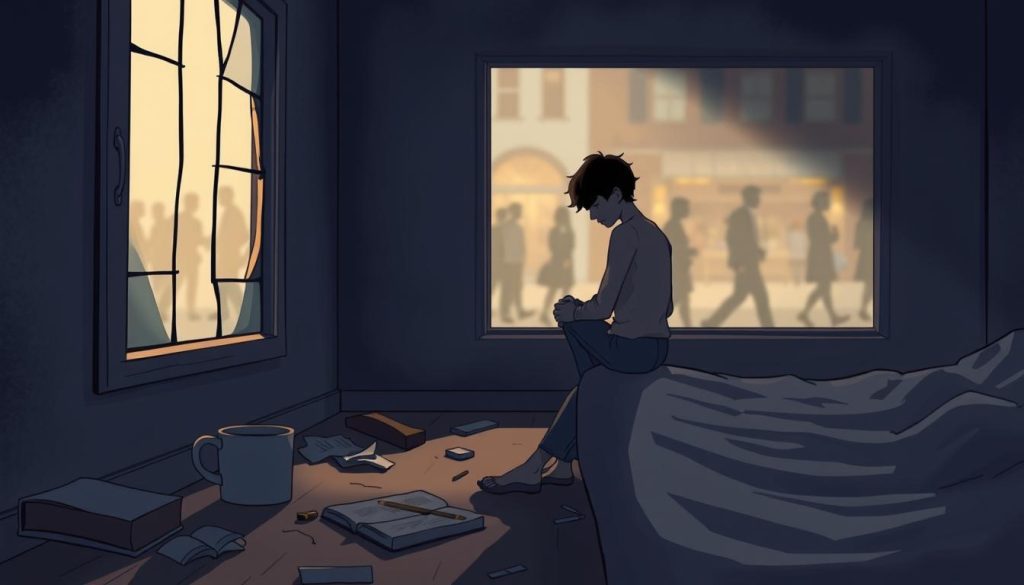
Depression and social isolation go hand in hand, creating a bad cycle. People with depression pull back from social events, making loneliness worse. This makes it harder to get better.
Not having people around changes our brain and how we feel. Those feeling isolated and depressed lose interest in others, feel less worthy, and get more anxious. These feelings stop them from asking for help when they need it.
How Social Withdrawal Functions in Depression
Social withdrawal is both a sign and a cause of depression. Here are some points to consider:
- People with depression often choose to stay alone
- Being alone takes away the good feelings we get from others
- Not having support makes it harder to cope
- Feeling lonely makes negative thoughts worse
- Being connected with others gives us the emotional support we need
Experts say keeping up with friends and family is key to fighting and managing depression. Talking to loved ones, getting help, and feeling part of a group helps a lot. These things fight off the bad effects of feeling alone and depressed.
Chronic Loneliness Health Risks
Chronic loneliness does more than just hurt our feelings. It can harm our bodies and minds. Being alone for too long can lead to serious health problems. It’s important to understand these risks to take steps to stay connected.
Physical Manifestations of Prolonged Isolation
Being lonely for a long time can hurt our bodies. Studies show that lonely people are more likely to get heart disease. Older adults who don’t see friends often have weaker immune systems.
Here are some physical health problems caused by loneliness:
- Increased blood pressure and heart disease risk
- Weakened immune function and delayed recovery from illness
- Higher inflammation markers in the body
- Sleep disturbances and fatigue
- Weight gain and poor metabolic health
Long Term Impacts on Cognitive Function
Loneliness can make our brains age faster. Studies show that lonely people’s brains look older than others. Without friends, our memory gets worse faster.
Here are some cognitive problems caused by loneliness:
- Accelerated decline in memory retention
- Reduced mental sharpness and processing speed
- Increased risk of dementia diagnosis
- Difficulty maintaining focus and concentration
Chronic loneliness is a big health problem. We need to act fast to help people stay connected.
Loneliness and Anxiety Disorders
Loneliness and anxiety disorders are closely linked. Feeling isolated can make anxious thoughts worse. This creates a cycle where staying alone increases anxiety, and anxiety makes us want to stay away from others.
Understanding this cycle is key. It shows how loneliness and anxiety disorders grow together. Breaking free from this cycle takes effort and intention.
Social isolation can make our minds very anxious. When we feel alone, our brain becomes overly alert. It’s like our nervous system is always on the lookout for danger.
This constant alertness is tiring. It makes even simple social interactions seem scary. Feeling isolated can lead to real fear and worry that affects our daily lives.
How Isolation Fuels Anxious Thinking
Being alone for too long lets anxious thoughts grow. Without social interaction, negative thoughts can spread. A person alone might worry a lot about what others think of them.
They might fear being rejected or imagine the worst in social situations. These thoughts can make anxiety much worse.
To break this cycle, we need to be aware and take action. Here are some steps:
- Notice when you’re avoiding social situations
- Reach out to people you trust, even for a little while
- Challenge your anxious thoughts with reality checks
- Get help from a professional if anxiety is too much to handle
Dealing with loneliness can help reduce anxiety. Being connected with others can manage anxiety. It offers reassurance, perspective, and emotional support that fights off the negative effects of isolation.
The Emotional Effects of Loneliness
Loneliness causes deep emotional pain that affects every part of life. It can lead from mild sadness to severe depression. Feeling isolated makes the brain release stress hormones. This changes mood, sleep, and overall wellbeing.
Understanding these feelings is the first step to healing. It helps in rebuilding connections with others.
Loneliness goes beyond simple sadness. It can make people doubt their worth, lose motivation, and lose hope for the future. These feelings are natural and common. Recognising them early and addressing them with compassion is key.
Managing Feelings of Social Exclusion
Social exclusion feels like rejection, which can change how people see themselves. Managing these feelings needs effort and self-compassion.
- Practice self-reflection without harsh judgment about your situation
- Identify small ways to connect with others, such as joining clubs or groups
- Reach out to old friends or acquaintances with a simple message
- Volunteer for causes you care about to build meaningful relationships
- Seek out online communities that share your interests and values
Addressing Persistent Low Mood
Persistent low mood often comes with loneliness. It needs dedicated attention. Start by setting realistic social goals and celebrate small wins.
| Strategy | How It Helps | Time Commitment |
|---|---|---|
| Daily journaling | Tracks mood patterns and identifies triggers | 10-15 minutes daily |
| Outdoor walks | Boosts mood and provides natural light exposure | 20-30 minutes daily |
| Structured social plans | Provides accountability and scheduled connection | 2-3 hours weekly |
| Mindfulness practices | Reduces anxiety and improves emotional regulation | 5-10 minutes daily |
| Creative activities | Expresses emotions and builds confidence | 30 minutes to 1 hour weekly |
Small, consistent actions create meaningful change. Joining local groups, classes, or volunteering helps. It turns low mood into purposeful activity. These steps support mental health recovery and help you feel part of a community again.
Psychological Benefits of Social Connection
Strong relationships protect your mental health. Talking to others regularly makes your brain release oxytocin and serotonin. These chemicals boost your mood and lower stress.
Being around friends and family changes your brain for the better. Your nervous system relaxes, and anxiety decreases. Depression is less likely too. This is because good relationships support your brain’s health.
Loneliness has the opposite effect. It drains your mental energy, while connection boosts it. Even small chats with neighbours or quick calls with friends can make a big difference.
Here are some ways social bonds help your mind:
- Regular social contact reduces anxiety and worry
- Shared activities boost confidence and self-worth
- Supportive relationships improve your ability to cope with stress
- Community involvement creates a sense of belonging
- Positive interactions enhance emotional stability
You don’t need a big group to benefit. What matters most is the quality of your connections. Having one person who truly listens and cares can greatly improve your mental health. Regular, genuine connections build lasting psychological strength.
Preventing Loneliness and Mental Illness
Preventing loneliness and mental illness needs us to make a plan. Isolation can harm our mental health a lot. But, there are steps we can take to connect with others and feel better.
By making real connections and getting support from our community, we can fight loneliness. This helps our mental health stay strong.
Building Meaningful Community Networks
Real connections are key to good mental health. These connections offer deep support, not just small talks. Joining groups that share your interests is a great start.
Volunteering helps too. It brings us into purposeful connections that make us happier.
In the UK, there are many ways to connect. Find what fits your life and interests:
- Local hobby clubs and interest groups
- Volunteer positions with charities and community services
- Faith communities and spiritual gatherings
- Sports clubs and fitness classes
- Educational courses and workshops
- Neighbourhood associations and local events
Strategies for Improving Social Wellbeing
Improving social wellbeing takes planning and effort. Meeting people regularly helps fight loneliness. Even small steps can make a big difference.
| Strategy | Description | Expected Benefit |
|---|---|---|
| Weekly social meetups | Schedule regular time with friends or group members | Reduces isolation and strengthens bonds |
| Volunteer work | Commit to helping others through local organisations | Creates purpose and meaningful relationships |
| Group activities | Join classes or clubs aligned with personal interests | Natural social interaction through shared passion |
| Digital communities | Participate in online forums or virtual groups | Accessible connection for people with mobility challenges |
| Neighbourhood engagement | Attend local events and community gatherings | Builds local support networks and sense of belonging |
Starting to fight loneliness begins with understanding its impact. Even shy people need to connect in ways that feel right for them. It’s about being real and consistent, not forcing things. Building these networks takes time, but the benefits to our mental health are huge and lasting.
Professional Support for Wellbeing
When personal efforts don’t work, it’s time to seek professional help. Mental health experts know how loneliness impacts wellbeing deeply. They provide support that fits your needs and situation.
A therapist or counsellor can help you find out why you feel isolated. They use proven methods to prevent loneliness and mental illness. They help you change negative thought patterns and find ways to connect with others.
- Cognitive Behavioural Therapy addresses unhelpful thought patterns contributing to social anxiety
- Interpersonal Therapy focuses on improving your relationships and communication skills
- Counselling provides a safe space to express your feelings and concerns
- Group therapy connects you with others experiencing similar challenges
Your GP can help you find NHS services or private therapists. Online services like BetterHelp UK and Rethink Mental Illness are great for those with busy schedules.
Looking for professional help shows courage, not weakness. Experts know loneliness impacts wellbeing in many ways. Taking steps now helps your mental health in the future.
Conclusion
It’s vital to understand how social bonds affect our mental wellbeing today. We’ve seen how chronic loneliness can harm our bodies and minds. It leads to anxiety disorders when we feel isolated for too long.
Feeling alone for extended periods can seriously damage our health. This is true for both our physical and mental states.
We’ve discussed ways to create stronger social networks and boost emotional resilience. Getting help from therapists and joining community groups are key. These steps help protect us from the negative effects of loneliness.
Working to strengthen your social connections is a powerful move for your wellbeing. You can do this by volunteering, joining clubs, or simply reaching out to loved ones. Building these bonds creates a safety net for your mental health.
By prioritising social engagement, you build the strength to face life’s challenges. This leads to greater happiness in your life.

