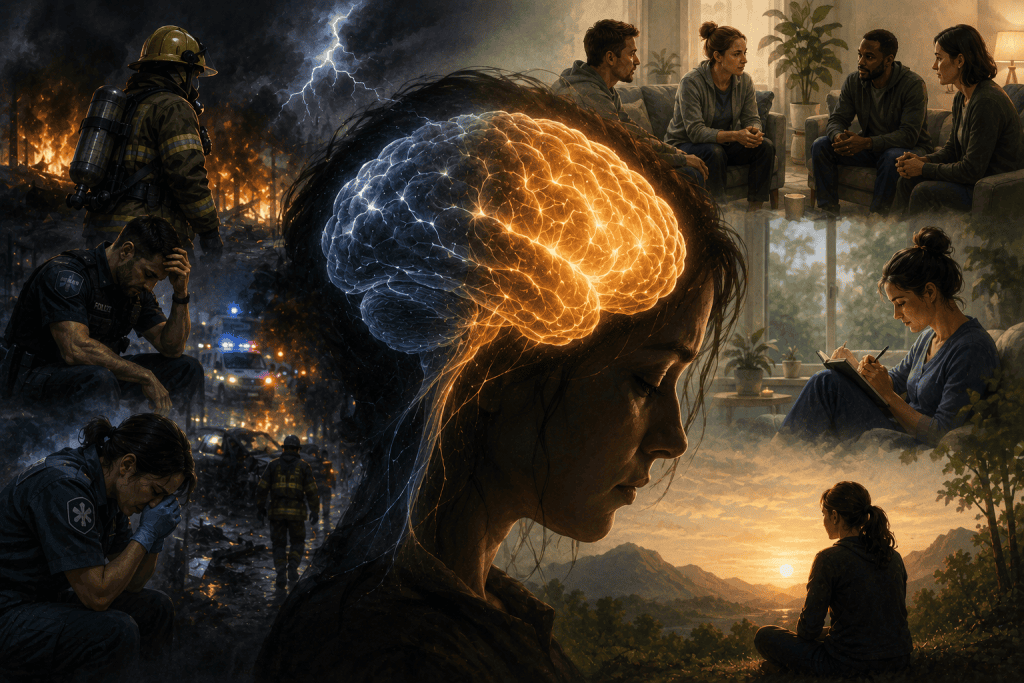
Trauma does not only affect memories. It can affect the brain, the body, emotions, relationships, sleep, confidence and the way a person sees the world. For blue light workers, NHS staff, veterans, carers, survivors of abuse, and people living under long-term stress, trauma can become more than one single event. It can build up over time.
Repeated exposure to trauma can change how the brain responds to danger. It can make the nervous system more alert, more reactive and less able to switch off. A person may begin to feel constantly on edge, emotionally numb, easily startled, exhausted, angry, anxious or detached. They may struggle with sleep, concentration, memory, relationships or trust.
These reactions are not signs of weakness. They are signs that the brain and body have adapted to repeated threat. The brain is trying to protect the person, but over time, that protection can become exhausting.
Understanding how trauma affects the brain can help reduce shame. It can also show why proper support, therapy, rest and safe relationships are so important.
Trauma Is a Whole-Body Experience
When someone experiences trauma, the brain and body respond quickly. The nervous system prepares for survival. Heart rate increases. Breathing changes. Muscles tense. Stress hormones are released. Attention narrows towards danger. This is often called the fight, flight or freeze response.
This response is not a choice. It is automatic. It is designed to keep us alive.
For many people, once the danger has passed, the body gradually returns to a calmer state. But when trauma is repeated, severe or unresolved, the nervous system can stay on high alert. The person may continue to feel unsafe even when the threat is no longer present.
This is why someone affected by trauma may react strongly to sounds, smells, crowds, conflict, sirens, uniforms, medical settings, shouting, sudden movements or certain dates. The brain may read these reminders as danger, even when the person is physically safe.
The Brain’s Alarm System: The Amygdala
The amygdala is often described as the brain’s alarm system. Its job is to detect threat and help trigger a survival response. When trauma occurs, the amygdala can become highly active.
In people affected by post-traumatic stress, the amygdala may become more sensitive to signs of danger. This can lead to hypervigilance, panic, irritability, exaggerated startle responses and feeling constantly “on edge.”
The National Center for PTSD describes PTSD as being linked with excessive amygdala activity and reduced activation in areas such as the prefrontal cortex and hippocampus.
This helps explain why trauma can make someone feel unsafe even in ordinary situations. The alarm system has become too quick to react. It may sound the alarm at reminders, memories or perceived threats, not only actual danger.
For blue light workers and others repeatedly exposed to trauma, this can become part of everyday life. A paramedic may feel tense whenever the radio goes off. A police officer may constantly scan public places for risk. A nurse may feel anxious walking into a certain ward. A veteran may sit with their back to the wall in restaurants. These are not overreactions. They are survival responses that have become deeply learned.
The Memory Centre: The Hippocampus
The hippocampus helps the brain organise memory and place events in context. It helps us understand when something happened and whether it belongs to the past or present.
Trauma can interfere with this process. Traumatic memories are not always stored like ordinary memories. They may come back as images, body sensations, smells, sounds, nightmares or flashbacks. A person may not simply “remember” what happened; they may feel as though part of them is back there again.
Research has repeatedly linked PTSD with changes in brain circuits involving the hippocampus, amygdala and prefrontal cortex. Traumatic Stress Wales also notes that adults with PTSD may show reductions in hippocampal volume and changes in prefrontal regulation, which can leave people overwhelmed by stress even when there is no current danger.
This can help explain why people affected by trauma may say things like, “I know I’m safe, but I don’t feel safe.” The thinking part of the brain may understand the situation, but the memory and threat systems are still reacting as if danger is present.
The Thinking and Regulation Centre: The Prefrontal Cortex
The prefrontal cortex helps with planning, decision-making, emotional regulation, impulse control and perspective. It helps us pause, think, reflect and calm ourselves down.
When someone is repeatedly exposed to trauma, this part of the brain can become less effective during moments of threat. The alarm system may dominate, while the thinking brain struggles to stay in control.
This is why trauma reactions can feel so powerful. A person may know they are reacting strongly, but still be unable to stop the reaction in the moment. They may snap, shut down, panic, freeze, leave, cry, dissociate or become defensive before they have time to think.
This is not because they do not care. It is because the survival brain is taking over.
Over time, with support and practice, the prefrontal cortex can become more engaged again. Therapy, grounding techniques, breathing exercises, safe relationships, mindfulness, physical activity and trauma-informed support can all help the brain learn that it does not need to stay in survival mode all the time.
Hypervigilance: Always Scanning for Danger
Repeated trauma can teach the brain to keep scanning for threat. This is called hypervigilance. It can feel like being unable to relax, constantly checking exits, noticing every sound, watching people’s body language, or expecting something bad to happen.
For emergency workers, this can be reinforced by the job. Police officers, paramedics, firefighters, call handlers and NHS staff often have to anticipate risk. They are trained to notice danger and respond quickly. But when the shift ends, the brain may not easily switch off.
Hypervigilance can affect home life. A person may struggle to relax with family, become irritated by noise, dislike crowded places, or feel uncomfortable when plans change. They may seem controlling, distant or constantly tense.
Underneath, the nervous system is trying to prevent another shock.
Emotional Numbness and Shutdown
Not everyone responds to trauma with panic or fear. Some people become numb. They feel detached, flat, empty or disconnected from themselves and others. This can happen when the nervous system becomes overwhelmed and moves into shutdown.
Emotional numbness can be confusing. A person may know they love their family but struggle to feel warmth. They may hear upsetting news and feel nothing. They may stop enjoying things they once cared about. They may feel as though they are watching life from behind glass.
This numbness is often protective. If feeling everything is too painful, the mind may reduce feeling altogether. But over time, numbness can affect relationships, motivation and quality of life.
It is important not to shame someone for feeling numb. They are not cold or uncaring. Their system may have been overloaded for too long.
Trauma and Sleep
Sleep is often affected by repeated trauma. People may struggle to fall asleep because their body does not feel safe enough to rest. They may wake frequently, have nightmares, sweat, panic, or feel exhausted even after sleep.
Night-time can be especially difficult because distractions disappear. Memories, worries and body sensations may become louder. For people with trauma symptoms, sleep can feel unsafe because it means lowering defences.
Poor sleep then makes everything harder. It reduces emotional regulation, concentration, patience and resilience. The person becomes more vulnerable to anxiety, depression, irritability and burnout.
Improving sleep often requires more than simply “going to bed earlier.” The nervous system needs help to calm down. A predictable routine, reduced alcohol, grounding exercises, therapy, and feeling emotionally safe can all support better rest.
Trauma Can Change Relationships
Repeated trauma can affect trust and connection. A person may become withdrawn, guarded, irritable or emotionally distant. They may avoid talking about what they have experienced because they do not want to burden others, or because they believe no one will understand.
Some people become more reactive in relationships. They may feel rejected easily, become defensive, struggle with conflict, or expect people to let them down. Others may avoid closeness altogether.
This is not because they do not want love or support. It may be because their brain has learned that vulnerability is risky.
Safe, patient relationships can help healing. Being listened to, believed and accepted can send powerful signals to the nervous system that connection does not always mean danger.
Trauma, Memory and Concentration
People affected by repeated trauma may struggle with memory and concentration. They may forget appointments, lose track of conversations, struggle to read, find decision-making hard, or feel mentally foggy.
This can be frightening, especially for people who were once highly organised or confident. But it makes sense when the brain is using so much energy to manage threat, stress and emotional survival.
When the nervous system is overloaded, everyday thinking becomes harder. The brain is prioritising safety over focus.
This is why trauma-informed support focuses on stabilisation, grounding and safety, not just talking about the traumatic event. The brain often needs to feel safer before it can process memories properly.
Repeated Trauma and Burnout
Repeated exposure to distress can also lead to burnout, especially in caring and emergency roles. Burnout may include emotional exhaustion, cynicism, reduced compassion, detachment, dread of work, irritability and a sense of hopelessness.
For blue light workers and NHS staff, trauma and burnout can overlap. Someone may not only be tired from workload; they may also be carrying years of distressing incidents, moral injury, grief and pressure.
This is why telling workers to be more resilient is not enough. Many are already extremely resilient. What they need is time, support, confidential help, safe supervision, trauma-informed services and workplaces that recognise the emotional cost of the job.
The Brain Can Heal
Although trauma can change the brain, the brain can also adapt and recover. This is sometimes called neuroplasticity: the brain’s ability to change through new experiences, learning and support.
This does not mean trauma disappears overnight. Healing takes time. But people can learn to feel safer, reduce triggers, process memories, improve sleep, rebuild relationships and reconnect with life.
A 2024 review in Molecular Psychiatry notes that while neuroimaging research has made progress in understanding PTSD-related brain changes and treatment response, the field still has work to do before brain imaging can be used routinely in clinical practice. In other words, we know trauma affects brain systems, but recovery is personal and should never be reduced to a scan or label.
People are more than what happened to them. Trauma may shape the brain, but it does not have to define the rest of a person’s life.
What Helps the Brain Recover?
Recovery from repeated trauma often begins with safety. The brain needs repeated experiences that show danger is no longer everywhere.
Helpful support may include trauma-informed counselling, EMDR, trauma-focused CBT, peer support, grounding techniques, mindfulness, safe relationships, exercise, sleep support, creative expression and practical help with stressors such as housing, debt, work or family pressure.
For blue light workers and NHS staff, confidential support is especially important. People need to know they can speak honestly without being judged, exposed or seen as weak. Early support can prevent symptoms from becoming more severe.
Grounding techniques can help in the moment. These include noticing five things you can see, placing your feet firmly on the floor, slowing your breathing, holding a warm drink, naming the date and place, or reminding yourself: “This is a memory. I am here now.”
Therapy can help process traumatic memories safely, but it should happen at the right pace. Forcing someone to talk about trauma before they feel stable can be overwhelming. Good trauma support builds safety first.
Reducing Shame
One of the most damaging effects of trauma is shame. People may blame themselves for how they reacted, what they did, what they did not do, or how they feel now.
But trauma responses are survival responses. Fight, flight, freeze, fawn and shutdown are not moral failures. They are nervous system reactions.
Someone affected by trauma may need to hear this repeatedly: “You are not broken. Your brain and body adapted to survive. With the right support, you can heal.”
Reducing shame is not just comforting. It is part of recovery. Shame keeps people isolated. Compassion helps people reconnect.
When to Seek Support
It may be time to seek support if trauma symptoms are affecting sleep, relationships, work, mood, concentration, anger, alcohol or substance use, or your ability to feel safe. Support is especially important if you experience flashbacks, nightmares, panic, emotional numbness, suicidal thoughts, self-harm, or feel unable to cope.
A GP, counsellor, trauma-informed therapist, local mental health charity, occupational health service or crisis service may be able to help. If there is immediate danger, call 999 or go to A&E. If urgent mental health help is needed but it is not a life-threatening emergency, NHS 111 can help direct you to support.
Asking for help is not weakness. It is a sign that your mind and body have carried too much for too long.
Final Thoughts
Repeated exposure to trauma can change the brain’s alarm system, memory system and emotional regulation system. It can make people feel constantly alert, emotionally numb, easily triggered, exhausted or disconnected. It can affect sleep, relationships, concentration and confidence.
But these changes are understandable. They are not signs of failure. They are signs of survival.
The brain learns from danger, but it can also learn from safety. With support, time, compassion and trauma-informed care, people can recover. They can feel safer in their bodies. They can reconnect with others. They can process what happened without being controlled by it.
Trauma changes people, but healing is possible. No one should have to carry the impact of trauma alone.