


Recovery from mental health issues and addiction needs more than just personal effort. Community support is key in modern healthcare in the UK. Local areas provide resources, understanding, and friendship that hospitals can’t offer.
The NHS Long Term Plan agrees with this. It focuses on adding community care to treatment plans. This change shows that social connections help heal and bring lasting change.
Those on recovery paths often feel alone. Community efforts help by linking people with others who get their struggles. Sharing experiences builds trust and hope, even when things seem tough.
This article looks into why community support is so important for recovery. We dive into the science of human connection, peer networks, and mutual aid groups. Seeing how these elements work shows why local support is essential for lasting recovery in the UK.
Recovery is better with friends by your side. Community offers support, celebrates achievements, and reminds you that you’re not alone in your struggles.
Understanding the Role of Social Connections and Healing
Humans are naturally social. Our brains crave connection with others. Building strong social bonds helps our bodies and minds heal.
Research shows loneliness can increase mortality risk by 26%. This highlights the importance of social connections for our wellbeing.
The link between relationships and wellness is deep. It’s not just in our minds but also in our biology. This understanding shows why community support is key for recovery.

The Science of Human Connection
Our nervous systems respond to social interaction. Being with others releases good chemicals. Oxytocin, the “bonding hormone,” increases trust and reduces stress.
Cortisol is our stress hormone. High levels can harm our health. Being part of a group lowers cortisol and calms our nervous system.
- Oxytocin promotes feelings of safety and trust
- Social interaction reduces cortisol levels
- Group engagement calms the nervous system
- Regular connection improves immune function
Emotional Benefits of Belonging
Being part of a community boosts our emotional strength. Feeling accepted improves our self-image. We feel less anxious and more confident.
Group membership also improves mental health. People in supportive communities have lower depression and anxiety rates. This is because they know others understand and care about their journey.
| Emotional Benefit | Impact on Recovery | Duration of Effect |
|---|---|---|
| Sense of belonging | Increases motivation for change | Long-term |
| Reduced isolation | Decreases depression symptoms | Sustained |
| Increased trust | Builds emotional safety | Ongoing |
| Shared understanding | Validates personal experiences | Continuous |
| Peer encouragement | Strengthens commitment to goals | Throughout recovery |
These emotional benefits lay a strong foundation for recovery. Feeling accepted in our community builds resilience. This resilience helps us through tough times.
How Community Support Can Help People Recover
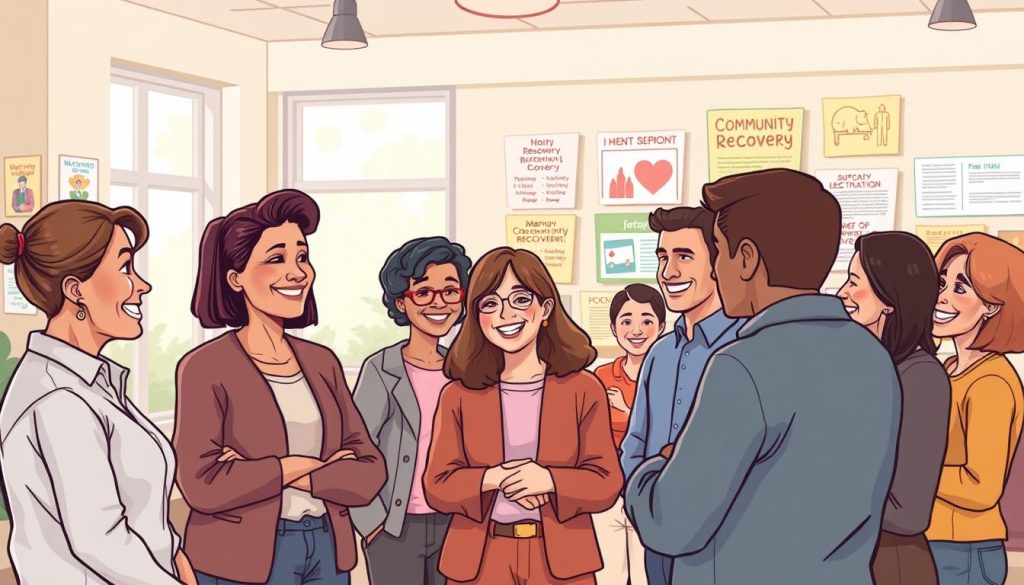
Community support gives people a place to heal and grow together. Being part of local recovery groups offers resources and encouragement that clinics can’t. It’s about the power of shared experiences and constant peer interaction.
In the UK, groups like Mind show community-based help reduces pressure on doctors. These local groups use proven methods to help people keep moving forward and avoid falling back. The regular contact with others creates a safety net that clinics can’t match.
- Regular peer interaction strengthens emotional resilience
- Shared goals encourage sustained behavioural change
- Group accountability reduces the risk of relapse
- Access to practical advice from those with lived experience
- Sense of belonging that combats isolation
Community groups offer structure and routine. Members know when to meet and what to expect. This helps them build healthy habits. Consistent engagement with supportive peers turns recovery into a team effort.
Studies show people in community programmes do better in the long run than those only seeing professionals. The mix of clinical help and peer support is key to healing. It’s clear how community support helps when people feel truly connected and cared for.
The Importance of Peer Support Networks
Peer support networks are key places for people to find understanding and validation. They offer a space where you can share your story without fear of judgment. Studies show that when people feel heard by those who get it, they heal faster.
Being part of these networks shows that you’re not alone. This knowledge brings comfort and hope. The deep understanding from those who’ve been through it is invaluable.
Shared Experiences as a Catalyst
Sharing your story can start a journey of change. Hearing others’ similar struggles can be incredibly powerful. It’s often the real-life advice from peers that truly helps.
- Real-life stories inspire hope and possibility
- Practical advice comes from actual lived experience
- Validation reduces feelings of shame and isolation
- Mutual understanding builds emotional strength
Building Trust Within Groups
Trust grows when people come together with a shared goal. In peer support networks, being open is seen as a sign of strength. As trust builds, people feel free to share their deepest fears.
This openness is the start of true healing. Together, members support each other through tough times and celebrate victories. These strong bonds help everyone in the group to recover better.
Benefits of Community-Based Rehabilitation
Community-based rehabilitation changes how we recover by bringing treatment to our homes and workplaces. It keeps us close to our families, jobs, and friends while we get help. Unlike old-fashioned hospitals, it lets us try out new skills in our own settings.
Studies from the UK’s Social Care Institute for Excellence show it works well. People who stay in their communities recover better and feel happier. This is more than those in hospitals.
Keeping rehab local has many benefits. It’s cheaper than using big hospitals. People get help from local doctors, clinics, and support groups.
Key benefits include:
- Maintaining employment and income stability during recovery
- Strengthening family relationships through continued home presence
- Accessing familiar community resources and support networks
- Reducing stigma by receiving treatment within normal community settings
- Building independence gradually within safe environments
- Lower programme costs without compromising quality
Community-based rehabilitation helps us get back to normal life easier. It builds real strength by facing real challenges with expert help. It values our dignity and knows recovery works best when we’re with our loved ones and in familiar places.
Establishing Mutual Aid Groups for Long-Term Success
Building lasting recovery needs strong, daily support. Mutual aid groups offer this by connecting people through shared goals. They work best when run by members, not professionals. Studies from the British Journal of Psychiatry show they lead to better recovery outcomes.
Reciprocity is key in mutual aid groups. Members both give and receive help. This balance keeps everyone focused on recovery and builds confidence.
Creating Sustainable Support Structures
For groups to last, they need solid foundations. Here are key elements:
- Regular meeting schedules that people can depend on
- Simple guidelines that protect member safety and respect
- Shared leadership roles distributed among members
- Access to basic resources without high costs
- Clear communication about group values and expectations
With these basics, groups can stand on their own. Members take charge, reducing need for outside help.
Facilitating Open Dialogue
Trust grows when people feel heard. Good groups foster honest talks. Members share openly, without fear of being judged.
Ground rules keep this openness safe. They include confidentiality, respect for views, and time for everyone to speak. Thoughtful dialogue makes all feel valued in their recovery.
Psychological Advantages of Collective Healing Processes
Collective healing offers unique psychological benefits that solo efforts can’t match. It helps people see themselves as part of a community, not alone. This shift in view brings significant psychological gains.
One key benefit is reducing shame and stigma. Through group efforts, individuals see their struggles as common, not personal failures. Studies by the British Psychological Society show group work boosts self-confidence and emotional control. Knowing others face similar issues helps ease the feeling of being alone.
Collective healing creates a safe space to share personal trauma. This shared experience has many psychological benefits:
- It normalises tough emotions and experiences.
- It builds confidence by showing others’ success.
- It fosters accountability in supportive groups.
- It teaches practical coping strategies through peer learning.
- It strengthens emotional resilience through mutual support.
The power of shared recovery lies in the mutual understanding that emerges naturally within groups. Seeing others overcome challenges gives hope. It shows recovery is possible, even when things seem tough.
Group settings allow for emotional expression in ways solo therapy can’t. Hearing others’ stories gives voice to silent experiences. This support boosts the mental wellbeing of everyone involved.
Overcoming Isolation Through Social Support Systems
Loneliness is a big obstacle to getting better, making depression and anxiety worse. When people face these issues alone, it’s harder to get better. Social support systems help connect people with their communities, bringing hope when it’s needed most.
Strong social support systems change the recovery journey. They offer help, emotional support, and understanding. Studies show that community-based help reduces emergency service use by providing timely support.
Breaking the Cycle of Loneliness
Isolation makes it harder to stay strong and can lead to relapse. Feeling alone makes negative thoughts worse and hopelessness deeper. But, community support breaks this cycle by building real connections.
Being part of groups has many benefits:
- Less shame and judgment
- Regular contact with people who understand
- Sharing ways to cope and advice
- Getting motivated and accountable from others
Accessing Resources Through Networks
Social networks help get to important resources that are hard to find alone. They offer housing help, job training, and healthcare referrals through community ties.
| Resource Type | Community Access Method | Recovery Impact |
|---|---|---|
| Housing Support | Peer referrals and group networks | Stable foundation for stability |
| Employment Training | Mentor connections within groups | Financial independence and purpose |
| Healthcare Services | Resource sharing among members | Continuous medical supervision |
| Counselling Services | Trusted recommendations from peers | Professional mental health support |
Networks spread knowledge and opportunities. They help find jobs, homes, and services through personal connections. This network often reaches people who might miss out on vital support.
Strategies for Effective Community Engagement in Recovery
Effective community engagement in recovery needs a thoughtful approach. It must put local voices at the centre. Organisations should listen to the people they serve to grow successfully.
Building trust takes time, patience, and a genuine commitment. Understanding what communities need is key.
Creating pathways for participation starts with removing barriers. Make recovery services accessible to all. This includes those from marginalised backgrounds who may feel left out.
Community support in recovery works best when everyone feels welcomed. They should be valued for their contributions.
Key Approaches to Drive Engagement
Successful programmes share common elements. These elements encourage participation and build lasting connections.
- Create regular opportunities for people to meet and share experiences
- Invite local leaders to help guide and shape recovery initiatives
- Offer flexible meeting times and accessible locations
- Provide information in multiple languages and formats
- Build partnerships with local organisations already trusted by communities
- Celebrate wins and acknowledge individual progress publicly
Empowering Local Leadership
When communities take ownership of their recovery, engagement deepens. Supporting local leaders means giving them resources and authority. This respects community knowledge and creates sustainable change.
“People recover best when they feel part of something meaningful and connected to others who understand their journey.”
Regular feedback mechanisms help organisations stay responsive. Listening to what works and what doesn’t ensures initiatives evolve. This meets changing community needs.
Building Resilience Through Shared Experiences
Resilience isn’t something you’re born with. It grows when people work together. Facing challenges with others who understand helps you bounce back stronger. Shared experiences create bonds that teach and adapt everyone involved.
Research shows social support is key for recovery after tough times. Having caring people around is vital for healing.
Community-based rehabilitation programmes show the power of group work. They strengthen people emotionally and mentally. When you join these programmes, you see you’re not alone in your struggles.
This realisation changes how you view your challenges. It makes you believe you can overcome them.
Developing Coping Mechanisms Together
Working with others helps you find practical ways to deal with stress and hardship. Group members share what works for them. This might include:
- Breathing exercises that calm the nervous system
- Journalling to process emotions
- Physical activity to reduce tension
- Creative expression through art or music
- Problem-solving discussions with peers
Learning these methods together boosts your confidence. You know your group will support you.
Strengthening Personal Resolve
Group settings build inner strength in ways solo efforts can’t. Seeing others overcome challenges inspires you. Personal resolve grows when people see themselves reflected in others’ stories of survival and progress.
Community members celebrate each other’s small wins. This reinforces positive change. This collective encouragement motivates you every day.
The Impact of Localised Support on Mental Wellbeing
Local support systems are key to better mental health in communities. When mental health services are nearby, it’s easier to get help. People don’t have to travel far or deal with complex systems.
This close support helps people overcome barriers to seeking help. Costs, time, and not knowing distant services can stop people. Local support tackles these issues by bringing help right to people’s doors.
Peer support networks in local areas are very effective. They understand the unique needs of each community. Local authorities can create services that meet these needs.
Key Advantages of Localised Support Systems
- Immediate access to trained support workers
- Services tailored to community needs
- Reduced travel time and expenses
- Stronger connections between neighbours
- Better understanding of local challenges
Supporting local services makes communities stronger. People build stronger bonds and trust in their services. Feeling supported by their community boosts mental wellbeing.
Navigating Challenges in Group Settings
Group recovery environments are powerful, but they face unique challenges. People in mutual aid groups often deal with complex situations. These can impact their recovery journey. Learning to handle these issues makes the group experience better and keeps everyone safe.
The British Association for Counselling and Psychotherapy says clear rules help. They make group healing safer and more effective.
Managing Interpersonal Dynamics
When people from different backgrounds meet, conflicts can happen. Group members might disagree on direction, communication, or personal space. It’s important to tackle these issues early to avoid frustration.
Here are some ways to manage group dynamics:
- Set clear rules at the start of each group session
- Listen actively during discussions
- Let members share concerns with facilitators privately
- Use structured discussions to ensure everyone gets a say
- Deal with exclusion right away
Maintaining Boundaries in Recovery
Boundaries are key to avoiding burnout. They help group members focus on their own recovery while supporting others.
| Boundary Type | Purpose | Example |
|---|---|---|
| Emotional Boundaries | Prevent taking on others’ feelings as your own | Acknowledge another’s struggle without feeling their pain |
| Time Boundaries | Respect meeting times and personal space | Stay in touch only during agreed-upon times |
| Personal Boundaries | Keep personal info and space private | Decide what to share about your recovery |
| Professional Boundaries | Keep peer support separate from professional help | Refer to therapists for clinical needs |
Healthy boundaries make groups stronger. They help everyone stay committed to their recovery journey.
Conclusion
Recovery through community is key in mental health support. Studies show that those who connect with others do better. Social links cut down on loneliness and boost strength.
Peer support helps people understand each other’s struggles. These benefits are huge, affecting more than just one person.
Getting involved in community recovery changes how we see mental health. When we work together, we make society stronger. Local groups and support networks offer both practical and emotional help.
They turn recovery into a shared journey. When communities support their members, real change happens.
We encourage you to look into local resources. Joining a support group or starting one can make a difference. Talk to health experts and community leaders about recovery efforts in your area.
By doing so, you help build a more caring and strong society. Every effort to connect with others strengthens the network for everyone.

