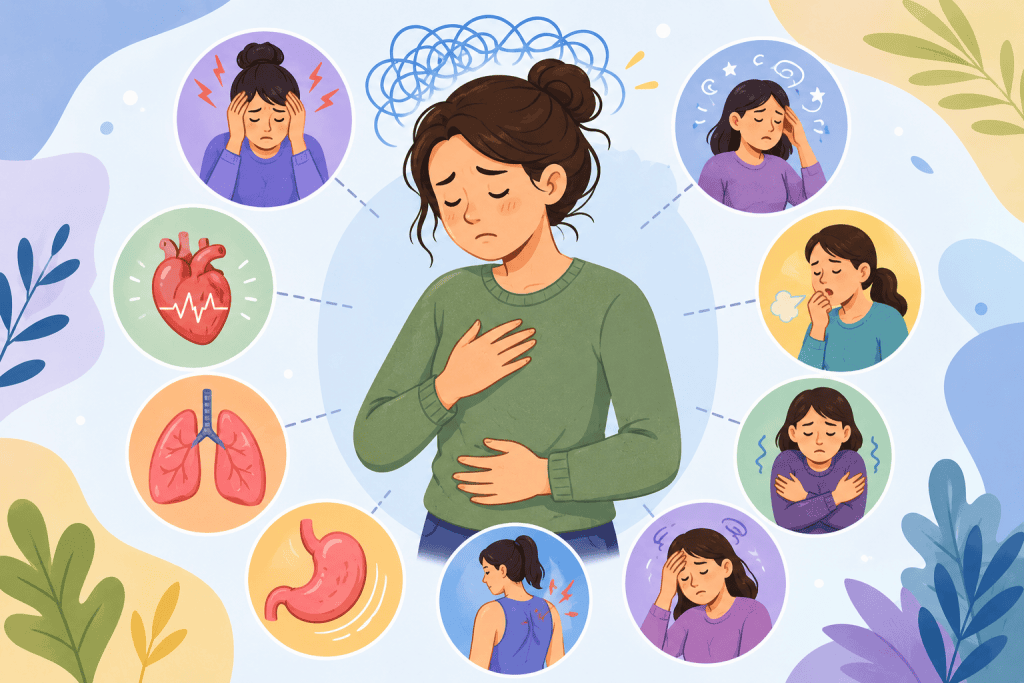
Anxiety is often described as a feeling of worry, fear or unease, but it is much more than a mental or emotional experience. Anxiety can affect almost every part of the body, from the heart and lungs to the digestive system, muscles and sleep.
For some people, the physical symptoms of anxiety can be so strong that they believe something is seriously wrong with their health. They may experience chest pain, dizziness, nausea, shaking, breathlessness or a racing heart. These symptoms can feel frightening, especially when they appear suddenly or without an obvious reason.
Understanding how anxiety affects the body can help people make sense of what they are experiencing. It can also reduce fear and encourage them to seek the right support.
Anxiety is not “all in your head”. It is a real physical response involving the brain, nervous system, hormones and body.
Why Anxiety Causes Physical Symptoms
The body has a built-in survival system designed to protect us from danger. This is often called the fight, flight or freeze response.
When the brain believes there may be a threat, it sends signals throughout the body. Stress hormones such as adrenaline and cortisol are released, preparing the person to respond quickly.
The heart begins to beat faster to send more blood to the muscles. Breathing speeds up to increase oxygen. Muscles tighten in preparation for action. Digestion slows because the body temporarily prioritises survival over less urgent functions.
This response can be extremely helpful when someone is facing real danger.
The problem is that anxiety can activate the same system when there is no immediate physical threat. A stressful thought, difficult memory, social situation, work problem or fear about the future may trigger the body as though danger is happening right now.
The person may know logically that they are safe, but their body may still react with intense physical symptoms.
A Racing or Pounding Heart
One of the most common physical symptoms of anxiety is a rapid or pounding heartbeat.
During the stress response, the heart pumps faster to move blood around the body. Some people become extremely aware of every heartbeat. They may feel it pounding in their chest, throat or ears.
This can lead to further worry.
A person may think:
“Is something wrong with my heart?”
“Am I going to collapse?”
“Could this be a heart attack?”
These thoughts may increase fear, causing the heart to beat even faster. This can create a difficult cycle in which the physical symptom increases the anxiety, and the anxiety makes the symptom stronger.
Heart palpitations can also feel like the heart is skipping a beat, fluttering or beating irregularly. Although anxiety commonly causes these sensations, new, severe or ongoing symptoms should still be discussed with a healthcare professional.
It is important not to assume that every physical symptom is caused by anxiety without appropriate medical advice.
Chest Tightness and Chest Pain
Anxiety can cause tightness, pressure or pain in the chest.
This may happen because the muscles around the chest and shoulders become tense. Rapid breathing can also create discomfort, while increased attention to bodily sensations may make normal changes feel more intense.
Chest pain caused by anxiety can still feel very real and alarming. It may be sharp, aching, burning or heavy.
Because chest pain can also have other causes, it should never simply be ignored. Anyone experiencing severe chest pain, pain spreading to the arm, neck, jaw or back, fainting, or significant breathing difficulties should seek urgent medical help.
Once physical causes have been ruled out, understanding the connection between anxiety and chest discomfort can help reduce some of the fear surrounding the symptom.
Shortness of Breath
Anxiety can make people feel as though they cannot breathe properly.
During the fight or flight response, breathing often becomes faster and shallower. The person may begin breathing from the upper chest rather than taking slower breaths from the diaphragm.
This can create feelings of breathlessness, chest tightness and light-headedness.
Some people describe it as being unable to take a satisfying deep breath. They may repeatedly yawn, sigh or gasp in an attempt to get enough air.
The feeling can be frightening, but it is often linked to overbreathing rather than a lack of oxygen. Breathing too quickly can alter the balance of oxygen and carbon dioxide in the blood, causing dizziness, tingling and a sense of unreality.
Trying to force very deep breaths may sometimes make the feeling worse. Slowing the breathing gently, especially the exhale, can help the nervous system begin to settle.
Dizziness and Feeling Faint
Anxiety can cause dizziness, unsteadiness, blurred vision and feelings of faintness.
These sensations may be linked to rapid breathing, changes in blood flow, muscle tension or the release of stress hormones.
A person may feel as though the room is moving or that they are walking on an uneven surface. They may worry about collapsing in public, which can lead them to avoid shops, transport, queues or crowded places.
Although anxiety can make someone feel faint, people do not always lose consciousness. During the fight or flight response, blood pressure often rises rather than falls.
However, dizziness can also be caused by dehydration, low blood sugar, medication, inner-ear problems and other health conditions. Persistent dizziness should be medically checked.
Shaking and Trembling
Adrenaline prepares the muscles for rapid action. As a result, anxiety can cause trembling, shaking or weakness.
The hands may shake when holding a cup, writing or using a phone. The legs may feel unsteady. The voice may tremble during conversations or presentations.
Some people become embarrassed by these symptoms and worry that others will notice.
Trying desperately to stop the shaking may increase tension and make it feel worse. It can be more helpful to recognise that the body is releasing excess energy created by the stress response.
Gentle movement, grounding techniques and slower breathing may help the body use and release some of this energy.
Sweating and Feeling Hot
Anxiety can cause sudden sweating, hot flushes or feelings of overheating.
The body produces sweat to cool itself during physical activity or perceived danger. This may affect the palms, face, scalp, underarms or the whole body.
Some people may also experience chills or feel cold after the anxiety begins to settle.
Sweating can cause additional social anxiety. A person may worry about visible sweat marks, shaking hands or appearing nervous, which can increase their distress.
Wearing breathable clothing, carrying water and taking short breaks may help in situations where anxiety-related sweating is common.
Muscle Tension and Pain
When the body believes it is in danger, muscles tighten automatically.
If anxiety continues for a long time, this tension may become constant. A person may not even realise how tightly they are holding their shoulders, jaw, back or stomach.
Ongoing tension can lead to:
- Headaches
- Neck and shoulder pain
- Jaw pain
- Teeth grinding
- Backache
- Muscle cramps
- A heavy or aching feeling throughout the body
Some people wake up feeling sore because they have been clenching their jaw or tensing their muscles during sleep.
Regular stretching, gentle exercise, massage, heat, relaxation exercises and checking posture can help reduce this tension. However, emotional support may also be needed to address the anxiety that is causing it.
Headaches and Pressure
Anxiety can contribute to tension headaches and migraines.
Tight muscles around the neck, shoulders, scalp and jaw may cause a band-like pressure around the head. Poor sleep, dehydration, missed meals and screen use during stressful periods can also make headaches more likely.
People may become worried that a headache is a sign of something dangerous, especially when they are already feeling anxious about their health.
Keeping a record of headaches, stress levels, sleep and food intake may help identify patterns. Frequent, severe or unusual headaches should always be discussed with a medical professional.
Digestive Problems
The brain and digestive system are closely connected.
When the stress response is activated, digestion may slow down or speed up. This can lead to nausea, stomach pain, bloating, acid reflux, diarrhoea, constipation or an urgent need to use the toilet.
Some people lose their appetite when anxious. Others eat more because food provides temporary comfort.
Anxiety can also worsen existing digestive conditions such as irritable bowel syndrome.
Digestive symptoms may then create more anxiety. Someone may worry about being too far from a toilet, feeling sick in public or eating before leaving home.
This can result in avoidance and make everyday activities more difficult.
Eating regular meals, reducing excessive caffeine, staying hydrated and speaking with a GP can all be helpful. Psychological support may also reduce digestive symptoms by calming the nervous system.
Tingling and Numbness
Anxiety can cause tingling, numbness or pins and needles, particularly in the hands, feet, face and around the mouth.
This is often linked to rapid breathing. Changes in carbon dioxide levels can affect nerve sensations and create tingling or numbness.
Muscle tension may also place pressure on nerves and contribute to unusual sensations.
Because numbness can have many causes, sudden or one-sided symptoms should be taken seriously and medically assessed.
Where anxiety has been identified as the cause, learning about the symptom can reduce panic and prevent the cycle from escalating.
Fatigue and Exhaustion
Anxiety can be exhausting.
A person may appear physically inactive while their nervous system is working constantly. Their mind may be scanning for danger, replaying conversations, predicting problems and preparing for worst-case scenarios.
This ongoing state of alert uses a great deal of energy.
After a period of intense anxiety or a panic attack, someone may feel completely drained. Their muscles may ache, their concentration may be poor and they may need time to recover.
Long-term anxiety can also affect motivation. Everyday tasks may feel harder because the person is already using so much energy trying to manage their symptoms.
Fatigue does not mean someone is lazy. It may be a sign that their body has been under stress for too long.
Sleep Problems
Anxiety and sleep difficulties often reinforce each other.
The person may feel tired during the day but become wide awake when they go to bed. Without distractions, worries may become louder.
They may replay past events, plan for future problems or become focused on whether they will manage to sleep.
Physical tension can also make it hard to relax. The heart may feel more noticeable at night, especially when the room is quiet.
Poor sleep can then increase anxiety the next day. It can affect emotional control, concentration and the ability to cope with stress.
A regular bedtime routine, reduced caffeine, less screen use before bed and writing worries down may help. Persistent insomnia may require professional support.
Changes in Appetite
Anxiety can change how much someone eats and how they experience food.
Stress hormones may reduce appetite, cause nausea or make swallowing feel difficult. Some people forget to eat because they are preoccupied with worry.
Others may eat more during stressful periods, particularly foods high in sugar or fat, because they provide short-term comfort.
Irregular eating can make anxiety symptoms worse. Low blood sugar may cause shaking, dizziness, weakness and irritability, which can be mistaken for another anxiety attack.
Regular, balanced meals can support both physical and emotional wellbeing.
Problems With Concentration and Memory
Although concentration is usually thought of as a mental function, it is closely connected to the body’s stress response.
When the brain believes danger is present, it focuses on survival rather than complex thinking. This can make it difficult to read, remember information, follow conversations or make decisions.
A person may walk into a room and forget why they are there. They may struggle to complete tasks at work or repeatedly check things because they do not trust their memory.
This can be frustrating and embarrassing.
Once anxiety begins to reduce, concentration and memory often improve. Breaking tasks into smaller steps and reducing unnecessary pressure can make daily life more manageable.
A Weakened Immune System
Short periods of stress do not usually cause lasting harm, but long-term anxiety may place strain on the body.
Ongoing stress can affect sleep, appetite, inflammation and immune function. A person may feel run down or take longer to recover from illness.
This does not mean anxiety directly causes every health problem. However, living in a constant state of stress can make it harder for the body to rest, repair and maintain healthy routines.
Addressing anxiety is therefore important for both mental and physical health.
Health Anxiety and the Fear of Physical Symptoms
Some people become extremely worried about their health because of the physical sensations caused by anxiety.
They may repeatedly check their pulse, search symptoms online, ask others for reassurance or attend medical appointments frequently.
Reassurance may help for a short time, but the fear soon returns.
The person is not imagining their symptoms. The sensations are real. The difficulty lies in how they interpret them.
For example, a harmless palpitation may be interpreted as a serious heart problem. A tension headache may be seen as evidence of a brain condition.
Support for health anxiety can help people understand these patterns and develop healthier ways of responding to bodily sensations.
When to Ask for Help
Anxiety becomes a problem when it is persistent, overwhelming or begins to interfere with everyday life.
It may be time to seek support if anxiety is affecting:
- Sleep
- Work or education
- Relationships
- Appetite
- Physical health
- Travel or social activities
- Confidence
- The ability to leave home
A GP can help rule out physical causes and discuss treatment options. Counselling, cognitive behavioural therapy, medication, peer support and lifestyle changes may all be useful.
Seeking help does not mean the symptoms are “just anxiety”. It means the person deserves support for something that is having a real effect on their life.
Calming the Body
Because anxiety affects the body, recovery often involves working with the body as well as the mind.
Helpful approaches may include:
- Slow, controlled breathing
- Gentle exercise
- Regular meals
- Good hydration
- Reducing caffeine
- Grounding techniques
- Progressive muscle relaxation
- Spending time outdoors
- Improving sleep routines
- Talking to someone trusted
- Professional counselling
Not every technique will work for everyone. The aim is not to force anxiety to disappear immediately, but to help the nervous system recognise that the person is safe.
You Are Not Weak
Physical symptoms of anxiety can be frightening, painful and exhausting. They can affect confidence and make someone feel as though they are losing control.
But these symptoms are not a sign of weakness.
They are signs that the body’s protection system has become overactive.
With the right understanding and support, it is possible to reduce anxiety and feel safer in your body again. Recovery may take time, but every small step matters.
You do not have to wait until anxiety takes over your life before asking for help. Support is available, and speaking to someone can be the beginning of feeling calmer, stronger and more in control.