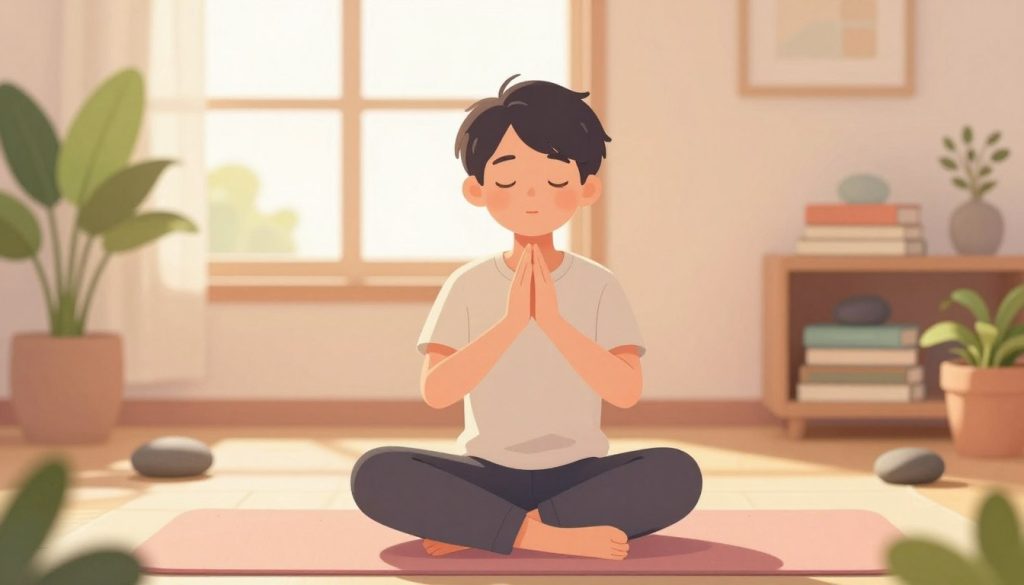
Feeling overwhelmed by anxiety can be debilitating. Fortunately, grounding exercises offer a powerful tool for managing anxiety and regaining control.
These simple yet effective anxiety relief practices help individuals focus on the present moment, distracting them from worrisome thoughts and calming the mind. By incorporating grounding techniques into daily life, individuals can develop greater resilience to anxiety.
Key Takeaways
- Grounding exercises can help alleviate anxiety symptoms.
- Regular practice enhances resilience to anxiety.
- Simple techniques can be easily incorporated into daily life.
- Grounding exercises promote a sense of calm and well-being.
- Effective anxiety relief is achievable through consistent practice.
Understanding Anxiety and the Need for Grounding
Understanding anxiety is crucial for developing effective management strategies. Anxiety can be overwhelming, affecting daily life and overall well-being. It is essential to recognize the symptoms and understand how grounding techniques can provide relief.
Symptoms of Anxiety
Anxiety manifests in various ways, including persistent worry, restlessness, and difficulty concentrating. Physical symptoms such as rapid heartbeat and trembling can also occur. Recognizing these symptoms is the first step towards managing anxiety.
Grounding techniques offer a practical approach to coping with anxiety by focusing on the present moment. These mental health exercises help individuals detach from distressing thoughts and emotions. By incorporating grounding into daily routines, individuals can develop effective coping mechanisms for stress.
Understanding and addressing anxiety requires a comprehensive approach. By acknowledging its impact and utilizing grounding techniques, individuals can improve their mental well-being and resilience.
The Science Behind Grounding Techniques for Anxiety
Understanding the science behind grounding techniques is crucial for appreciating their role in anxiety relief. Grounding techniques are calming strategies that help individuals manage anxiety by focusing on the present moment.
These techniques have a profound impact on both psychological and physiological levels. When an individual is experiencing anxiety, their body’s “fight or flight” response is triggered, leading to increased heart rate, blood pressure, and respiration.
Grounding techniques counteract this response by promoting relaxation methods that calm the nervous system. Techniques such as deep breathing, progressive muscle relaxation, and mindfulness meditation have been shown to reduce anxiety symptoms by decreasing cortisol levels and enhancing parasympathetic activity.

The psychological benefits of grounding techniques are equally significant. By distracting individuals from their anxiety-provoking thoughts and emotions, grounding techniques help reduce rumination and worry.
This, in turn, enhances cognitive functioning and promotes emotional regulation. In conclusion, the science behind grounding techniques underscores their potential as effective relaxation methods for anxiety management.
Physical Grounding Exercises
Grounding techniques that involve physical activity can significantly reduce feelings of anxiety and disconnection. By engaging the senses, individuals can shift their focus away from anxious thoughts and towards the present moment.
Physical grounding exercises are diverse and can be tailored to suit different preferences and needs. They often involve activities that stimulate the senses, such as touch, movement, or sensation.
Examples of Physical Grounding Exercises
- Walking barefoot on grass or sand, feeling the texture and temperature beneath your feet.
- Engaging in physical activities like yoga or tai chi, which combine movement with mindfulness.
- Using a stress ball or fidget toy to release tension through touch and manipulation.
- Taking a warm bath or shower, focusing on the sensations of the water on your skin.
- Paying attention to your breath while engaging in physical activity, such as during a brisk walk.
These exercises not only help in managing anxiety but also contribute to overall stress management. By incorporating physical grounding techniques into daily routines, individuals can develop more effective coping strategies for dealing with anxiety.
It’s essential to experiment with different physical grounding exercises to find what works best for you. Some people may prefer more vigorous activities, while others might find solace in gentle, calming exercises. The key is to find activities that you enjoy and that help you feel more grounded.
By making physical grounding exercises a regular part of your routine, you can enhance your ability to manage anxiety and improve your overall well-being. These techniques, combined with other grounding methods, can provide a comprehensive approach to mindfulness exercises and stress relief.
Breathing and Mindfulness Grounding Techniques
By combining breathing techniques with mindfulness, individuals can develop robust grounding practices for anxiety. Breathing exercises are a fundamental aspect of grounding, helping to calm the mind and regulate the body’s response to stress.
Mindfulness, the practice of being present in the moment, complements breathing techniques by enhancing awareness of one’s thoughts, feelings, and bodily sensations. This combined approach can be particularly effective in reducing anxiety.
Mindfulness Exercises for Grounding
Mindfulness exercises can be simple yet powerful. One technique is to focus on the sensation of the feet touching the ground, noticing the weight distribution and the sensation of the floor beneath. Another is to pay attention to the breath, observing its pattern without attempting to control it.
- Practice deep, slow breaths, focusing on the sensation of the breath moving in and out of the body.
- Engage in mindful walking, paying attention to the sensation of each step.
- Use guided meditation recordings to lead you through mindfulness exercises.
Mindful breathing can be done anywhere, at any time, making it a versatile grounding technique. It’s about observing the breath and letting go of distracting thoughts.
Regular practice of these techniques can lead to better management of anxiety. Incorporating them into daily routines can enhance their effectiveness.
By adopting these self-care tips for anxiety, individuals can take proactive steps towards reducing their anxiety levels and improving their overall well-being.
Mental and Cognitive Grounding Strategies
Anxiety can be managed through various mental and cognitive strategies that promote calmness and clarity. These techniques help individuals focus on the present moment, reducing the overwhelming feelings associated with anxiety.
Mental Exercises for Anxiety Relief
Engaging in mental exercises can significantly alleviate anxiety symptoms. One effective technique is to practice mental visualisation, where you imagine yourself in a peaceful, safe environment. This could be a serene beach or a quiet forest. The key is to engage all your senses in the visualisation, noticing the sights, sounds, and sensations.
Another calming strategy involves using cognitive reappraisal. This entails reframing negative thoughts in a more positive or realistic light. For instance, instead of thinking “I will never be able to handle this,” you could reframe it as “I have managed challenging situations before, and I can do so again.”
Additionally, practicing mindfulness through meditation or focused attention on the present moment can be highly beneficial. Mindfulness helps in reducing rumination and worry by grounding the individual in the here and now.
- Engage in puzzles or brain teasers to distract from anxious thoughts.
- Practice gratitude by listing things you are thankful for.
- Use positive affirmations to reinforce a positive mindset.
By incorporating these mental and cognitive grounding strategies into your daily routine, you can develop effective coping mechanisms for managing anxiety. Regular practice enhances the efficacy of these techniques, leading to improved mental well-being.
Incorporating Grounding Techniques for Anxiety into Daily Life
Incorporating grounding techniques into daily life can be a transformative approach to managing anxiety. By making grounding a regular practice, individuals can better cope with anxiety-provoking situations.
To start, it’s essential to establish a consistent routine. This could involve setting aside a few minutes each day for relaxation methods such as deep breathing exercises or a short walk outside. Consistency is key to making grounding a habitual part of daily life.
Another effective strategy is to incorporate anxiety relief practices into daily activities. For example, paying attention to the sensation of feet on the ground while walking or the sounds around you can be a simple yet effective grounding technique.
Overcoming common obstacles, such as a busy schedule, can be achieved by integrating grounding techniques into daily routines, like during commutes or right before bed. By doing so, individuals can enhance their ability to manage anxiety effectively.
By incorporating these relaxation methods and anxiety relief practices into daily life, individuals can develop a robust toolkit for managing anxiety, leading to a more balanced and fulfilling life.
Conclusion: Building a Personalised Grounding Practice
Developing a grounding practice tailored to your needs can be a powerful tool in managing anxiety. By incorporating the stress management techniques and self-care tips for anxiety outlined in this article, you can create a personalised plan to help you stay grounded in times of stress.
Start by identifying the grounding techniques that work best for you, whether it’s physical exercises, breathing and mindfulness practices, or mental and cognitive strategies. Experiment with different techniques to find what brings you the most comfort and calm.
As you continue on your grounding journey, remember that consistency is key. Make grounding a regular part of your daily routine, and be patient with yourself as you develop your practice. With time and commitment, you can harness the benefits of grounding to improve your overall well-being and reduce anxiety.
By making grounding a part of your self-care routine, you can take control of your anxiety and cultivate a greater sense of calm and resilience in your daily life.