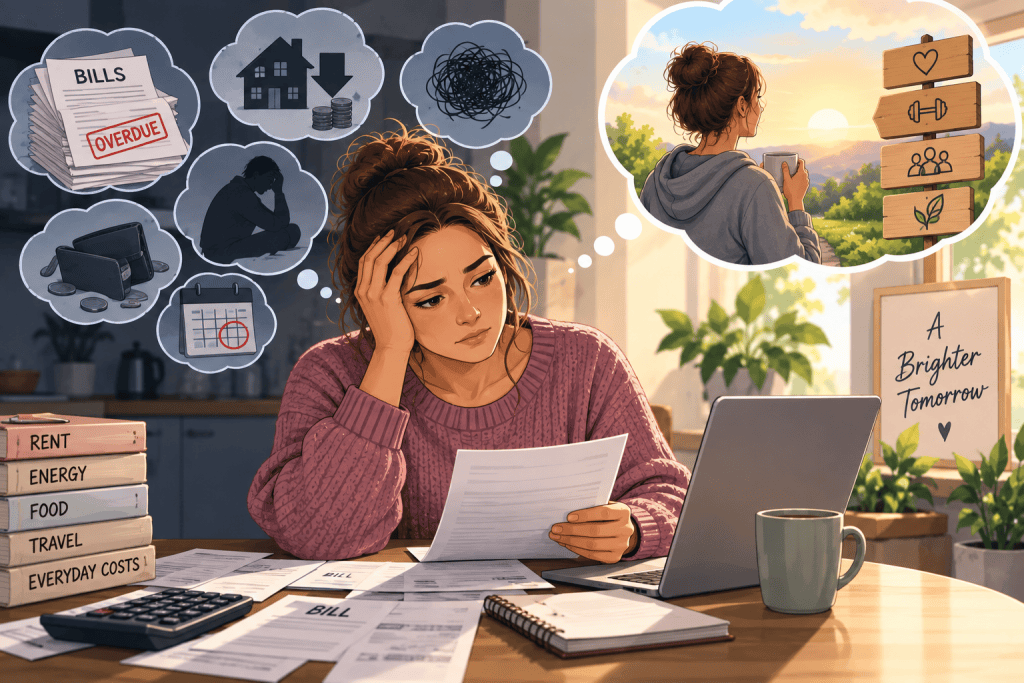
Financial worries can have a serious impact on mental health. Rising household costs, debt, rent or mortgage payments, job insecurity and unexpected bills can create constant pressure, making it difficult to switch off or feel in control.
For some people, money worries cause anxiety and sleepless nights. For others, financial problems can contribute to depression, relationship difficulties, low self-esteem and feelings of hopelessness.
The connection between financial worries and mental health can become a difficult cycle. Poor mental health can make it harder to manage money, while financial stress can make existing mental health problems worse.
Understanding this connection is important because people should not feel ashamed about struggling financially or emotionally.
How Financial Worries Affect Mental Health
Money is connected to many areas of everyday life.
It affects where we live, what we eat, how we travel, whether we can heat our homes and how secure we feel about the future.
When finances become uncertain, the impact can be much greater than simply worrying about a bank balance.
You may find yourself constantly calculating what you can afford, avoiding opening bills or checking your account repeatedly.
This ongoing stress can affect both your mental and physical wellbeing.
Common emotional effects of financial stress include:
- Anxiety
- Depression
- Irritability
- Panic
- Shame
- Guilt
- Poor concentration
- Difficulty sleeping
- Low confidence
- Social withdrawal
- Feelings of hopelessness
For some people, financial worries can become overwhelming.
Financial Stress and Anxiety
Anxiety is one of the most common responses to financial difficulties.
You may find yourself worrying constantly about what will happen next.
Questions such as:
“How will I pay this bill?”
“What if I lose my home?”
“What if my hours are cut?”
“What if something else goes wrong?”
can begin running through your mind throughout the day.
Financial anxiety can also cause physical symptoms such as headaches, muscle tension, stomach problems, a racing heartbeat and difficulty sleeping.
The uncertainty is often one of the hardest parts.
Even if no immediate crisis is happening, worrying about what could happen in the future can keep the body in a constant state of stress.
Money Problems and Depression
Long-term financial difficulties can also contribute to depression.
When people feel trapped in debt or unable to improve their situation, they may begin to lose hope.
This can lead to low mood, exhaustion and a sense that nothing will change.
Some people begin blaming themselves for their financial circumstances.
They may feel embarrassed, ashamed or believe they have failed.
However, financial difficulties can happen for many reasons, including:
- Redundancy
- Illness
- Relationship breakdown
- Bereavement
- Disability
- Caring responsibilities
- Reduced working hours
- Rising living costs
- Unexpected household expenses
- Business difficulties
Money problems are not a measure of somebody’s worth.
The Cost of Living and Mental Health
When the cost of everyday essentials rises, people with already limited incomes can face extremely difficult choices.
Households may have to decide between heating, food, transport or other essential costs.
This pressure can particularly affect people who are already vulnerable, including families on low incomes, disabled people, carers, older people and those experiencing unemployment.
Constant financial pressure can lead to chronic stress.
When the brain is focused on immediate survival and paying essential bills, there may be little emotional energy left for anything else.
People may struggle to focus at work, sleep properly or enjoy time with family and friends.
Financial Worries Can Affect Relationships
Money is a common source of tension within relationships.
Partners may disagree about spending, debt, household responsibilities or how to manage limited finances.
People may also hide financial problems because they feel embarrassed.
This can create secrecy and mistrust.
Stress can make people more irritable, which may lead to arguments over issues that would normally be manageable.
Open communication can help, particularly when both people approach the problem as something they need to manage together rather than blaming each other.
If financial stress is affecting your relationship, talking to somebody outside the situation may also help.
Why People Avoid Talking About Money
Money remains a sensitive subject.
Some people feel comfortable discussing relationships, work or even mental health but find it extremely difficult to admit they are struggling financially.
There can be a strong sense of shame attached to debt or financial hardship.
People may worry that others will judge them or assume they have been irresponsible.
As a result, they may hide bills, avoid asking for help or pretend that everything is fine.
Unfortunately, avoiding financial problems rarely makes them disappear.
Opening letters, checking what is owed and getting appropriate advice can feel frightening, but it can also be the beginning of regaining control.
How Poor Mental Health Can Make Money Problems Harder
The relationship between money and mental health works both ways.
When somebody is experiencing severe anxiety or depression, managing finances can become much harder.
They may struggle with concentration, motivation and decision-making.
Bills may remain unopened.
Appointments may be missed.
Forms may feel impossible to complete.
Some people may also spend impulsively when they are distressed or use shopping, gambling, alcohol or other behaviours as a way of coping.
This can make financial difficulties worse and increase feelings of shame.
Support should therefore look at both the practical and emotional issues.
Practical Steps for Managing Financial Stress
You may not be able to solve every financial problem immediately, but taking small steps can reduce uncertainty.
Start by getting a clear picture of your situation.
This may include looking at:
- Income
- Essential household costs
- Debts
- Benefits or financial support
- Rent or mortgage payments
- Council Tax
- Energy bills
- Credit agreements
It can help to write everything down rather than trying to keep it all in your head.
Prioritise essential bills and seek specialist advice before agreeing to repayment arrangements you may not be able to afford.
Free debt advice organisations may be able to help you understand your options.
You may also be entitled to benefits, grants or other financial support that you are not currently receiving.
Looking After Your Mental Health When Money Is Tight
Financial difficulties can make self-care feel like a luxury, but looking after your mental wellbeing does not have to involve spending money.
Simple things can still make a difference.
Try to maintain a basic daily routine.
Get outside when you can.
Stay connected with people you trust.
Avoid spending hours repeatedly checking bills or bank accounts if it increases anxiety.
Set aside a specific time to deal with finances, then try to focus on other parts of your day.
Sleep, exercise and regular meals can also help the body cope with stress.
Most importantly, do not isolate yourself because of financial embarrassment.
How Counselling Can Help With Financial Anxiety
Counselling cannot remove debt or increase somebody’s income, but it can help with the emotional impact of financial problems.
A counsellor can provide a safe place to talk about anxiety, shame, fear and hopelessness.
Counselling may help you:
- Manage anxiety
- Understand negative thought patterns
- Reduce feelings of shame
- Improve confidence
- Develop healthier coping strategies
- Manage relationship stress
- Cope with uncertainty
- Break overwhelming problems into manageable steps
Sometimes people need practical financial advice and emotional support at the same time.
Both are important.
When Financial Worries Feel Overwhelming
If money problems are affecting your sleep, relationships, work or ability to manage everyday life, consider asking for support.
You do not have to wait until you reach crisis point.
Speak to someone you trust.
Contact a financial or debt advice service.
Talk to your GP if your mental health is deteriorating.
Counselling may also help you manage the emotional impact.
If financial worries are making you feel that life is not worth living, take those feelings seriously.
You deserve support regardless of your financial situation.
Mental Health Support From Anxious Minds
At Anxious Minds, we understand that financial difficulties can have a major impact on emotional wellbeing.
We support people experiencing anxiety, depression, stress, trauma, bereavement and other mental health difficulties, including those facing financial hardship and other pressures.
Our counselling and support services aim to provide a safe, non-judgemental environment where people can talk openly about what they are experiencing and begin finding a way forward.
Financial problems can feel isolating, but you do not have to deal with the emotional impact alone.
Asking for support can be an important first step towards regaining a sense of control.
Find out more about counselling and mental health support from Anxious Minds at www.anxiousminds.co.uk.
If you or somebody else is in immediate danger or there is an immediate risk of serious harm, call 999 or go to your nearest Accident & Emergency department.