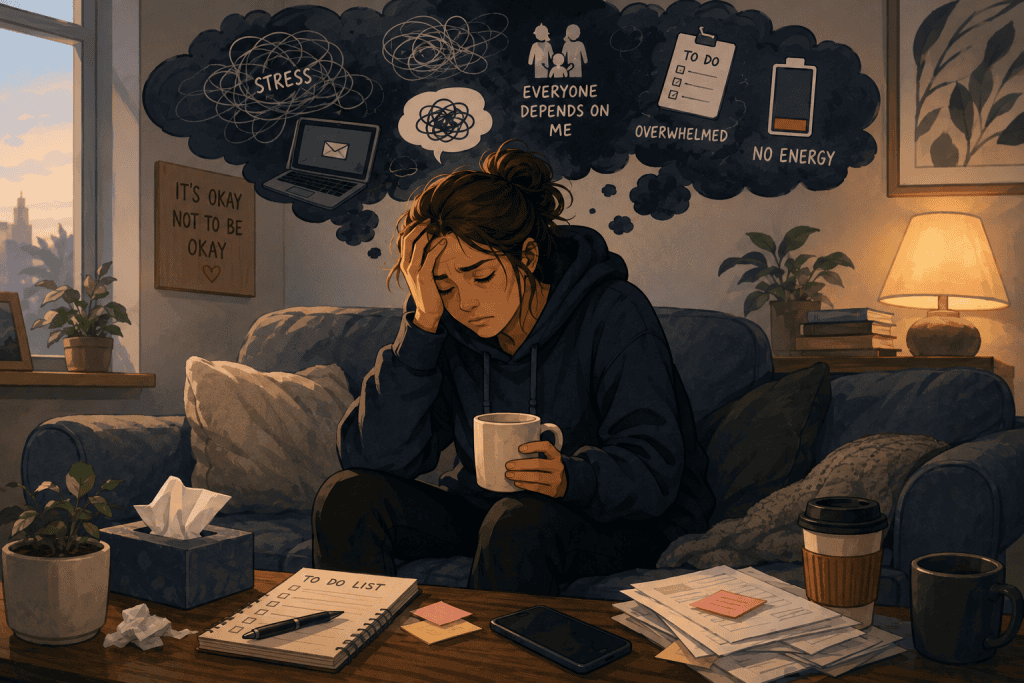
Emotional exhaustion can be difficult to recognise because it does not always look dramatic.
You may still get up, go to work, answer messages and complete basic responsibilities. To other people, you may appear to be coping.
Inside, however, you may feel completely drained.
Emotional exhaustion is more than ordinary tiredness. It can feel like your emotional energy has been used up. You may have little patience, motivation or interest left, even for the people and activities that normally matter to you.
It often develops after a long period of stress, pressure, caring responsibilities, conflict, worry or emotional strain. It can also be part of burnout, anxiety, depression, trauma or grief.
Understanding the signs of emotional exhaustion can help you recognise when you need rest, support or a change in circumstances.
Emotional Exhaustion Feels Like Having Nothing Left to Give
One of the clearest signs of emotional exhaustion is feeling as though you have reached the end of your emotional resources.
Small requests may feel overwhelming. A phone call, email or simple question can feel like one demand too many.
You may think:
“I cannot deal with anything else.”
“I just want everyone to leave me alone.”
“I do not have the energy to explain how I feel.”
This does not mean you have stopped caring.
It may mean that you have been caring, coping and pushing yourself for too long without enough recovery.
When emotional energy is low, even ordinary tasks can feel much harder than usual.
You May Feel Tired Even After Rest
Physical tiredness often improves with sleep. Emotional exhaustion may not.
You may sleep for several hours and still wake feeling drained. A weekend off may not feel long enough to recover. You may spend time resting but remain tense, distracted or worried.
This happens because the mind may still be under pressure even when the body is not moving.
You might lie in bed thinking about work, money, family problems or unfinished responsibilities. Your body is resting, but your mind remains active.
Over time, this can create a feeling of being permanently tired.
You may begin each day already feeling behind.
Everyday Tasks Can Feel Overwhelming
When you are emotionally exhausted, simple tasks can feel much larger than they really are.
Preparing food, replying to messages, attending appointments or deciding what to wear may require more energy than you feel able to give.
You may delay tasks because you cannot face starting them. Then the delay creates guilt and additional pressure.
This can lead to a cycle:
You feel too overwhelmed to begin.
The task becomes more urgent.
You criticise yourself for avoiding it.
The criticism leaves you feeling even more drained.
From the outside, this may look like poor organisation or laziness. In reality, your mind may be struggling to manage another demand.
You May Become More Irritable
Emotional exhaustion often affects patience.
You may become irritated by noise, interruptions, questions or small mistakes. Things you would normally handle calmly may suddenly feel unbearable.
You might snap at people you care about and then feel guilty afterwards.
This irritability can be confusing because you may not think of yourself as an angry person.
However, when your emotional resources are low, your ability to tolerate stress can become weaker.
Irritability may be a sign that you need rest, boundaries or support rather than evidence that you are becoming a bad person.
You May Feel Numb or Disconnected
Emotional exhaustion does not always feel like intense distress.
Sometimes it feels like nothing.
You may feel emotionally flat, detached or disconnected from the people around you. You may understand that something should make you happy or sad but struggle to feel much of anything.
This numbness can affect relationships.
A partner, friend or family member may think you are uninterested or distant. You may worry that you no longer care.
In many cases, numbness is a protective response. When the mind has been dealing with too much for too long, it may reduce emotional intensity to help you keep functioning.
This does not mean your feelings are gone permanently.
You May Lose Interest in Things You Usually Enjoy
Hobbies, social activities and interests can begin to feel like more work.
You may stop exercising, meeting friends, listening to music or doing creative activities because you do not have the energy.
Even positive plans may feel like obligations.
You might cancel at the last minute or avoid making arrangements because you expect to feel too tired.
The loss of interest can create further isolation. The fewer enjoyable or meaningful experiences you have, the harder it may become to recover emotional energy.
It is important not to force yourself into a busy schedule. However, gentle contact with supportive people and manageable activities may help prevent your world from becoming smaller.
Concentration and Memory May Become Worse
Emotional exhaustion can make thinking feel slow or foggy.
You may reread the same email several times, forget appointments or struggle to follow conversations.
Making decisions can become difficult because every choice feels like another demand.
You may find yourself staring at a task without knowing where to begin.
This can be frightening, particularly if you normally see yourself as organised and capable.
Mental fog can develop when the brain is overloaded. It does not necessarily mean that your abilities have disappeared. It may mean that you need recovery time and fewer demands.
You May Begin Withdrawing From Others
When you are emotionally drained, communication can feel exhausting.
You may stop answering calls, delay replying to messages or avoid social situations. You might feel you do not have the energy to talk or pretend that everything is fine.
You may also worry that you will become a burden.
Isolation can feel easier in the short term because it removes social pressure. However, withdrawing completely can leave you feeling even more alone.
You do not need to explain everything to everyone. Contact with one trusted person may be enough.
A simple message such as “I am feeling drained and may be quieter than usual” can help people understand what is happening.
Emotional Exhaustion Can Affect the Body
Emotional strain can create physical symptoms.
You may experience:
- Headaches
- Muscle tension
- Jaw clenching
- Stomach problems
- Chest tightness
- Poor sleep
- Changes in appetite
- Frequent minor illnesses
- Restlessness
- Low energy
- A racing heartbeat
- General aches and pains
These symptoms can create additional worry.
It is important not to assume that every physical symptom is caused by stress. Speak to a healthcare professional when symptoms are new, severe, persistent or concerning.
Mental and physical health are closely connected, and both deserve attention.
Common Causes of Emotional Exhaustion
Emotional exhaustion often develops when demands remain high for a long time and opportunities for recovery remain low.
Common causes include:
- Heavy workloads
- Long working hours
- Caring responsibilities
- Relationship conflict
- Financial pressure
- Bereavement
- Chronic illness
- Parenting stress
- Workplace bullying
- Trauma
- Supporting someone in crisis
- Feeling responsible for everyone
- Lack of sleep
- Constant uncertainty
- Poor boundaries
Sometimes there is no single cause.
It may be the result of many smaller pressures building over time.
A person can often manage one difficult situation. The problem comes when there is no space to recover before the next one arrives.
Emotional Exhaustion and Burnout
Emotional exhaustion is often a major part of burnout.
Burnout usually develops after prolonged stress, especially in work or caring roles.
It may involve:
- Feeling emotionally drained
- Becoming cynical or detached
- Reduced motivation
- Feeling ineffective
- Dreading work or responsibilities
- Struggling to recover during time off
Burnout is not simply disliking your job or having a difficult week.
It can affect confidence, relationships, sleep and physical health.
If the source of stress continues, self-care alone may not be enough. Changes to workload, responsibilities, working patterns or support may also be needed.
Why People Keep Pushing Through
Many people ignore emotional exhaustion because they believe stopping is not an option.
They may feel responsible for children, relatives, colleagues or service users. They may worry about losing income or disappointing others.
They may also be used to being the strong one.
Rest can feel selfish when other people depend on you.
However, continuing until you completely break down does not protect the people around you.
Recognising your limits is not weakness. It is part of maintaining your health and your ability to support others.
Small Steps That May Help
Recovery from emotional exhaustion usually requires more than one good night’s sleep.
Begin by reducing demands where possible.
Ask yourself:
“What can wait?”
“What can someone else help with?”
“What am I doing because I feel guilty rather than because it is necessary?”
You may also benefit from:
- Taking regular breaks
- Reducing unnecessary commitments
- Protecting sleep
- Eating regular meals
- Spending time outdoors
- Limiting alcohol
- Setting clearer boundaries
- Turning off work notifications
- Speaking honestly with someone you trust
- Returning to one manageable activity you enjoy
- Writing down worries
- Booking a GP or counselling appointment
Do not try to rebuild your entire life in one day.
Recovery often begins with smaller expectations and more realistic routines.
Learn to Set Boundaries
Emotional exhaustion is often connected to giving more than you can sustainably manage.
You may need to practise saying:
“I cannot take that on today.”
“I need more time.”
“I am not available this evening.”
“I can help with part of this, but not all of it.”
Boundaries may feel uncomfortable at first, particularly if you are used to putting other people first.
However, a boundary is not a rejection. It is a way of protecting the time and energy needed to remain well.
People who care about you may need time to adjust, but your health still matters.
When to Ask for Professional Help
Seek support when emotional exhaustion continues, becomes more severe or affects your ability to function.
Speak to a GP, counsellor or mental health professional if you are experiencing:
- Persistent low mood
- Severe anxiety
- Ongoing sleep problems
- Frequent panic
- Loss of interest in life
- Difficulty managing basic tasks
- Increasing alcohol or drug use
- Relationship breakdown
- Feeling trapped or hopeless
- Thoughts of self-harm or suicide
Professional support can help identify whether you are experiencing burnout, depression, anxiety or another difficulty.
You do not need to know exactly what is wrong before asking for help.
Emotional Exhaustion Is a Warning, Not a Failure
Emotional exhaustion is often the mind and body’s way of saying that the current level of pressure cannot continue.
It does not mean that you are weak, lazy or incapable.
It may mean that you have been carrying too much for too long.
Recovery requires more than telling yourself to be stronger. It may require rest, support, boundaries and changes to the situations that are draining you.
Start by acknowledging how you feel.
You do not have to wait until you completely break down.
You are allowed to ask for help before things reach crisis point.
Feeling exhausted does not mean you have failed.
It means you need care too.