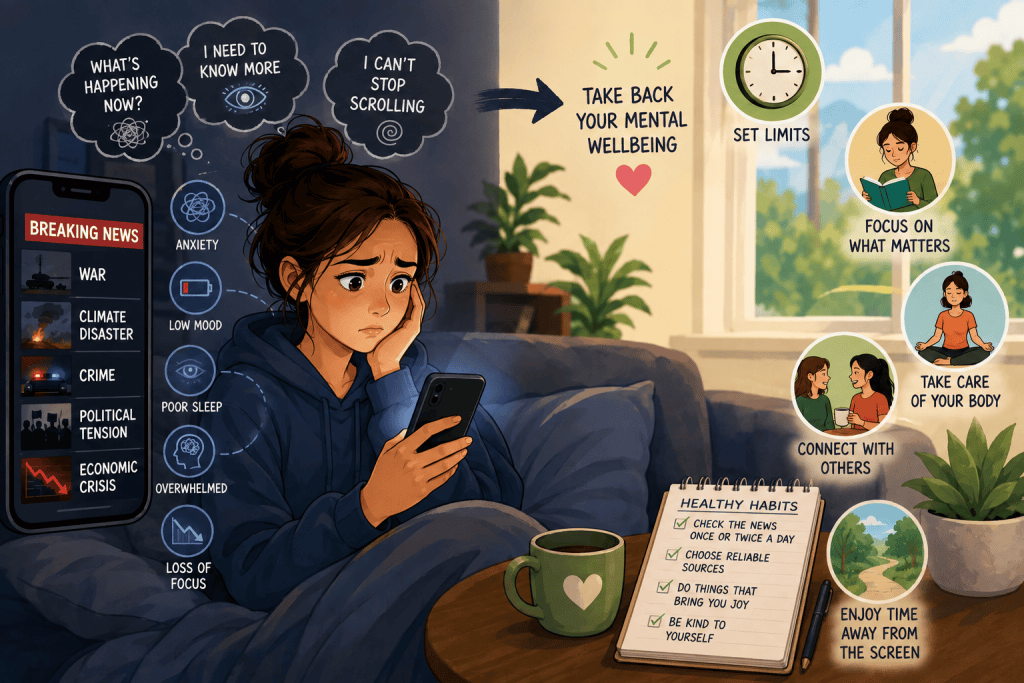
Checking the news can help us understand what is happening in the world. However, reading one update can quickly turn into spending a long time scrolling through stories about conflict, disasters, crime, political tension and other distressing events.
This behaviour is often called doomscrolling. It involves repeatedly consuming negative or upsetting online content, even when doing so leaves you feeling anxious, angry, helpless or emotionally exhausted.
Doomscrolling can easily become an automatic habit. You may pick up your phone to check one notification and realise much later that you have been moving between news websites, videos and social media posts.
Although staying informed is important, constant exposure to distressing information can affect mental wellbeing. The World Health Organization advises that spending too much time following news on television and social media can increase stress.
What Is Doomscrolling?
Doomscrolling means spending prolonged periods searching for or scrolling through negative news and online content.
It often begins with a reasonable intention. You may want to understand an event, check whether loved ones are safe or feel prepared for what might happen next.
The problem is that one update rarely feels like enough. Each new headline creates another question, concern or reason to continue scrolling.
The Mental Health Foundation explains that doomscrolling can create a negative cycle. Feeling worried or low may encourage someone to search for more information in an attempt to feel reassured, but the additional content can leave them feeling even worse.
Why Is Doomscrolling So Difficult to Stop?
Doomscrolling is not simply a lack of self-control. Several emotional and technological factors can keep the behaviour going.
The Brain Looks for Threats
People naturally pay attention to possible danger. This ability can help us identify risks and respond quickly.
When the world feels uncertain, the brain may search for more information to understand the threat. Unfortunately, online news feeds can provide an unlimited supply of alarming stories.
Instead of creating certainty, each new story may increase the feeling that something else could go wrong.
You Want to Feel Prepared
Reading more can create a temporary sense of control. You may believe that the next update will finally help you understand the situation or tell you what action to take.
However, many large-scale events are outside an individual’s control. Continually searching for answers can therefore increase helplessness rather than reduce it.
Online Platforms Encourage Continued Scrolling
Social media feeds, recommended posts and automatically playing videos make it easy to continue consuming content without making a conscious decision.
There is often no natural stopping point. As soon as one story ends, another appears.
Notifications can also draw you back into the same cycle throughout the day.
Negative Content Can Feel Urgent
Distressing headlines are often written to attract immediate attention. Words suggesting danger, crisis or major change can make a story feel impossible to ignore.
You may worry that taking a break means missing something important, even when you have already read enough to understand the main facts.
How Doomscrolling Affects Mental Wellbeing
Increased Anxiety
Repeated exposure to threatening information can make the world feel more dangerous than it is in your immediate surroundings.
You may begin anticipating disasters, worrying about loved ones or feeling tense whenever your phone displays a notification.
Doomscrolling can activate the body’s threat response, leaving someone feeling restless, alert or physically tense. The Mental Health Foundation notes that constant negative content may contribute to anxiety, sadness and feeling overwhelmed.
Low Mood and Hopelessness
When most of the content you see involves suffering, conflict and loss, it can become difficult to remember that positive events are also happening.
You may feel powerless because you cannot personally solve the problems appearing on your screen.
Over time, this can contribute to sadness, emotional numbness or a belief that nothing will improve.
Sleep Problems
Many people doomscroll while lying in bed. A quick evening check can extend far beyond the intended time, reducing the amount of sleep available.
Distressing stories can also leave the mind feeling alert when it should be preparing to rest. You may continue thinking about what you have seen after putting the phone down.
Good sleep supports mood, stress management and anxiety. The NHS recommends developing a relaxing bedtime routine and reducing habits that interfere with sleep.
Difficulty Concentrating
Constantly switching between headlines, videos and notifications can make sustained attention more difficult.
At work or during conversations, part of your mind may remain focused on whether another update has appeared.
Poor sleep and heightened anxiety can make concentration even harder, affecting memory, decision-making and productivity.
Anger and Irritability
Online news can create strong feelings of anger, injustice or frustration.
These emotions may continue after you stop scrolling, affecting interactions with family, friends and colleagues.
Arguments in comment sections can intensify distress, particularly when discussions become hostile or personal.
Physical Discomfort
Doomscrolling can involve sitting or lying in the same position for a long time.
This may contribute to headaches, eye strain, neck pain, shoulder tension and general discomfort. Stress may also cause a racing heartbeat, nausea or muscle tension.
The Mental Health Foundation identifies sleep difficulties, headaches, nausea and neck or shoulder pain among the possible effects associated with prolonged doomscrolling.
Reduced Connection With Everyday Life
Time spent scrolling can replace activities that support wellbeing, such as exercise, hobbies, rest and meaningful conversations.
You may be physically present with another person while your attention remains fixed on your phone.
Doomscrolling can therefore create an unusual combination of constant online connection and growing emotional isolation.
Signs Doomscrolling May Be Affecting You
It may be time to review your online habits if you:
- Check upsetting news repeatedly throughout the day
- Continue scrolling despite feeling worse
- Reach for your phone immediately after waking
- Read the news late into the night
- Feel anxious when you cannot check for updates
- Struggle to focus on work or conversations
- Feel angry, frightened or hopeless after going online
- Frequently argue with people in comment sections
- Neglect meals, exercise or other responsibilities
- Find it difficult to enjoy positive experiences
- Feel physically tense while reading the news
You do not need to experience every sign for doomscrolling to affect your wellbeing.
How to Stop Doomscrolling
Set Specific Times for News
Choose one or two times during the day to check reliable news sources.
Avoid checking continuously or responding to every notification. A planned routine allows you to remain informed without giving the news unrestricted access to your attention.
Set a Time Limit
Decide how long you will spend reading updates before opening an app or website.
A timer may help. When it ends, close the app and move to another activity, even when more stories are available.
The aim is not to finish the entire feed. Online feeds are designed to continue indefinitely.
Turn Off Unnecessary Notifications
News alerts can create a constant sense of urgency.
Keep notifications only for information that genuinely requires immediate attention. Most stories can wait until your next planned check.
Avoid News Before Bed
Create a phone-free period before going to sleep.
Place your phone away from the bed or charge it in another room. Reading, stretching, listening to calm music or preparing for the next day may help your mind settle.
Choose Reliable Sources
Following a small number of trusted news organisations can reduce exposure to rumours, repeated stories and exaggerated claims.
Avoid relying entirely on social media posts for complex information. Check the original source before sharing alarming content.
Notice Your Emotional Response
Pause and ask yourself:
“How am I feeling after reading this?”
“Am I learning anything new?”
“Is continuing to scroll helping me?”
“What do I need at this moment?”
These questions can interrupt automatic behaviour and help you make a conscious choice.
Replace Scrolling With Another Action
Simply telling yourself to stop may leave an empty space that the habit quickly fills again.
Choose a replacement activity, such as:
- Going for a short walk
- Making a drink
- Calling a friend
- Listening to music
- Reading a book
- Stretching
- Spending time outdoors
- Completing a practical task
- Doing something creative
The Mental Health Foundation recommends balancing distressing news consumption with activities such as movement, mindfulness, reading and spending time with others.
Focus on What You Can Control
Large events can create feelings of helplessness.
Consider whether there is a realistic action you can take, such as supporting a reputable charity, contacting an elected representative, helping someone locally or learning from a reliable source.
Once you have taken a meaningful action, give yourself permission to step away.
When to Seek Support
Speak to a GP, counsellor or mental health professional if online news is contributing to persistent anxiety, depression, panic, sleep problems or difficulty managing daily life.
Professional support may help you understand what drives the behaviour and develop healthier ways to cope with uncertainty.
Seek urgent help if you are experiencing thoughts of suicide or self-harm, feel unable to keep yourself safe or believe you may harm someone else.
In an immediate emergency, call 999 or attend the nearest accident and emergency department.
Staying Informed Without Becoming Overwhelmed
Reducing doomscrolling does not mean ignoring serious events or becoming uncaring.
It means recognising that consuming distressing information continuously does not necessarily make you better informed or more able to help.
You are allowed to take breaks, enjoy ordinary moments and protect your mental wellbeing while still caring about what happens in the world.
By setting limits, choosing reliable sources and making time for rest, movement and real-life connection, you can stay informed without allowing negative news to control your day.