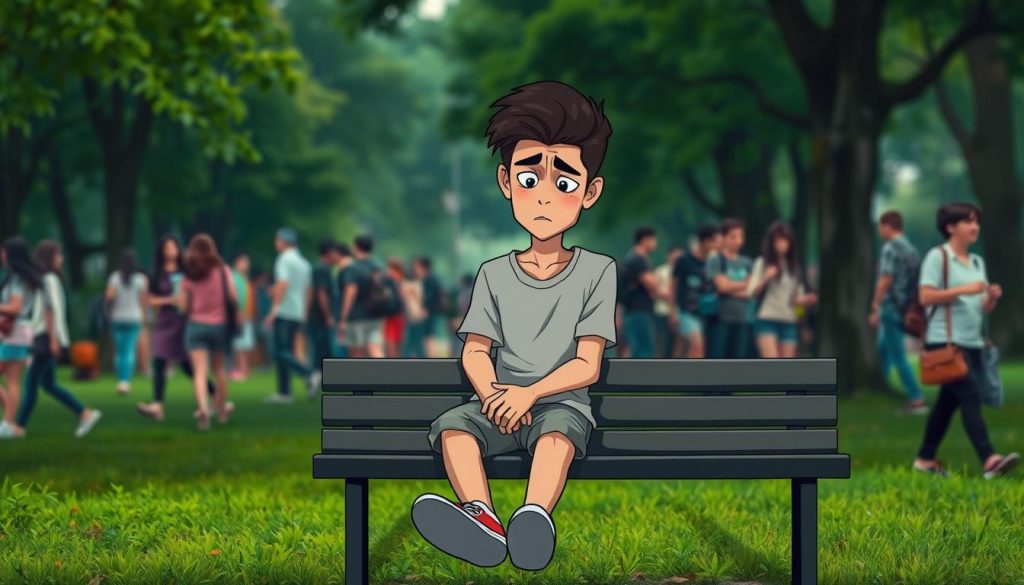
Feeling overwhelmed by social anxiety can be a debilitating experience, often leading to isolation and loneliness. It’s a common struggle that many people face, and it’s essential to address these feelings to regain control over one’s life.
This guide is designed to provide you with a comprehensive understanding of how to cope with social anxiety and the resulting isolation. By exploring practical strategies and techniques, you’ll be better equipped to manage your anxiety and reconnect with others.
Key Takeaways
- Understand the impact of social anxiety on daily life.
- Learn effective coping mechanisms for managing anxiety.
- Discover ways to break the cycle of isolation.
- Explore strategies for rebuilding social connections.
- Find resources for ongoing support.
Understanding Social Anxiety and Isolation
The intertwined issues of social anxiety and isolation can have a profound impact on an individual’s wellbeing. Social anxiety disorder is a condition that often leads to feelings of loneliness and disconnection from others.

What Is Social Anxiety Disorder?
Social anxiety disorder is a mental health condition characterised by an intense fear of being judged or scrutinised by others in social situations. This fear can be so overwhelming that it interferes with daily life, making routine interactions a source of significant distress.
The Cycle of Isolation
Isolation often follows as a consequence of social anxiety, creating a vicious cycle. As individuals withdraw from social interactions to avoid feelings of anxiety, they may experience increased loneliness, which in turn can exacerbate their anxiety about social interactions.
Common Triggers in Everyday Life
Everyday situations can become triggers for social anxiety, including meetings at work, social gatherings, or even simple tasks like grocery shopping. Recognising these triggers is the first step towards managing social anxiety and breaking the cycle of isolation.
By understanding the complexities of social anxiety disorder and its link to isolation, individuals can begin to address these issues more effectively.
Recognising the Signs and Impact
Understanding the indicators of social anxiety and isolation can help mitigate its debilitating effects. Recognising these signs is the first step towards seeking effective coping strategies and improving overall wellbeing.
Physical Symptoms to Be Aware Of
Social anxiety and isolation can manifest physically, often in ways that are not immediately associated with mental health. Common physical symptoms include:
- Trembling or shaking
- Sweating excessively
- A rapid heartbeat
- Nausea or stomach discomfort
- Tension headaches
These physical symptoms can be distressing and may exacerbate feelings of anxiety, creating a vicious cycle.

Psychological Effects of Prolonged Isolation
Prolonged isolation can have severe psychological effects, including:
- Increased feelings of loneliness and despair
- Heightened anxiety levels
- Depression
- Loss of identity and self-worth
These effects can be particularly challenging to overcome, making it crucial to address isolation early on.
How Relationships and Work Performance Suffer
Social anxiety and isolation can significantly impact personal and professional relationships. At work, this might manifest as:
- Difficulty communicating with colleagues
- Avoiding meetings or social gatherings
- Reduced productivity
In personal relationships, it can lead to feelings of disconnection and isolation from friends and family, further exacerbating the issue.
By recognising these signs and understanding their impact, individuals can take the first steps towards seeking help and developing effective coping strategies for managing social anxiety and isolation.
Practical Self-Help Techniques for Social Anxiety and Isolation
There are several effective self-help techniques that can help alleviate the symptoms of social anxiety and isolation. By incorporating these strategies into daily life, individuals can take significant steps towards improving their mental wellbeing.
Mindfulness and Grounding Exercises
Mindfulness and grounding exercises are powerful tools for managing social anxiety. These techniques help individuals focus on the present moment, reducing worries about the past or future. Mindfulness practices, such as meditation and deep breathing, can calm the mind and body. Grounding techniques, like paying attention to the five senses, can also help individuals feel more connected to their surroundings.
For example, a simple grounding exercise involves noticing the sensation of feet on the ground, the sounds around you, or the sensation of the air on your skin. Regular practice of these techniques can lead to a significant reduction in anxiety symptoms.
Cognitive Restructuring: Challenging Negative Thoughts
Cognitive restructuring is a helpful technique for challenging and changing negative thought patterns that contribute to social anxiety. This involves identifying distorted or unhelpful thinking, challenging these thoughts with evidence, and replacing them with more balanced and realistic ones. By altering negative thought patterns, individuals can reduce their anxiety and feel more confident in social situations.
For instance, if someone thinks, “I’m going to fail in this social situation,” they can challenge this thought by asking themselves for evidence to support it and then replace it with a more realistic thought, such as, “I’ve handled similar situations before, and I can do it again.”
Gradual Exposure: Creating Your Social Ladder
Gradual exposure involves gradually facing feared social situations in a controlled and manageable way. This can be achieved by creating a “social ladder,” where individuals start with small, achievable steps and gradually work their way up to more challenging situations. This technique helps build confidence and reduces avoidance behaviors.
For example, someone who is anxious about attending parties might start by attending small gatherings, then gradually move to larger events. Each success builds confidence and helps to reduce anxiety.
Building Daily Structure and Routine
Establishing a daily structure and routine can provide a sense of stability and control, which is particularly helpful for individuals dealing with social anxiety and isolation. A consistent routine can include set times for work, rest, exercise, and social activities, helping to create a balance that supports mental health.
By incorporating these self-help techniques into daily life, individuals can develop effective coping strategies for managing social anxiety and isolation. Regular practice and patience are key to achieving lasting improvements in mental wellbeing.
Professional Support Options in the UK
The UK offers a range of professional support options for those struggling with social anxiety and isolation. These resources are designed to provide comprehensive care and support to individuals in need.
NHS Pathways and Waiting Lists: What to Expect
The National Health Service (NHS) provides a structured pathway for individuals seeking help for social anxiety and isolation. Upon contacting the NHS, typically through a GP referral, individuals are assessed and then directed to appropriate services. Waiting lists can vary depending on the service and location, but the NHS strives to provide timely access to care. It’s essential for individuals to be aware that initial assessments are usually conducted promptly, and then treatment plans are put in place.
UK Charities and Support Groups (Mind, Anxiety UK)
Charities and support groups play a vital role in providing additional support to those experiencing social anxiety and isolation. Organizations such as Mind and Anxiety UK offer a range of services, including counseling, support groups, and educational resources. These charities provide a safe space for individuals to share their experiences and receive support from others who understand their challenges.
Therapy Approaches: CBT, ACT and Group Therapy
Various therapy approaches are available to help individuals manage social anxiety and isolation. Cognitive Behavioral Therapy (CBT) is a commonly used method that helps individuals identify and change negative thought patterns. Acceptance and Commitment Therapy (ACT) is another approach that focuses on accepting difficult emotions while taking action towards valued life goals. Group therapy provides a supportive environment where individuals can share experiences and learn from others.
When to Consider Medication
In some cases, medication may be considered as part of a treatment plan for social anxiety and isolation. This decision is typically made in consultation with a healthcare professional, who will assess the individual’s specific needs and circumstances. Medication can be an effective tool in managing symptoms, especially when combined with therapy.
Rebuilding Social Connections After Isolation
After experiencing social isolation, reconnecting with others can seem daunting, but it’s a vital part of the recovery process. Rebuilding social connections requires a gentle, gradual approach that acknowledges the challenges posed by social anxiety.
Low-Pressure Social Activities to Start With
Begin with low-pressure social activities that don’t feel overwhelming. This could include meeting a friend for coffee, joining an online forum related to a hobby, or participating in a local community event. Starting small is key to building confidence in social interactions.
Using Technology Positively for Connection
Technology can be a valuable tool for reconnecting. Use social media platforms, apps, and online communities to engage with others who share similar interests. It’s about finding a balance between online and offline interactions to foster meaningful connections.
Finding Communities Based on Interests in Your Area
Identify local groups or clubs that align with your interests. This could be anything from book clubs to sports teams. Engaging in activities you enjoy makes it easier to connect with like-minded individuals.
Supporting Others Who Experience Social Anxiety
Supporting others who experience social anxiety can be a powerful way to build connections. Consider volunteering for organizations that help people with mental health issues. This not only helps others but also provides a sense of purpose and community.
Conclusion: Moving Forward on Your Social Wellbeing Journey
Dealing with social anxiety and isolation requires a comprehensive approach that incorporates self-help techniques, professional support, and social connections. As you continue on your journey towards improved mental health, it’s essential to remember that progress is often gradual.
The strategies discussed, including mindfulness, cognitive restructuring, and gradual exposure, can help you build confidence and reduce feelings of isolation. Seeking support from UK charities like Mind and Anxiety UK, as well as NHS pathways, can provide valuable guidance and therapy options.
Rebuilding social connections through low-pressure activities and technology can also play a significant role in enhancing your social wellbeing. By taking small steps and being consistent, you can work towards a more fulfilling life. Focusing on your mental health is a journey, and every step you take is a move in the right direction.
FAQ
What is social anxiety disorder, and how does it differ from normal shyness?
Social anxiety disorder is a mental health condition characterised by an excessive and persistent fear of social or performance situations in which a person is exposed to possible scrutiny by others. It differs from normal shyness in its severity and impact on daily life, often involving avoidance of social interactions and significant distress.
How can I tell if my feelings of loneliness are a sign of a more serious issue like social anxiety?
Feelings of loneliness can be a symptom of social anxiety if they are accompanied by a persistent fear of social interactions, avoidance of social situations, and significant distress or impairment in daily life. If you’re experiencing these symptoms, it may be helpful to consult with a mental health professional.
What are some effective self-help techniques for managing social anxiety?
Techniques such as mindfulness, cognitive restructuring, and gradual exposure can be effective in managing social anxiety. Mindfulness involves being present in the moment, while cognitive restructuring involves challenging negative thoughts. Gradual exposure involves gradually increasing exposure to feared social situations.
How can I find support groups or therapy services in the UK for social anxiety?
Organisations such as Mind and Anxiety UK offer support groups and therapy services for individuals experiencing social anxiety. You can also contact your GP or a mental health professional for guidance on accessing NHS services or private therapy.
Can technology be used positively to help manage social anxiety and isolation?
Yes, technology can be used positively to help manage social anxiety and isolation. Online support groups, forums, and therapy services can provide a safe and accessible way to connect with others and receive support.
What are some low-pressure social activities that I can start with to rebuild my social connections?
Low-pressure social activities such as joining a book club, volunteering, or attending a hobby-based group can be a good starting point for rebuilding social connections. These activities allow you to interact with others while doing something you enjoy.
How can I support someone who is experiencing social anxiety?
Supporting someone with social anxiety involves being understanding, patient, and encouraging. You can offer to accompany them to social events or therapy sessions, and provide a safe and non-judgmental space to talk about their feelings.