


Mental health is a key topic in today’s Britain. Many people in the UK face psychological issues that impact their daily lives. It’s vital for everyone to work together to break the stigma around mental health.
This guide looks at how views on mental wellbeing have changed. We discuss the barriers that stop people from sharing their struggles. By understanding these, we can build a more supportive society for those with mental health issues.
Changing attitudes starts with education and open talks. You’ll find practical tips and real stories to help you challenge negative beliefs. This guide aims to give you the knowledge and confidence to make a real difference.
In this guide, we share insights from experts, community leaders, and the NHS. You’ll learn about legal rights for employees, supporting loved ones at home, and finding help when needed. Changing minds about mental health is more than just words—it’s about changing hearts across the nation.
Understanding the Current Landscape of Mental Health Awareness
Talking about mental health has changed a lot in twenty years. What was once a secret topic is now common in conversations. This change shows that mental health is as important as physical health. Knowing where we are today helps us see what needs to change.
Mental health awareness campaigns have changed how we view emotional wellbeing. These efforts show that attitudes can change when we hear real stories and get accurate info.

The Evolution of Public Perception
Public views on mental health have changed a lot. The Time to Change campaign, from 2007 to 2021, showed how messages can change society. It reached millions in England and Wales, fighting stereotypes with real stories and facts.
Important changes include:
- Seeing mental health as a medical issue, not a personal failure
- Being more open about emotional struggles
- Seeing seeking help as a sign of strength
- Understanding that anyone can face mental health issues
Identifying Barriers to Open Dialogue
Despite progress, big obstacles stop honest talks about mental wellbeing. Fear of being judged is a big one. People fear sharing their struggles might harm relationships or reputation.
Common barriers include:
- Stigma around mental health
- Workplace worries about job security and advancement
- Not knowing where to get help
- Family attitudes that don’t encourage emotional talk
- Concerns about being labelled or misunderstood
Overcoming these barriers takes ongoing work. Building trust and openness in communities makes people feel safer talking about mental health. Seeing respected figures share their experiences encourages others to do the same.
Breaking the Stigma Around Mental Health
To break the stigma around mental health, we all need to work together. This means individuals, communities, and big organisations in the UK. We must go beyond just knowing about mental health to really change how society views it. This change needs real effort and kindness in all parts of life.
Changing negative views involves several steps. These steps help change how people see mental health and support those who need it.
- Encouraging open conversations about mental wellbeing in everyday settings
- Sharing personal stories and lived experiences authentically
- Challenging harmful language and misconceptions when they arise
- Supporting those who struggle without judgment or prejudice
- Promoting evidence-based information about mental health conditions
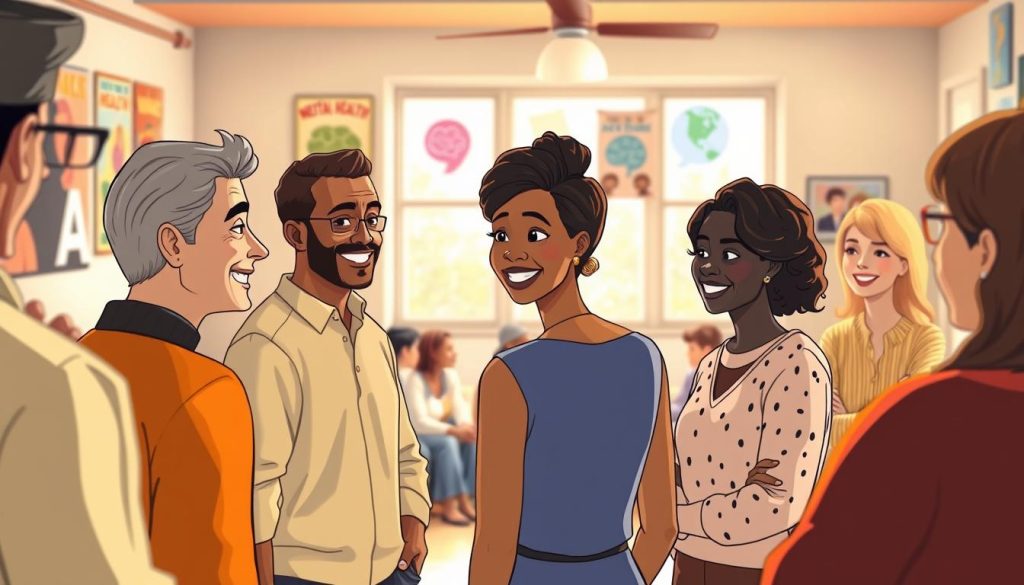
Change happens when we see that mental health affects us all. People from all walks of life face mental health issues. By talking openly, we make places where people feel safe to ask for help.
Mental health is not a personal failure—it is a shared human experience that deserves compassion and support.
Groups like Mind and the Samaritans show that consistent, empathetic communication changes minds. When leaders and famous people talk about mental health, it encourages others to do the same.
Changing how we see mental health isn’t just a one-off. It needs ongoing effort, learning, and dedication from everyone. Every conversation and act of support helps build a more accepting world.
Challenging Mental Health Misconceptions in Society
In the UK, many people have wrong ideas about mental health. These beliefs stop people from getting help. Knowing the truth about mental illness is key to reducing stigma. By fighting these misconceptions, we open up honest talks and understanding.
These wrong beliefs come from many places. They might be old ideas passed down in families. Or they could come from TV shows that don’t show mental health correctly. These beliefs change how people see themselves and others with mental health issues.
Debunking Common Myths
Many myths about mental health are around today. Let’s look at some of the most harmful ones:
- Mental illness is weakness – Mental health conditions are medical, not flaws
- People with mental health problems are dangerous – Most are not a threat to others
- Mental health problems go away on their own – Getting help leads to better results
- Children cannot develop mental health conditions – Young people face mental health issues too
- Talking about mental health makes it worse – Talking helps recovery
The Role of Media Representation
TV, films, and news shape what we think about mental health. Bad portrayals can harm. Good reporting shows mental health in a fair light.
Groups like Mind and Rethink Mental Illness work with media to improve. They push for stories that show real experiences. Good media helps make mental health talks normal in Britain.
You can help by being critical of media. Challenge stereotypes. Support media that shows mental health well. Your actions can change minds around you.
Normalising Mental Health Conversations at Home
Creating a safe space for family to talk about feelings is key for mental health. It shows everyone that emotions are important and need to be talked about. When we openly discuss mental health, we strengthen our bonds and spot issues early.
Starting these talks might feel awkward at first. Parents and guardians can start with simple questions in daily moments. Asking “How did that make you feel?” or “What was the hardest part of your day?” can lead to deeper talks without stress.
Building trust takes time and effort. Kids learn that feelings are okay when they see adults handling theirs well. By making mental health talks normal at home, you teach the next generation that asking for help is brave, not weak.
Here are some tips for family chats:
- Choose calm moments for meaningful talks, not during arguments or stress
- Listen without judgment or trying to fix everything immediately
- Share your own feelings to show vulnerability is safe
- Use age-appropriate language children can understand
- Celebrate when family members open up about struggles
- Make mental health a regular topic, like physical health
Creating these habits lays a foundation of emotional safety. It protects all family members for their whole lives.
The Impact of Mental Health Discrimination in the Workplace
Mental health issues affect millions of workers in the UK. Many hide their struggles, fearing job loss or unfair treatment. Workplaces that ignore mental health hinder productivity and wellbeing. But, supporting staff can build stronger, healthier teams.
Mental health discrimination is a big problem in many workplaces. Staff may face bad attitudes from colleagues or bosses. Some hide their conditions to avoid being judged or left out. It’s important for workplaces to understand the law and support mental health.
Legal Protections for Employees
The Equality Act 2010 protects workers with mental health issues. Employers must make reasonable adjustments to help staff do their jobs well. These might include flexible hours, quiet spaces, or adjusted deadlines.
Under this law, employers can’t unfairly treat staff because of mental health. Workers have the right to ask for support without fear of losing their job. ACAS offers free advice on workplace rights and duties.
- Right to reasonable adjustments in working conditions
- Protection from unfair dismissal based on mental health
- Access to occupational health services
- Confidentiality regarding medical information
Creating Inclusive Professional Environments
Creating inclusive workplaces is more than just following the law. Organisations should encourage open talks about mental wellbeing. Training managers to spot and help with signs of distress is key.
Inclusive environments benefit businesses in many ways:
| Workplace Benefit | Positive Impact |
|---|---|
| Mental health support policies | Reduced staff turnover and increased loyalty |
| Manager training on mental wellbeing | Better early intervention and support |
| Employee assistance programmes | Improved productivity and morale |
| Flexible working arrangements | Enhanced work-life balance for all staff |
| Mental health awareness campaigns | Reduced stigma and stronger team cohesion |
Supportive workplaces make employees feel valued and understood. Staff who get the right support do better, stay longer, and contribute more to business goals.
Promoting Mental Health Advocacy Through Education
Education is key to understanding mental wellbeing. Schools and universities in the UK play a big role. They help young people see mental health in a new light.
By teaching mental health in schools, we change attitudes and save lives. Students learn to be kind to themselves and others. This knowledge helps replace stigma with acceptance.
Adding mental health to the curriculum has many benefits. Students learn to manage their emotions and support their peers. These skills help them in all areas of life.
Key Educational Strategies for Mental Health Promotion
Several strategies are effective in teaching about mental health:
- Embedding mental health modules within existing subjects like science, PE, and citizenship
- Training teachers to recognise signs of mental distress and respond with sensitivity
- Establishing student-led mental health clubs and peer support programmes
- Inviting mental health professionals to deliver workshops and awareness campaigns
- Creating safe spaces where students feel comfortable discussing wellbeing concerns
| Educational Initiative | Target Audience | Expected Outcome |
|---|---|---|
| Mental Health Curriculum Integration | Primary and Secondary Students | Increased mental health literacy and early problem recognition |
| Teacher Professional Development | Educators | Enhanced confidence in supporting student wellbeing |
| Peer Support Training Programmes | Student Leaders | Stronger school communities and reduced isolation |
| University Mental Health Services | Higher Education Students | Better transition support and accessible counselling services |
Universities face unique challenges in supporting student mental health. The transition from secondary school brings academic pressure and social changes. Institutions that focus on mental health advocacy help students thrive.
Teacher training is the foundation of mental health initiatives. Educators with proper training can spot warning signs and support students. This transforms classrooms into places of understanding and healing.
Student-led initiatives boost mental health advocacy. When young people lead, their peers are more open to listening. These initiatives help challenge stereotypes through real stories and conversations.
Supporting Mental Wellbeing Within Local Communities
Local communities are key in helping people with mental health issues. They offer a place where people can talk openly without fear of being judged. This helps fight against mental health stigma by making everyone feel included.
When people feel supported, they can recover better. This is because they feel understood and valued by those around them.
Community support teams up with the NHS to help everyone. They make sure help reaches those who need it, no matter their situation or background.
Grassroots Initiatives and Support Groups
Grassroots groups bring people together. They offer a sense of belonging that formal settings can’t match. These groups are run by people who understand what others are going through.
- Peer-led support groups where members share their journeys
- Community mental health cafés for casual chats
- Local charities with counselling and practical help
- Volunteer-run helplines with trained staff
- Drop-in centres for free mental health advice
These efforts make people feel heard and valued. Volunteers share their own experiences, making conversations real and helpful.
Accessing NHS Services
The NHS offers wide-ranging mental health support across the UK. Knowing how to use these services is important. It ensures people get the help they need when they need it.
| Service Type | How to Access | Best For |
|---|---|---|
| GP Referral | Contact your local GP surgery | Initial assessment and diagnosis |
| NHS Talking Therapies | Self-referral or GP referral | Depression and anxiety support |
| Crisis Teams | Call 999 or local crisis line | Immediate mental health emergencies |
| Community Mental Health Teams | Via GP or local NHS services | Ongoing support and management |
Knowing where to get help is a big step. It makes treatment more accessible. Supporting mental wellbeing means connecting people with the right resources at the right time.
Ending Mental Health Prejudice Through Personal Narratives
Personal stories are powerful tools against mental health prejudice. When people share their mental health experiences, it helps others see that these challenges are real. These stories make mental health relatable, showing that vulnerability is a strength, not a weakness.
Real experiences change how society views mental health. Stories from those with depression, anxiety, and bipolar disorder debunk false beliefs. They show that mental illness doesn’t define a person’s worth or abilities. Diverse voices sharing their struggles prove that mental health issues affect everyone.
Listening to lived experiences reduces mental health stigma. Personal stories have a big impact, going beyond just talking. Media, workplaces, and schools help spread these voices, leading to cultural changes. Hearing similar stories helps people feel less alone and ashamed.
Why Stories Matter More Than Facts
Research shows stories change minds better than facts alone. They touch our emotions and intellect. Hearing someone’s recovery story makes hope feel real and reachable.
- Stories reduce the distance between people and mental health conditions
- Narratives encourage others to seek professional support
- Authentic accounts challenge inaccurate stereotypes
- Shared experiences build community understanding
Amplifying these voices creates pathways toward compassion and acceptance across society.
Fostering Mental Health Acceptance in Healthcare Settings
Healthcare places are key in shaping how people see their wellbeing. When medical staff treat mental health with respect, patients feel more at ease. The General Medical Council sets standards for compassionate care that sees the whole patient.
Training staff improves care quality. Informed staff can spot issues early and respond with care. This changes how healthcare works.
Improving Patient Experiences
Patients often worry about talking about mental health in clinics. When staff show understanding and patience, these worries lessen. Making mental health talks normal in clinics makes people feel safe sharing their struggles.
- Listening without judgement to patient concerns
- Using clear, non-technical language when explaining mental health conditions
- Allowing extra time for sensitive discussions
- Following up on mental health referrals promptly
- Creating private spaces for confidential conversations
Training for Medical Professionals
Education programmes help staff become better at mental health advocacy. These courses teach about spotting depression, anxiety, and other common conditions.
| Training Focus Area | Key Outcomes |
|---|---|
| Mental Health Recognition | Staff identify symptoms during routine appointments |
| Communication Skills | Professionals engage with patients respectfully and effectively |
| Signposting Services | Patients receive clear guidance on available support options |
| Self-Care Awareness | Healthcare workers maintain their own mental wellbeing |
Investing in staff training shows mental health is as important as physical health. Regular updates keep staff up-to-date with the latest in mental health care.
Resources for Continued Mental Health Support
Finding the right support is key for keeping your mental health in check. The UK has many trusted groups and services ready to help. They are there for everyone, no matter your situation.
Creating a support network takes time and effort. Knowing where to go for help can greatly aid your recovery.
Essential Helplines and Support Services
There are several organisations in the UK that offer immediate help and ongoing support:
- Samaritans: Available 24/7 for anyone in emotional distress
- Mind: Offers practical advice and emotional support services
- Rethink Mental Illness: Provides tailored support and information
- CALM: Specialises in supporting male mental health
- Relate: Offers relationship counselling and therapy services
Digital Tools and Online Platforms
Technology makes it easy to support your mental wellbeing from home. Apps and websites have self-help tools, meditation guides, and mood trackers. The NHS Every Mind Matters programme offers free support plans.
Local Community Support
Your GP can help you find local counselling services and support groups. Peer support networks in your area offer connection with others facing similar issues. Community mental health teams also provide specialist care when needed.
| Service Type | Best For | Access Method |
|---|---|---|
| Crisis Helplines | Immediate emotional support | Phone or text |
| Counselling Services | Long-term therapeutic support | NHS referral or private |
| Support Groups | Peer connection and shared experiences | In-person or online meetings |
| Digital Apps | Daily wellbeing maintenance | Download or web-based |
Reaching out is a sign of strength, not weakness. These resources are here to support you at every step of your mental health journey.
Conclusion
Breaking the stigma around mental health is a shared task. Everyone in the UK can help. Schools, workplaces, hospitals, and communities all have a role.
When we challenge false beliefs and speak up for those who struggle, we make real change happen.
Mental health acceptance starts with honest conversations. It grows when we listen to people’s stories without judgment. It strengthens when we push back against outdated ideas and support better mental health services.
Ending mental health prejudice takes time. It is not something that happens overnight.
This guide has covered many ways to create a more inclusive UK. From understanding the current state of mental health awareness to supporting those in your own neighbourhood, each step matters. The resources and information shared here can help you take action in your own life and community.
The path forward requires patience, learning, and real empathy. We must keep asking questions, keep listening, and keep working toward a world where mental health is treated with the same care as physical health. Your efforts to promote acceptance make a real difference. Together, we can build a brighter future for everyone.

