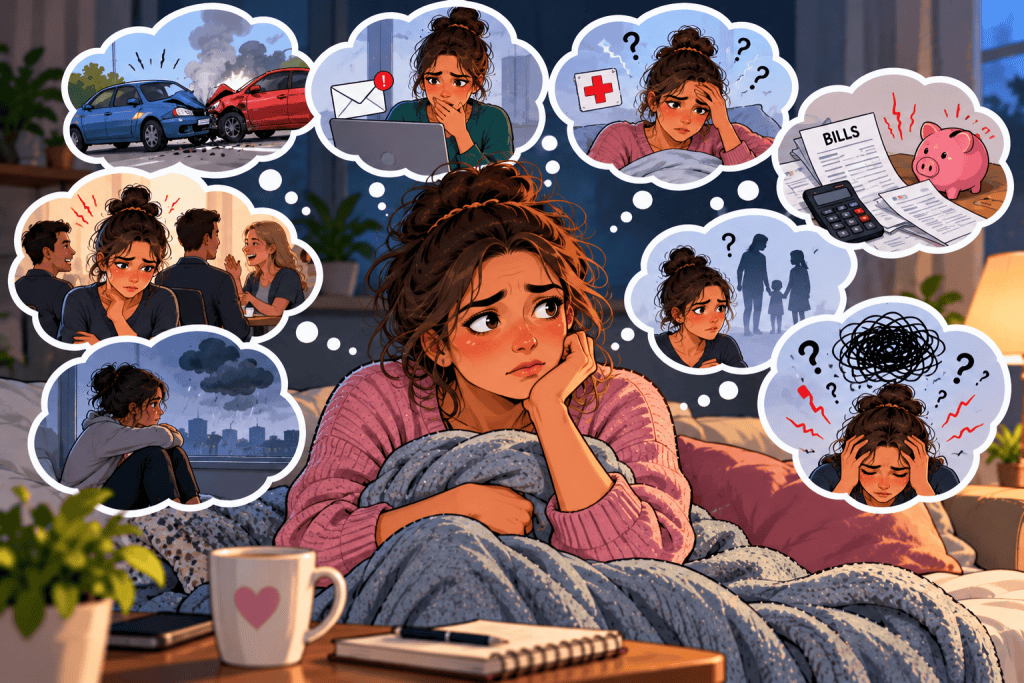
Why Does Your Brain Always Expect Something Bad to Happen?
Have you ever noticed how quickly your mind jumps to the worst possible outcome?
Perhaps someone you love is late coming home, and you immediately imagine they have been involved in an accident.
You receive an unexpected message from your manager and instantly assume you have done something wrong.
A small physical symptom makes you worry about a serious illness, or an upcoming event leaves you imagining every possible disaster before it has even happened.
For some people, these thoughts appear occasionally. For others, expecting the worst becomes an exhausting part of everyday life.
Even when everything seems to be going well, their minds remain focused on what could go wrong.
They may struggle to relax, enjoy positive experiences or feel confident about the future because they are constantly preparing themselves for potential problems.
At Anxious Minds, we understand how overwhelming it can be when your brain seems determined to identify danger in every situation.
The important thing to understand is that your brain isn’t necessarily trying to make you unhappy. It may be attempting to protect you from threats, even when those threats are unlikely or imagined.
Understanding why this happens is an important step towards developing healthier ways of responding to anxiety.
What Is Catastrophic Thinking?
Catastrophic thinking, sometimes called catastrophising, is a pattern of thinking in which someone automatically imagines the worst possible outcome of a situation.
Instead of considering several possible explanations, the mind focuses on the most frightening one.
For example, someone might experience a headache and immediately worry that they have a serious medical condition.
Another person might make a small mistake at work and begin imagining that they will lose their job, struggle financially and eventually lose their home.
Although these outcomes may be possible in theory, the mind treats them as though they are likely or inevitable.
The NHS identifies expecting the worst from situations as a common unhelpful thinking pattern associated with stress and anxiety.
Catastrophic thinking is not a mental health diagnosis in itself. However, it can occur alongside anxiety disorders, depression, trauma-related difficulties and periods of significant stress.
1. Your Brain Is Designed to Look for Danger
The human brain has developed systems that help us recognise potential threats.
Throughout human history, being able to identify danger quickly was essential for survival.
Our ancestors needed to remain alert to predators, hostile environments and other risks.
Although modern life is very different, these protective mechanisms remain important.
The brain can respond to uncertainty by searching for possible threats and preparing the body to respond.
This becomes problematic when ordinary situations are interpreted as dangerous.
An unanswered message, unfamiliar physical sensation or unexpected change of plans may activate anxiety even when there is no immediate threat.
For some people, the brain becomes so focused on preventing danger that it struggles to recognise when circumstances are safe.
2. Anxiety Can Make Uncertainty Feel Dangerous
One of the main reasons people constantly prepare for the worst is difficulty tolerating uncertainty.
Nobody can predict the future completely.
We cannot guarantee that relationships will always be successful, that employment will remain secure or that unexpected problems will never occur.
For someone experiencing anxiety, this uncertainty can feel extremely uncomfortable.
Their mind may repeatedly ask:
“What if something goes wrong?”
“What if I can’t cope?”
“What if I make a terrible mistake?”
“What if something bad happens to someone I love?”
The person may believe that thinking through every possible outcome will help them remain prepared.
However, repeatedly imagining disasters rarely provides lasting reassurance.
Instead, each frightening possibility may create another question, keeping the cycle of worry going.
3. Past Experiences Can Teach Your Brain to Expect Problems
Our previous experiences influence how we interpret new situations.
Someone who has experienced trauma, betrayal, financial hardship or repeated disappointment may develop a heightened sensitivity to potential problems.
For example, a person who has previously lost their employment unexpectedly may become anxious whenever their manager requests a meeting.
Someone who has experienced an abusive relationship may become unusually alert to changes in another person’s behaviour.
A person who has experienced a serious illness may become particularly sensitive to unfamiliar physical symptoms.
These reactions can develop because past experiences have influenced what the individual associates with danger.
When someone has experienced difficult or frightening situations, their brain may begin treating the possibility of something going wrong as something that must constantly be monitored.
However, past experiences do not necessarily predict what will happen in the future.
Learning to separate previous experiences from present circumstances can be an important part of recovery.
4. Why Overthinking Can Feel Like Being Prepared
One of the challenges of catastrophic thinking is that worrying can sometimes feel productive.
Someone may believe that if they consider every possible problem, they will be less likely to experience something unexpected.
They might repeatedly rehearse conversations, analyse situations or create detailed plans for things that may never happen.
This can create a temporary feeling of control.
However, worrying and preparing are not the same thing.
Practical preparation involves identifying realistic problems and taking useful action.
Excessive worrying often involves repeatedly imagining situations that are uncertain or beyond someone’s control.
For example, preparing for a job interview might involve researching the organisation and practising answers.
Catastrophic thinking might involve spending hours imagining embarrassment, rejection, unemployment and financial disaster.
The difference is whether the thinking leads to meaningful action or simply increases distress.
5. Hypervigilance Can Keep Your Mind on High Alert
Some people experience a state of heightened alertness known as hypervigilance.
Hypervigilance involves constantly monitoring the environment for possible threats.
Someone may notice every unfamiliar noise, study other people’s facial expressions or feel uncomfortable when they cannot predict what will happen next.
This can be particularly common following traumatic experiences, although heightened alertness can occur for other reasons.
A person might struggle to relax in public places, feel nervous when plans change or become anxious when someone behaves unexpectedly.
Their body may react with muscle tension, a racing heartbeat or difficulty concentrating.
Remaining in this state can be physically and emotionally exhausting.
Even when nothing dangerous happens, the individual may struggle to feel genuinely safe.
6. Why Your Mind Imagines the Worst at Night
For many people, catastrophic thinking becomes particularly intense at bedtime.
During the day, work, household responsibilities and conversations provide distractions.
At night, when everything becomes quiet, anxious thoughts may become more noticeable.
Someone may begin thinking about their finances, health, relationships or upcoming responsibilities.
One concern leads to another until their mind is imagining several possible disasters.
Poor sleep can then make emotional regulation more difficult, potentially increasing anxiety the following day.
This creates an exhausting cycle in which worrying affects sleep and sleep difficulties make worrying harder to manage.
Developing a calming bedtime routine and learning to postpone repetitive worry can help interrupt this pattern.
7. How Catastrophic Thinking Affects Everyday Life
Constantly preparing for the worst can affect almost every aspect of someone’s life.
A person may begin avoiding situations because they fear something will go wrong.
They might hesitate to apply for a new job, begin a relationship or attend social events.
Others repeatedly seek reassurance from family and friends.
They may ask whether everything is okay, check messages frequently or repeatedly look for signs that something bad is about to happen.
Although these behaviours can provide temporary relief, they may reinforce anxiety in the longer term.
The NHS recognises that anxiety can affect thinking, sleep, concentration, physical wellbeing and everyday behaviour.
Over time, persistent worry may leave someone emotionally exhausted and less confident in their ability to cope with uncertainty.
8. The Cycle of Worst-Case Scenario Thinking
Catastrophic thinking can become a self-reinforcing pattern.
An uncertain situation occurs
The mind imagines the worst possible outcome
Anxiety and physical tension increase
The person worries, checks or seeks reassurance
Temporary relief makes the behaviour feel necessary
The cycle repeats when uncertainty returns
Recognising this pattern helps people understand why attempting to eliminate every possible risk can sometimes make anxiety stronger.
9. How to Stop Constantly Expecting the Worst
Although catastrophic thinking can feel automatic, there are practical techniques that may help reduce its impact.
Recognise when you are catastrophising
The first step is noticing when your mind jumps directly to a frightening conclusion.
Ask yourself whether you are responding to something that has happened or imagining something that could happen.
Challenge your predictions
Consider the evidence supporting your fears.
What other explanations might exist?
Are you assuming the worst simply because you feel anxious?
Focus on realistic possibilities
Instead of asking only what the worst outcome could be, consider what is most likely based on the available evidence.
You do not have to convince yourself that everything will be perfect.
The aim is to develop a more balanced perspective.
Separate problems from hypothetical worries
Some concerns require practical action.
Others involve situations that may never happen.
If you can take a useful step, make a plan.
If there is nothing you can reasonably do, practise allowing the uncertainty to remain without repeatedly analysing it.
Reduce reassurance-seeking
Repeatedly asking others whether everything will be okay may provide temporary comfort.
However, gradually learning to tolerate uncertainty can help reduce reliance on reassurance.
Practise grounding techniques
When anxious thoughts become overwhelming, bring your attention back to the present.
Notice your surroundings, focus on physical sensations or practise slow, comfortable breathing.
This can help reduce the feeling that imagined future events are happening right now.
Make time for rest and enjoyable activities
Regular exercise, supportive relationships, sufficient sleep and relaxing activities can contribute to emotional wellbeing.
These habits may not eliminate anxiety, but they can make stressful experiences easier to manage.
10. Try the NHS ‘Catch It, Check It, Change It’ Technique
The NHS recommends a cognitive behavioural approach called Catch It, Check It, Change It to help people recognise and reframe unhelpful thoughts.
The technique involves three steps:
Catch it
Notice the thought: “My manager wants to speak to me. I’m going to lose my job.”
Check it
Ask whether there is actual evidence that you are losing your job or whether other explanations are possible.
Change it
Develop a more balanced response: “I don’t know what the meeting is about. I can wait until I have more information.”
With practice, this technique can help people recognise when anxiety is influencing their interpretation of events.
11. Learning That You Can Cope With Uncertainty
One of the most helpful changes someone can make is learning that they do not need to predict every possible problem.
Life will always involve uncertainty.
Unexpected situations sometimes happen, and not everything will go according to plan.
However, constantly imagining disasters does not guarantee protection from them.
Instead, building confidence in your ability to respond to difficulties can be more useful.
You may not know exactly what tomorrow will bring, but that does not mean you are incapable of managing it.
Learning to trust your coping abilities can gradually reduce the need to mentally prepare for every worst-case scenario.
12. When Worst-Case Thinking Becomes a Mental Health Concern
Occasional worrying is a normal part of life.
However, when someone experiences persistent, difficult-to-control worry that interferes with everyday activities, relationships or sleep, professional support may be beneficial.
Excessive worrying can occur alongside generalised anxiety disorder, health anxiety, social anxiety, PTSD and other mental health conditions.
Someone may experience racing thoughts, restlessness, irritability, muscle tension, fatigue or difficulty concentrating.
The NHS advises speaking to a GP when anxiety becomes difficult to manage or self-help strategies are not improving symptoms.
Seeking support can help people understand what is contributing to their worries and identify appropriate treatment.
How Counselling Can Help With Catastrophic Thinking
Professional counselling can provide a confidential environment where people explore their fears, experiences and emotional difficulties.
For some individuals, catastrophic thinking is connected to previous trauma or repeated experiences of uncertainty.
Others may struggle with low self-esteem, perfectionism or an overwhelming need for control.
Cognitive behavioural therapy (CBT) is an evidence-based treatment for several anxiety disorders.
It can help people identify unhelpful thinking patterns, question negative predictions and develop healthier responses to uncertainty.
Supportive counselling may also help individuals explore underlying emotional difficulties and build confidence in managing challenging situations.
The most appropriate approach depends on the individual’s needs and circumstances.
Affordable Anxiety Counselling at Anxious Minds
At Anxious Minds, we understand how exhausting it can be when your brain constantly anticipates problems.
For some people, persistent anxiety affects their ability to relax, maintain relationships, sleep properly or enjoy everyday experiences.
Our charity provides affordable counselling services across the North East, including face-to-face appointments at our centres in Wallsend and Blyth, alongside online and telephone counselling.
We support adults and young people aged 14 and over experiencing anxiety, depression, trauma, stress and other emotional difficulties.
Our counselling services offer a confidential and supportive environment where individuals can explore their thoughts, understand the experiences contributing to their anxiety and develop healthier coping strategies.
We also recognise that financial pressures can make mental health difficulties harder to manage.
Our aim is to make professional mental health support accessible to people who might otherwise struggle to afford it.
Final Thoughts: You Don’t Have to Prepare for Every Disaster
Living with a mind that constantly expects the worst can be exhausting.
Even positive experiences may become overshadowed by fears about what could go wrong.
Someone may find themselves worrying about their health, relationships, employment or family long before there is any evidence of a problem.
Although the brain’s threat-detection systems are designed to help protect us, anxiety can sometimes cause them to become overly sensitive.
The good news is that these patterns can change.
By recognising catastrophic thinking, challenging negative assumptions and learning to tolerate uncertainty, people can gradually develop a healthier relationship with their thoughts.
You do not have to imagine every possible disaster to be prepared for life.
Sometimes the most important skill is learning that you can face uncertainty without allowing fear to control every decision.
At Anxious Minds, we believe nobody should have to struggle with persistent anxiety or overthinking alone.
With understanding, appropriate support and practical coping strategies, positive change is possible.
Anxious Minds – Supporting Mental Health and Changing Lives Across the North East.
Visit www.anxiousminds.co.uk to learn more about our affordable counselling and mental health support services.