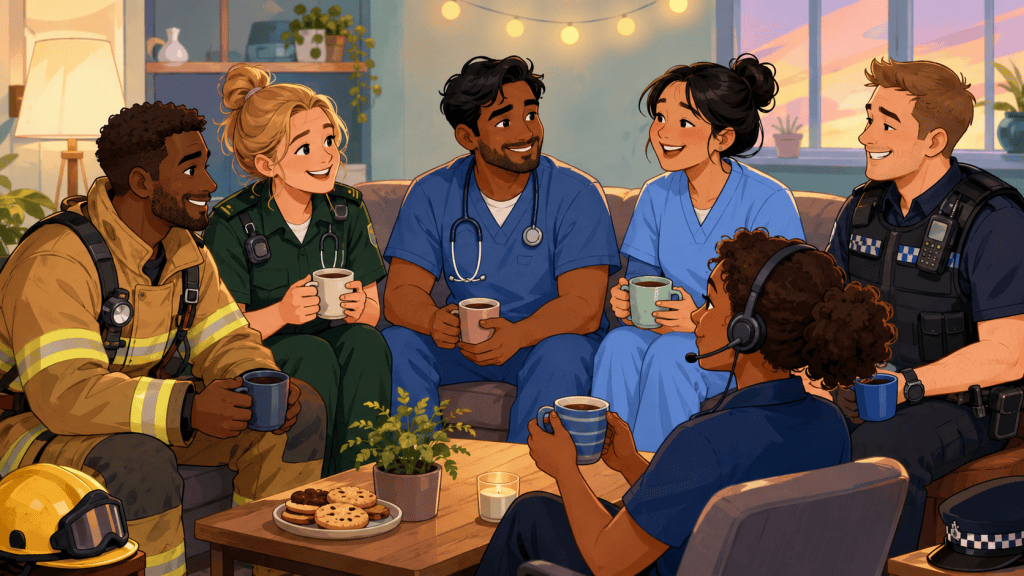
Blue light workers are often the first people called when life is at its worst. Police officers, paramedics, firefighters, ambulance crews, NHS staff, emergency call handlers, search and rescue teams and other front-line responders step into situations most people hope they will never experience.
They attend road traffic collisions, violent incidents, sudden deaths, fires, medical emergencies, suicides, safeguarding concerns, domestic abuse, major incidents and scenes of extreme distress. They comfort families, make life-changing decisions, protect the public, save lives and carry responsibility under pressure.
But behind every uniform is a person.
A person who goes home after the shift. A person who may replay what they have seen. A person who may struggle to sleep, connect with family, manage emotions, or switch off from the job. A person who may be praised for being strong while quietly carrying the weight of repeated trauma.
Blue light workers do not just need mental health support after a crisis. They deserve long-term mental health care that recognises the cumulative impact of the work they do.
The Emotional Cost of the Job
Blue light work is not ordinary work. It often involves repeated exposure to danger, distress and human suffering. While training and experience can help workers respond professionally, they do not make anyone immune to emotional impact.
A paramedic may remember the patient they could not save. A police officer may carry the image of a traumatic incident for years. A firefighter may struggle after a fatal fire. A call handler may still hear the voice of someone who was terrified or suicidal. An emergency department nurse may move from one crisis to the next with no time to process what has happened.
These experiences do not always disappear when the shift ends. They can build up quietly over time.
Many blue light workers become skilled at putting emotions aside in the moment. This can be necessary during an emergency. But if there is no safe space to process what has happened afterwards, those emotions may resurface as anxiety, depression, anger, numbness, nightmares, flashbacks, relationship strain, alcohol use, burnout or emotional exhaustion.
Long-term mental health care matters because the impact of the work is often long-term too.
Trauma Can Build Slowly
Not all trauma comes from one single event. Sometimes it is the build-up of many incidents over months, years or decades.
This is sometimes called cumulative trauma. It can happen when someone is repeatedly exposed to distressing, dangerous or emotionally overwhelming situations. One incident may be manageable. Ten may be harder. Hundreds across a career can leave deep marks.
A blue light worker may not notice the impact at first. They may keep functioning, keep working and keep telling themselves they are fine. They may use humour, silence, busyness or emotional distance to cope. They may compare themselves to colleagues and think, “Others have seen worse.”
But the nervous system keeps score. Repeated trauma can leave people constantly alert, easily startled, irritable, emotionally detached or unable to relax. It can affect sleep, memory, concentration, relationships and physical health.
Short-term support may help after a specific incident, but cumulative trauma needs ongoing care. It needs services that understand that some injuries are not visible and some wounds take time to show.
The Delayed Impact of Trauma
One reason long-term support is so important is that trauma does not always appear immediately. Some people feel okay after a difficult incident, only to struggle weeks, months or years later.
This delayed impact can be confusing. A worker may think, “Why is this affecting me now?” They may feel ashamed because they coped at the time but are struggling later. They may worry that something is wrong with them.
In reality, delayed reactions are common. During a crisis, the brain and body may focus on survival and performance. The emotions may come later, when life becomes quieter or when another event triggers old memories.
Retirement can also be a difficult time. Many blue light workers carry years of experiences but only begin to process them when they leave the job. Without the structure, identity and team environment of the service, distress can surface more strongly.
This is why mental health care should not stop when an incident ends, when someone returns to work, or when they leave service. Support must be available across a career and beyond it.
The Pressure to Be Strong
Blue light workers often work in cultures where strength, resilience and reliability are highly valued. These qualities are important, but they can also create barriers to asking for help.
Many workers fear being judged if they admit they are struggling. They may worry that colleagues will see them as weak or unreliable. They may fear being removed from duties, losing career opportunities, or being treated differently by managers.
This pressure can be even stronger for those in roles where public safety depends on confidence and decision-making. They may believe they cannot show vulnerability because others rely on them.
But needing mental health support does not mean someone is weak. It means they are human. In fact, asking for help early can protect the worker, their family, their colleagues and the public.
Long-term care helps change the message from “only ask for help when you break” to “support is part of staying well.”
Crisis Support Is Not Enough
Crisis support is vital. If someone is suicidal, unsafe or unable to cope, urgent help can save lives. But blue light workers deserve more than crisis response.
Waiting until someone reaches breaking point is not good enough.
Mental health care should include prevention, early intervention, ongoing counselling, trauma support, peer support, reflective practice, supervision, family support and follow-up after major incidents. It should be easy to access before problems become severe.
Short-term interventions can be helpful, but they may not be enough for people carrying years of trauma, grief, moral injury and stress. Some people need longer-term therapy. Some need ongoing peer support. Some need help rebuilding life after leaving service. Some need support for addiction, relationships, sleep, anger or depression.
A one-off debrief or a few sessions may not match the complexity of what blue light workers carry.
Long-term mental health care recognises that recovery is not always quick, neat or linear.
Moral Injury and Guilt
Blue light workers may experience moral injury. This can happen when someone feels they could not do what they believed was right, often because of circumstances outside their control.
A paramedic may feel guilt after being unable to save someone. A police officer may feel distress after attending repeated domestic abuse cases where outcomes are limited. A firefighter may question whether more could have been done. NHS staff may feel pain when demand, waiting times or resources prevent patients receiving the care they need quickly enough.
Moral injury can create deep guilt, shame, anger and helplessness. It can challenge a person’s sense of identity and purpose.
This type of distress often needs more than a quick conversation. It may require time, reflection, trauma-informed therapy and support from people who understand the reality of front-line work.
Long-term care gives people space to process not just what happened, but what it meant to them.
The Impact on Families
Blue light work affects families too. Partners, children and loved ones may notice changes long before the worker asks for help.
A person may become withdrawn, irritable, emotionally numb or restless. They may avoid talking about work, struggle with sleep, use alcohol to switch off, or become distant at home. Shift work can make family routines harder. Missed birthdays, cancelled plans and exhaustion can create strain.
Families may want to help but not know how. They may feel shut out. They may carry worry in silence.
Long-term mental health care should recognise the role of families. Support for blue light workers can improve relationships, communication and home life. Where appropriate, family education or support can help loved ones understand trauma, burnout and recovery.
When we support the worker, we often support the whole family.
Confidential Support Matters
Many blue light workers avoid help because they worry about confidentiality. They may fear their employer, colleagues or professional body will find out. They may be concerned about career consequences, role restrictions or workplace gossip.
This is why confidential support is essential.
Workers need safe spaces where they can speak honestly without fear of judgement. They need clear information about what is confidential, what the limits are, and how their privacy will be protected.
Independent support can be especially valuable. Some people may feel more comfortable speaking to a counsellor, charity or external service away from their workplace. Others may prefer peer support from someone who understands the job. The key is choice.
Long-term care must be trusted. If people do not trust the support, they will not use it.
Burnout Needs More Than Rest
Burnout is common in high-pressure caring and emergency roles. It can involve emotional exhaustion, loss of motivation, detachment, cynicism, poor sleep, irritability and feeling that nothing is ever enough.
Rest is important, but burnout often needs more than a few days off. If someone returns to the same pressure without support or change, the burnout may continue.
Long-term mental health care can help workers understand their limits, process stress, rebuild emotional resilience and develop healthier coping strategies. But organisations also need to address workload, culture, staffing, supervision and recovery time.
It is not enough to tell blue light workers to be resilient. Many already are. The question is whether systems are giving them the support needed to remain well over time.
Support Should Continue After Retirement
Many blue light workers spend years serving the public and then face retirement with little emotional transition. Leaving the job can bring relief, but it can also bring loss of identity, structure, purpose and team connection.
For some, retirement is when the memories catch up. The body finally slows down, but the mind begins to replay years of incidents. Without the routine of work, people may feel isolated or unsure who they are without the uniform.
This is why long-term mental health care should continue after service. Retired blue light workers should not be forgotten once they leave the workforce. They may need support to process their experiences, reconnect with community, manage trauma symptoms and build a new chapter of life.
A career of service deserves care beyond the final shift.
Peer Support Can Be Powerful
Peer support can play a vital role in long-term mental health care. Speaking to someone who understands the culture, language and pressures of blue light work can reduce shame and isolation.
A worker may open up more easily to someone who has stood in similar shoes. Peer support can help people realise they are not alone, not weak and not broken.
However, peer support should not be the only option. It works best as part of a wider system that includes professional counselling, trauma therapy, crisis support, occupational health, community services and family support.
No single approach will work for everyone. Long-term care should offer different routes so people can choose what feels safe and useful.
Why Community-Based Support Matters
Local community mental health charities can be an important part of the support network for blue light workers. They can offer accessible, affordable and confidential help outside the workplace. For some workers, this independence makes it easier to talk.
Community support can also help with wider issues such as isolation, debt, addiction, family strain, housing worries, grief and low confidence. Mental health is rarely separate from the rest of life.
A blue light worker may need trauma counselling, but they may also need support with relationships, sleep, financial pressure or loneliness. Good long-term care looks at the whole person, not just the symptoms.
Community-based services can help bridge the gap between workplace support, NHS services and private therapy.
Early Support Protects Everyone
Supporting blue light workers is not only the right thing to do morally. It also protects teams, organisations and communities.
When workers are mentally well, they are more able to make decisions, manage pressure, communicate, show compassion and remain in their roles. When they are unsupported, the risks increase: sickness absence, burnout, staff turnover, mistakes, relationship breakdown, addiction, crisis and suicide.
Long-term mental health care is an investment in people who invest their lives in others.
It helps workers stay healthier. It helps families stay stronger. It helps services retain experienced staff. It helps communities receive better care.
What Long-Term Care Should Include
Long-term mental health care for blue light workers should be confidential, accessible, flexible and trauma-informed. It should be available early, not only after crisis. It should be offered during service, after major incidents, during sickness absence, when returning to work, and after retirement.
It should include:
Counselling and trauma therapy
Peer support
Support after critical incidents
Family support where appropriate
Help with sleep, stress and burnout
Addiction support
Confidential external pathways
Regular wellbeing check-ins
Training for managers and supervisors
Support during retirement or career transition
Most importantly, it should be built on dignity. Blue light workers should not feel they have to prove they are broken enough to deserve help.
Final Thoughts
Blue light workers give their skill, courage and compassion to the public every day. They respond to fear, danger, pain and loss. They hold people together in moments when everything is falling apart.
But they cannot be expected to carry the emotional weight of that work without proper care.
They deserve long-term mental health support because trauma can build over time. Because the impact can appear years later. Because families are affected too. Because crisis support alone is not enough. Because asking for help should be safe, confidential and free from shame.
The people who protect, rescue, treat and comfort others deserve to be protected too.
Behind every uniform is a human being. And every human being deserves care, support and the chance to heal.