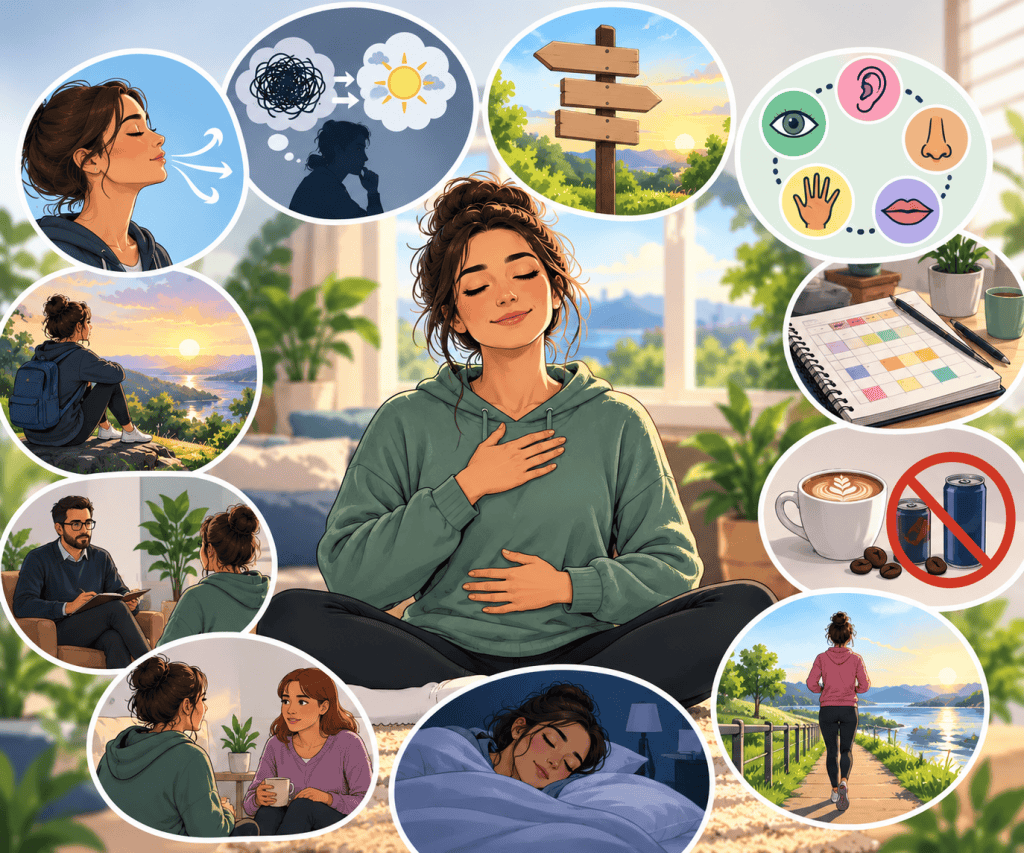
Anxiety can affect your thoughts, emotions, body and everyday life. It may show up as constant worrying, racing thoughts, poor sleep, muscle tension, panic, irritability or a feeling that something bad is about to happen.
For some people, anxiety comes and goes. For others, it can feel like a constant background noise that makes work, relationships and normal daily tasks more difficult.
The good news is that there are practical ways to manage anxiety and reduce how much control it has over your life.
The aim is not always to eliminate anxiety completely. Instead, it is about learning how to understand it, calm your body, challenge unhelpful thoughts and build habits that support your mental wellbeing.
Here are 10 practical ways to manage anxiety.
1. Slow Down Your Breathing
When anxiety rises, breathing often becomes faster and shallower.
This can make symptoms such as dizziness, chest tightness and a racing heartbeat feel worse.
Try slowing your breathing down.
Breathe in gently through your nose for around four seconds, then breathe out slowly for five or six seconds.
Do not force a huge breath.
The goal is calm, steady breathing.
A longer out-breath can help your body begin to relax.
Practising this regularly, not only when you feel anxious, can make it easier to use when you need it.
2. Challenge Anxious Thoughts
Anxiety often makes the mind jump to the worst possible outcome.
You may think:
“What if everything goes wrong?”
“What if I embarrass myself?”
“What if I cannot cope?”
These thoughts can feel completely true in the moment.
Try asking yourself:
What evidence do I have that this will definitely happen?
What would I say to a friend who was thinking this way?
Is there another possible explanation?
Challenging anxious thoughts is not about pretending everything is fine.
It is about trying to think in a more balanced and realistic way.
3. Focus on What You Can Control
Anxiety often grows when we spend too much time worrying about things we cannot control.
You may worry about what somebody else thinks, what might happen next week or whether something unexpected will go wrong.
Try separating your worries into two groups.
The first group includes things you can influence.
The second includes things you cannot.
Focus your energy on practical actions you can take today.
That might mean making a phone call, sending an email, attending an appointment or asking for support.
You do not need to solve every problem at once.
4. Use Grounding Techniques
Grounding can be useful when anxiety makes you feel overwhelmed or disconnected.
One common technique is to focus on your senses.
Notice:
- Five things you can see
- Four things you can feel
- Three things you can hear
- Two things you can smell
- One thing you can taste
This helps bring your attention away from anxious thoughts and back towards the present moment.
You can also ground yourself by feeling your feet against the floor, holding a cold drink or describing the room around you.
5. Build a Daily Routine
Anxiety often becomes harder to manage when life feels chaotic or unpredictable.
A simple routine can create a sense of stability.
Try to keep regular times for:
- Getting up
- Meals
- Work or study
- Exercise
- Relaxation
- Going to bed
You do not need a perfect schedule.
Even a loose structure can help reduce uncertainty.
If anxiety makes large tasks feel overwhelming, break them into smaller steps.
Instead of telling yourself to “sort everything out,” decide what one small thing you can complete today.
6. Reduce Caffeine and Other Stimulants
Caffeine can increase symptoms that feel similar to anxiety.
These may include:
- A racing heartbeat
- Shakiness
- Restlessness
- Poor sleep
- Feeling on edge
If you drink a lot of coffee, energy drinks or other caffeinated products, reducing them may help.
You do not necessarily need to stop completely.
Try cutting down gradually and see whether your anxiety changes.
Alcohol can also affect mood and sleep, and some people find that anxiety is worse after drinking.
7. Get Moving
Physical activity can be a useful way to manage anxiety.
You do not have to spend hours in the gym.
Walking, cycling, swimming, stretching, gardening or other forms of movement can help reduce tension and give your mind a break from constant worrying.
Exercise can also support sleep and improve overall wellbeing.
If motivation is low, start small.
A 10-minute walk is better than doing nothing because you feel you cannot manage a full workout.
Outdoor activity can be particularly helpful because it combines movement with a change of environment.
8. Make Time for Sleep and Rest
Anxiety and poor sleep often reinforce each other.
Worry can make it difficult to sleep, while lack of sleep can make anxiety harder to manage the next day.
Try to create a consistent bedtime routine.
Reduce screen use before bed if possible.
Keep the room comfortable and avoid spending long periods lying awake while scrolling through your phone.
If thoughts start racing, write them down.
Sometimes putting worries on paper can help your brain feel that they have been recorded and can be dealt with later.
Rest is important too.
You do not have to be productive every moment of the day.
9. Talk to Someone You Trust
Anxiety often becomes worse when it is kept hidden.
Talking to somebody can help you feel less alone and may give you a different perspective.
You could speak to:
- A friend
- A family member
- Your GP
- A counsellor
- A support worker
- A peer-support group
You do not need to explain everything perfectly.
You might simply say:
“I have been feeling really anxious lately and I am finding it difficult.”
That can be enough to start the conversation.
Asking for support early can prevent anxiety from becoming more difficult to manage.
10. Consider Counselling for Anxiety
If anxiety is persistent or affecting your everyday life, counselling may help.
Counselling gives you a safe and confidential space to explore what is causing your anxiety.
A counsellor can help you understand your triggers, recognise negative thinking patterns and develop healthier ways of coping.
Counselling may also help with issues connected to anxiety, including:
- Trauma
- Grief
- Relationship difficulties
- Work stress
- Financial worries
- Low confidence
- Depression
- Major life changes
You do not need to wait until you reach crisis point before asking for help.
What to Do When Anxiety Feels Overwhelming
Sometimes anxiety can feel so intense that it becomes difficult to think clearly.
When this happens, try to focus on the next few minutes rather than everything at once.
Slow your breathing.
Put your feet firmly on the floor.
Look around the room.
Remind yourself where you are.
If possible, move somewhere quieter.
Then focus on one small action.
You might drink some water, step outside, contact someone you trust or sit somewhere safe until the intensity begins to reduce.
If symptoms are new, severe or feel physically dangerous, seek medical advice rather than assuming anxiety is the cause.
Managing Anxiety Takes Practice
There is no single technique that works for everyone.
Some people find breathing exercises useful.
Others prefer exercise, counselling, grounding or talking to someone.
You may need to experiment with several approaches.
It is also important to remember that progress is not always a straight line.
You can have a good week followed by a difficult day.
That does not mean you are back at the beginning.
Learning to manage anxiety is often about gradually building a set of tools that you can use when you need them.
Anxiety Support From Anxious Minds
At Anxious Minds, we provide accessible counselling and mental health support for people experiencing anxiety, depression, trauma, stress, bereavement and other emotional difficulties.
Our aim is to provide people with practical support alongside a safe place to talk.
If anxiety is affecting your sleep, relationships, work, confidence or ability to manage everyday life, you do not have to deal with it alone.
Small steps can make a real difference.
Learning how to manage anxiety, understanding what triggers it and asking for support when you need it can help you regain a greater sense of control.
Find out more about counselling and mental health support from Anxious Minds at www.anxiousminds.co.uk.
If you or somebody else is in immediate danger or there is an immediate risk of serious harm, call 999 or go to your nearest Accident & Emergency department.