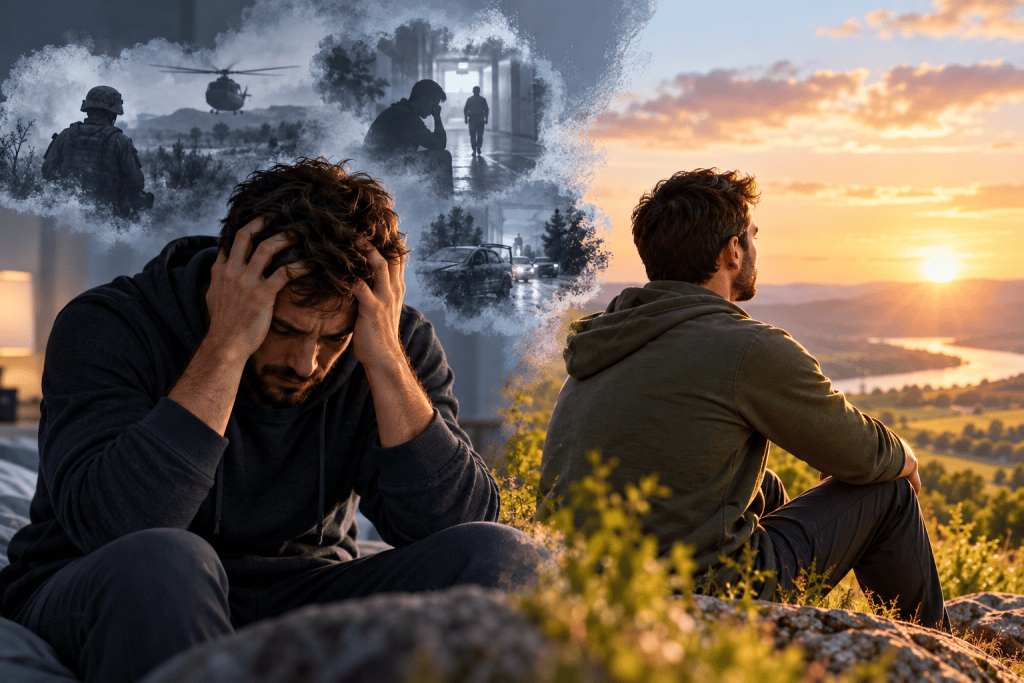
Post-traumatic stress disorder, commonly known as PTSD, is a mental health condition that can develop after someone experiences or witnesses something extremely frightening, distressing or traumatic.
For some people, the effects of trauma gradually reduce over time.
For others, the experience can continue to affect everyday life long after the immediate danger has passed.
Memories may return unexpectedly. Sleep can become difficult. Certain sounds, smells, places or situations may suddenly trigger intense fear or distress.
Someone may feel constantly alert, struggle to relax or begin avoiding anything that reminds them of what happened.
PTSD can affect people from all backgrounds.
It can develop after military service, accidents, assaults, domestic abuse, bereavement, medical emergencies, disasters, violence or many other traumatic experiences.
At Anxious Minds, we understand that trauma can affect every part of a person’s life.
Understanding the signs and symptoms of PTSD can be an important first step towards getting the right support.
What Is PTSD?
PTSD stands for post-traumatic stress disorder.
The NHS describes PTSD as a mental health condition caused by very stressful, frightening or distressing events. Symptoms can include distressing memories, flashbacks, intrusive thoughts and nightmares, as well as avoidance and changes in mood and behaviour.
After a traumatic event, it is completely understandable to experience strong emotional and physical reactions.
You may feel frightened, shocked, confused or emotionally numb.
You may replay what happened in your mind or struggle to sleep.
For many people, these reactions gradually become less intense.
PTSD can develop when trauma-related symptoms continue and begin having a significant impact on everyday life.
The symptoms may appear soon after an event, but for some people they can emerge months or even years later.
What Can Cause PTSD?
PTSD can develop following many different experiences.
Examples may include:
- Military combat or operational service
- Physical or sexual assault
- Domestic abuse
- Serious accidents
- Road traffic collisions
- Childhood abuse or neglect
- Witnessing violence
- Sudden or traumatic bereavement
- Medical emergencies
- Life-threatening illness
- Natural disasters
- Terrorist incidents
- Workplace trauma
- Repeated exposure to distressing situations
People working in the Armed Forces, emergency services, healthcare and other high-pressure professions may also experience repeated exposure to traumatic events.
But trauma is deeply personal.
Two people can experience the same event and respond very differently.
Developing PTSD does not mean somebody is weak or failed to cope properly.
It means the brain and body have continued responding to an experience that felt dangerous or overwhelming.
What Are the Main Symptoms of PTSD?
PTSD symptoms can vary significantly between individuals.
However, they are often grouped into several broad areas.
These include:
- Re-experiencing the trauma
- Avoidance
- Changes in thoughts and emotions
- Feeling constantly alert or on edge
These symptoms can affect work, relationships, sleep, confidence and everyday routines.
Flashbacks and Reliving the Trauma
One of the most recognised symptoms of PTSD is experiencing flashbacks.
A flashback can make somebody feel as though the traumatic experience is happening again.
This may involve vivid images, sounds, physical sensations or intense emotions.
The person may know logically that they are safe, but their body can react as though the original danger is happening in the present moment.
For example, they may experience:
- Rapid heartbeat
- Sweating
- Shaking
- Shortness of breath
- Panic
- Nausea
- Feeling frozen
- An overwhelming urge to escape
The NHS identifies flashbacks, intrusive images or thoughts, and recurring dreams or nightmares among the common ways PTSD can cause a person to repeatedly experience a traumatic event.
Flashbacks can be extremely frightening, particularly when somebody does not understand what is happening.
Nightmares and Sleep Problems
Trauma often affects sleep.
Some people experience repeated nightmares related directly to what happened.
Others may have frightening dreams that do not clearly resemble the original event.
People with PTSD may also struggle to fall asleep because they feel unsafe when they relax.
They may wake frequently during the night or become alert at small noises.
Poor sleep can then affect concentration, mood and energy during the day.
Over time, sleep deprivation can make other PTSD symptoms feel even more difficult to manage.
Intrusive Memories
People with PTSD may experience unwanted memories of what happened.
These memories can appear suddenly.
Someone may be working, driving, eating or talking to a friend when an image or memory unexpectedly enters their mind.
Trying to push these memories away can sometimes make them feel even more persistent.
The person may begin avoiding situations where they worry memories will return.
This can gradually make everyday life more restricted.
Avoiding Reminders of Trauma
Avoidance is another common feature of PTSD.
Someone may avoid:
- Particular places
- Certain people
- Television programmes
- News reports
- Conversations
- Driving
- Crowded environments
- Specific smells
- Certain sounds
- Talking about what happened
For example, someone involved in a serious road traffic accident might avoid travelling in cars.
A military veteran may avoid fireworks because the sounds remind them of explosions.
Someone who has experienced domestic abuse may avoid places where they believe they could encounter the person responsible.
Avoidance can provide temporary relief.
But if someone’s life becomes increasingly organised around avoiding trauma reminders, it can become difficult to recover confidence.
Feeling Constantly on Edge
PTSD can leave the nervous system feeling as though danger could return at any moment.
This is sometimes called hyperarousal or hypervigilance.
Someone may constantly monitor what is happening around them.
They might sit where they can see the door.
They may become uncomfortable in crowded environments.
Sudden noises may cause an exaggerated startle response.
Someone may find it almost impossible to fully relax.
Other symptoms can include:
- Irritability
- Difficulty concentrating
- Anger
- Restlessness
- Poor sleep
- Feeling constantly alert
- Being easily startled
Living in this state for long periods can be physically and emotionally exhausting.
Emotional Numbness
PTSD does not always look like fear or panic.
Some people experience emotional numbness.
They may feel disconnected from themselves or from other people.
Things they once enjoyed may no longer feel meaningful.
Someone may stop socialising or withdraw from relationships because they feel unable to connect.
Family members may notice that the person seems distant.
The individual themselves may struggle to understand why they feel so different.
Guilt and Shame After Trauma
Trauma can sometimes create powerful feelings of guilt.
Someone may repeatedly think:
“I should have done something differently.”
“I should have noticed what was happening.”
“Why did I survive?”
“Why didn’t I stop it?”
These feelings can occur even when the person was not responsible for what happened.
Trauma can change the way somebody interprets an event afterwards.
A person may judge decisions made during an extremely frightening situation as though they had been able to think calmly at the time.
Therapy can help people explore these beliefs and develop a more balanced understanding of what happened.
PTSD and Anger
Anger is another symptom that is sometimes overlooked.
Someone with PTSD may become easily irritated or react more strongly than they did before the traumatic event.
This does not necessarily mean they are an angry person.
Their nervous system may be operating in a heightened state of alertness.
When the brain is constantly searching for danger, small situations can sometimes trigger disproportionately strong emotional reactions.
Understanding this pattern can help people develop healthier ways of managing those responses.
PTSD and Relationships
Trauma can affect relationships in many ways.
Someone may become emotionally withdrawn.
They may struggle with trust.
Physical affection may become difficult.
They may feel misunderstood by partners or relatives who have not experienced what they went through.
Family members may also struggle to understand sudden changes in behaviour.
Open communication and appropriate professional support can help both the individual and those close to them understand what is happening.
PTSD and Work
PTSD can also affect employment.
Someone may experience difficulty concentrating, tiredness, irritability or anxiety.
They may struggle in busy or noisy environments.
Certain workplace situations could trigger memories.
Some people become completely focused on work because staying busy prevents them thinking about the trauma.
Others may struggle to attend work consistently.
There is no single way PTSD affects employment.
Support should be based on the person’s individual symptoms and circumstances.
PTSD in Veterans
Military personnel and veterans may experience trauma connected to combat, operational deployments, serious injury, loss of colleagues or repeated exposure to dangerous situations.
For some veterans, symptoms can emerge immediately.
For others, difficulties may appear years after leaving the Armed Forces.
The transition from military to civilian life can sometimes make previously manageable symptoms more noticeable.
Veterans may experience flashbacks, nightmares, hypervigilance, anger, isolation, alcohol misuse or difficulty adjusting to relationships and civilian routines.
Specialist veteran mental health services can be particularly important because they understand the military context surrounding trauma.
PTSD and Alcohol
Some people use alcohol or other substances to manage trauma symptoms.
Alcohol may initially appear to reduce anxiety or help someone sleep.
But over time it can worsen sleep, mood and emotional regulation.
It may also prevent someone developing healthier ways to manage trauma.
If alcohol or substance use has become part of how you cope with PTSD, discussing this openly with a professional can be important.
Support should address both the trauma and the coping behaviours surrounding it.
Can PTSD Be Treated?
Yes.
There are recognised treatments for PTSD, and many people experience significant improvement with appropriate support.
The NHS lists trauma-focused cognitive behavioural therapy and eye movement desensitisation and reprocessing, commonly known as EMDR, among the treatments available for PTSD. Medication may also be considered for some people.
NICE recommends individual trauma-focused CBT for adults with PTSD or clinically important PTSD symptoms presenting more than one month after a traumatic event. NICE also recommends EMDR for adults presenting more than three months after non-combat-related trauma, with some additional circumstances where it may be considered earlier.
Treatment should always be tailored to the individual.
What Is Trauma-Focused CBT?
Trauma-focused cognitive behavioural therapy is specifically designed to help people experiencing trauma-related difficulties.
It may involve learning about trauma responses, developing strategies for managing flashbacks and anxiety, exploring trauma memories and addressing beliefs connected to guilt, shame, fear or responsibility.
NICE says trauma-focused CBT should also help people overcome avoidance and re-establish areas of everyday functioning such as work and social relationships.
This work should be delivered by appropriately trained professionals.
What Is EMDR?
EMDR stands for Eye Movement Desensitisation and Reprocessing.
It is a psychological treatment used to help people process traumatic memories.
During EMDR, a trained therapist helps someone focus on specific memories while using forms of bilateral stimulation, often guided eye movements.
The aim is to reduce the emotional intensity associated with traumatic memories and help the brain process them differently.
NICE includes EMDR among its recommended psychological interventions for PTSD in adults in appropriate circumstances.
Learning to Recognise PTSD Triggers
Triggers are reminders that activate trauma-related reactions.
They might include:
- Sounds
- Smells
- Places
- People
- Dates or anniversaries
- News reports
- Physical sensations
- Arguments
- Particular words
- Crowded environments
Sometimes the connection is obvious.
Other times, someone may suddenly become anxious without initially understanding why.
Keeping a simple record of situations surrounding flashbacks or strong emotional reactions can sometimes help identify patterns.
The NHS also suggests keeping a diary to help recognise things such as sounds or smells that may trigger flashbacks.
Supporting Someone With PTSD
If somebody you know is experiencing PTSD, patience can be extremely important.
Do not pressure them to tell you everything that happened.
Trauma should be discussed at a pace they feel able to manage.
Instead, you can:
- Listen without judgement
- Ask what support they need
- Learn about PTSD
- Respect boundaries
- Encourage professional help
- Avoid minimising their experience
- Remain patient when symptoms fluctuate
Rather than saying:
“You need to move on.”
Try:
“I can see this is still affecting you. I’m here if you want to talk.”
Small changes in language can make people feel much safer.
When Should You Seek Professional Support?
Consider seeking help if trauma symptoms are affecting your:
- Sleep
- Relationships
- Work
- Confidence
- Ability to leave home
- Ability to relax
- Alcohol or substance use
- Everyday functioning
You do not need to wait until things reach crisis point.
Support can help you understand your symptoms and identify appropriate treatment.
A GP can also help assess what support may be suitable and refer you to appropriate services.
You Do Not Have to Face Trauma Alone
PTSD can make people feel as though the traumatic event is still controlling their life.
They may feel trapped between avoiding the past and constantly reliving it.
But trauma does not have to define the rest of someone’s life.
Recovery can take time.
It can involve setbacks and difficult periods.
But with appropriate support, people can learn to understand their trauma responses, manage symptoms and begin rebuilding their confidence and quality of life.
Anxious Minds Is Here to Help
At Anxious Minds, we support people experiencing trauma, anxiety, depression and other mental health difficulties.
Our services include professional counselling and specialist veteran mental health support.
We understand that people who have experienced trauma may need both early intervention and longer-term support.
If PTSD symptoms are affecting your everyday life, reaching out can be an important first step.
Anxious Minds
Telephone: 0191 262 0305
If you are in immediate danger, feel unable to keep yourself safe, or believe you may act on thoughts of suicide or serious self-harm, call 999 or attend your nearest Accident & Emergency department.
PTSD can make the past feel as though it is still happening.
With the right support, it is possible to begin feeling safe in the present again.