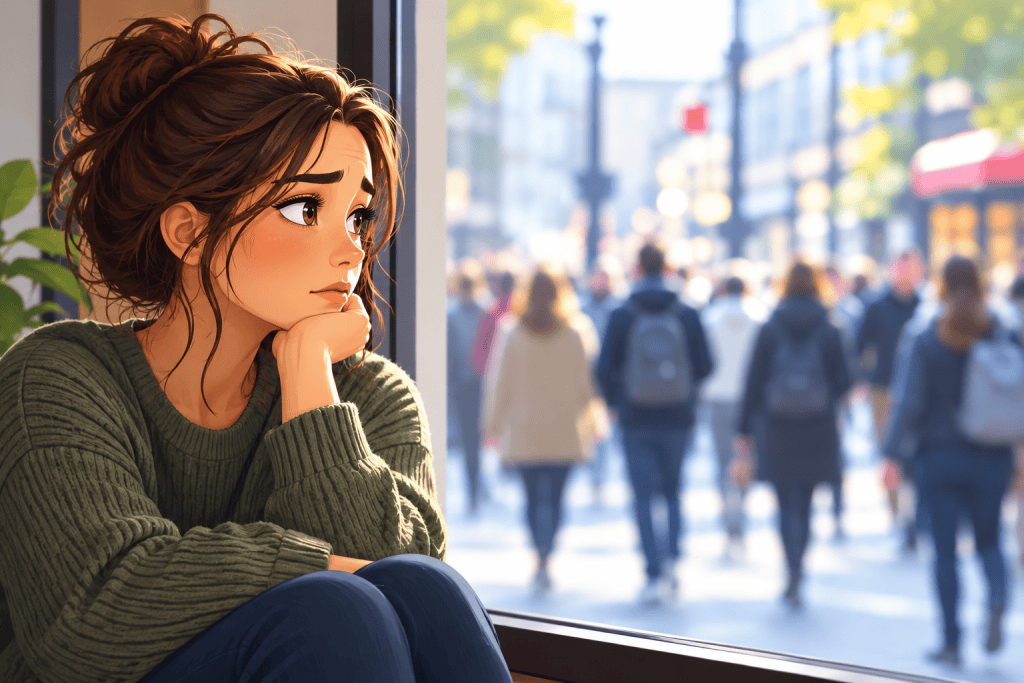
Agoraphobia is often misunderstood as simply being a fear of open spaces or being afraid to leave the house. In reality, it is a complex anxiety condition that can have a significant impact on someone’s independence, relationships, work and everyday life.
A person experiencing agoraphobia may feel intense anxiety about being somewhere that feels difficult to escape from, or where they believe help may not be available if they become overwhelmed or have a panic attack. This can include public transport, supermarkets, shopping centres, busy streets, queues, crowded events or simply being a long way from home.
For some people, agoraphobia is relatively mild. They may still go to work, visit family and travel, but certain situations cause considerable anxiety. For others, the condition can become so severe that leaving home feels almost impossible.
The important thing to understand is that agoraphobia can be treated, and recovery is possible.
What is agoraphobia?
Agoraphobia is an anxiety disorder involving a fear of situations in which escaping might feel difficult or where help may not seem readily available if something goes wrong.
The NHS explains that agoraphobia is more complicated than simply a fear of open spaces. Situations that may cause anxiety include using public transport, going to a shopping centre or leaving home.
The fear may centre around experiencing a panic attack, fainting, losing control, becoming ill, feeling trapped or being embarrassed in front of other people.
Over time, someone may begin avoiding situations they associate with these feelings.
The problem is that avoidance can gradually make the fear stronger.
Someone might initially stop travelling on trains. They then avoid buses. Next, they may avoid busy shops, restaurants or appointments. Eventually, their world can become increasingly restricted.
What does agoraphobia feel like?
Agoraphobia can be different for everyone.
A person might feel perfectly comfortable at home but become extremely anxious when they think about travelling somewhere unfamiliar.
Another person may be able to leave home as long as someone they trust accompanies them.
Someone else might manage most activities but feel unable to use public transport, stand in queues or attend busy events.
Common situations that may trigger agoraphobia include:
- buses, trains and other public transport
- supermarkets and shopping centres
- busy town centres
- cinemas and theatres
- queues
- crowded places
- travelling far from home
- unfamiliar locations
- motorways or bridges
- restaurants
- appointments
- being alone outside the home
- enclosed spaces where leaving quickly may feel difficult.
The underlying issue is often not the location itself.
It is the fear of what might happen while you are there.
Symptoms of agoraphobia
Agoraphobia can cause physical, psychological and behavioural symptoms.
According to the NHS, physical symptoms can resemble those experienced during a panic attack and may include a rapid heartbeat, rapid breathing, sweating, nausea, trembling, dizziness and feeling faint.
Other symptoms can include:
Physical symptoms
You may experience:
- racing or pounding heart
- shortness of breath
- chest tightness
- sweating
- shaking
- dizziness
- nausea
- feeling hot or cold
- feeling faint
- stomach problems
- difficulty swallowing
- feeling physically unsteady.
These symptoms can feel frightening, particularly if someone does not initially recognise them as symptoms of anxiety.
Psychological symptoms
A person may think:
“What if I have a panic attack?”
“What if I can’t get out?”
“What if I faint?”
“What if I lose control?”
“What if everyone notices?”
“What if nobody can help me?”
“What if I can’t get home?”
Although these thoughts can feel extremely convincing at the time, they are often part of the anxiety response rather than an indication that the feared outcome will actually happen.
Behavioural symptoms
Avoidance is one of the most important signs of agoraphobia.
A person may:
- stop using public transport
- avoid busy shops
- only go out at quiet times
- only leave home with someone they trust
- stay close to exits
- avoid travelling far from home
- cancel appointments
- order everything online
- avoid social events
- stop seeing friends
- become increasingly housebound.
In severe cases, someone may struggle to leave their home for prolonged periods.
Agoraphobia and panic attacks
Agoraphobia and panic attacks are closely linked.
A panic attack is a sudden episode of intense anxiety accompanied by powerful physical sensations.
A person may experience a racing heart, dizziness, difficulty breathing, shaking, sweating or feelings of unreality.
Because panic attacks can be frightening, someone may start worrying about having another one.
They may remember where previous panic attacks happened and begin avoiding similar places.
For example, imagine someone has a panic attack while travelling on a crowded bus.
They might begin thinking:
“I can’t get on a bus again because I might panic.”
Avoiding the bus provides immediate relief.
That relief can unintentionally teach the brain that avoiding buses keeps the person safe.
The next time they consider travelling by bus, their anxiety becomes even stronger.
This can create an anxiety and avoidance cycle.
What causes agoraphobia?
There is rarely one single cause.
Agoraphobia can sometimes develop following panic disorder, particularly when someone becomes frightened about experiencing further panic attacks.
Other factors may contribute, including:
- previous frightening experiences
- trauma
- prolonged stress
- bereavement
- physical illness
- other anxiety disorders
- major life changes
- feeling unsafe
- experiencing panic attacks
- family or environmental factors.
Sometimes agoraphobia develops gradually, and the person may struggle to identify exactly when it began.
What started as avoiding one difficult situation can slowly grow into avoiding many different situations.
The hidden impact of agoraphobia
Agoraphobia can affect far more than someone’s ability to leave the house.
It can affect work, education, friendships, relationships and physical health.
Someone may stop attending social occasions because getting there feels overwhelming.
They may turn down employment opportunities because travelling is difficult.
They might avoid healthcare appointments, shopping or visiting relatives.
Other people may mistakenly believe the person is being antisocial, unreliable or unwilling to make an effort.
The reality can be very different.
The person may desperately want to participate but feel overwhelmed by anxiety.
This can contribute to loneliness, frustration, low self-esteem and depression.
Why avoidance can make agoraphobia worse
Avoidance makes sense when something frightens us.
If going into a supermarket causes intense anxiety, staying at home immediately removes that anxiety.
The difficulty is that avoidance can reinforce the belief that the supermarket was dangerous.
The brain never gets the opportunity to learn:
“I felt anxious, but I coped.”
Instead, it learns:
“I escaped, therefore I was safe.”
Gradually, the list of situations that feel unsafe can become longer.
Breaking this cycle is therefore an important part of many treatments for agoraphobia.
Can agoraphobia be treated?
Yes.
People can recover from agoraphobia, even when symptoms have been present for a long time.
Treatment does not mean suddenly forcing yourself into the most frightening situation imaginable.
Progress is normally gradual.
The NHS describes a stepped approach that may include learning about the condition, self-help, guided self-help, cognitive behavioural therapy and, where appropriate, medication.
Cognitive Behavioural Therapy
Cognitive Behavioural Therapy (CBT) is commonly used to treat anxiety disorders.
CBT explores connections between thoughts, emotions, physical sensations and behaviour.
For example:
Situation: Going into a supermarket.
Thought: “I’m going to panic and collapse.”
Feeling: Fear.
Physical reaction: Racing heart, sweating and dizziness.
Behaviour: Leaving the supermarket.
A therapist may help someone understand this pattern and gradually develop different ways of responding.
NICE recommends CBT as a psychological treatment for moderate to severe panic disorder, including where agoraphobia is present.
Exposure therapy and agoraphobia
Exposure is often incorporated into CBT for agoraphobia.
This involves gradually facing feared situations in a planned and manageable way.
Someone who is frightened of shops would not necessarily begin by spending two hours in the busiest shopping centre they can find.
Their first step might simply involve walking to a small local shop.
Later they might go inside for five minutes.
Then they might visit a slightly larger shop.
Over time, the brain begins learning something important:
Anxiety is uncomfortable, but it can pass without needing to escape.
The NHS notes that CBT for agoraphobia is usually combined with exposure therapy, beginning with modest goals before progressing towards more challenging situations.
Medication for agoraphobia
Medication may sometimes form part of treatment.
Selective serotonin reuptake inhibitors, usually known as SSRIs, may be considered for people experiencing agoraphobia or related panic disorder.
Medication should always be discussed with an appropriately qualified healthcare professional who can explain potential benefits, side effects and other considerations.
For some people medication is used alongside psychological therapy rather than instead of it.
Small steps can become big changes
Recovery from agoraphobia does not normally happen overnight.
Progress might initially mean:
opening the front door,
walking to the end of the street,
visiting a local shop,
having a coffee somewhere,
travelling one bus stop,
attending an appointment,
or staying somewhere for five minutes longer than before.
To somebody else these achievements may appear small.
To a person living with severe agoraphobia, they can represent enormous steps forward.
Progress is progress.
Helping someone with agoraphobia
If someone you care about has agoraphobia, try to understand that their anxiety is real.
Telling someone to “just get out of the house” or “stop worrying” is unlikely to help.
Instead, encourage them to seek professional support and recognise the progress they make.
Support is valuable, but there is also an important balance between helping someone and unintentionally reinforcing avoidance.
Professional guidance can help individuals and families understand how to support gradual recovery.
When should you seek help?
Consider seeking support if anxiety is beginning to restrict your life.
This might include avoiding work, education, appointments, social activities, shops, public transport or leaving home.
You do not have to wait until agoraphobia becomes severe before asking for help.
The earlier difficulties are recognised and addressed, the greater the opportunity to prevent someone’s world becoming increasingly restricted.
The NHS advises people who believe they may have symptoms of agoraphobia to speak to their GP. People in England may also be able to self-refer to NHS Talking Therapies for problems such as anxiety and depression.
Counselling and mental health support from Anxious Minds
At Anxious Minds, we understand how frightening and isolating anxiety can become.
Our mental health services are designed to provide accessible support for people experiencing anxiety, panic, trauma, depression and other mental health difficulties.
We provide affordable counselling from our centres in Wallsend and Blyth, alongside options for online counselling, helping people access support even when travelling or leaving home feels difficult.
For somebody experiencing agoraphobia, online counselling may provide an important first step towards receiving support from a place where they currently feel safe.
Recovery can then focus on helping that person gradually rebuild confidence and independence at a pace appropriate for them.
You do not have to let your world keep getting smaller
One of the most difficult aspects of agoraphobia is how gradually it can take things away.
One avoided journey becomes two.
One cancelled appointment becomes several.
Someone stops visiting one place and then another.
Before they realise what has happened, life may revolve around avoiding anxiety.
But that process can also move in the opposite direction.
One short journey can become another.
One successful visit to a shop can become a longer visit.
One difficult situation that you manage to stay through can begin rebuilding confidence.
With appropriate treatment, understanding and support, people living with agoraphobia can make meaningful progress and regain parts of their lives that anxiety has taken away.
Agoraphobia does not have to determine how big your world can be.
If anxiety, panic attacks or agoraphobia are affecting your everyday life, consider speaking to your GP, accessing NHS Talking Therapies or contacting Anxious Minds to find out more about the counselling and mental health support available.