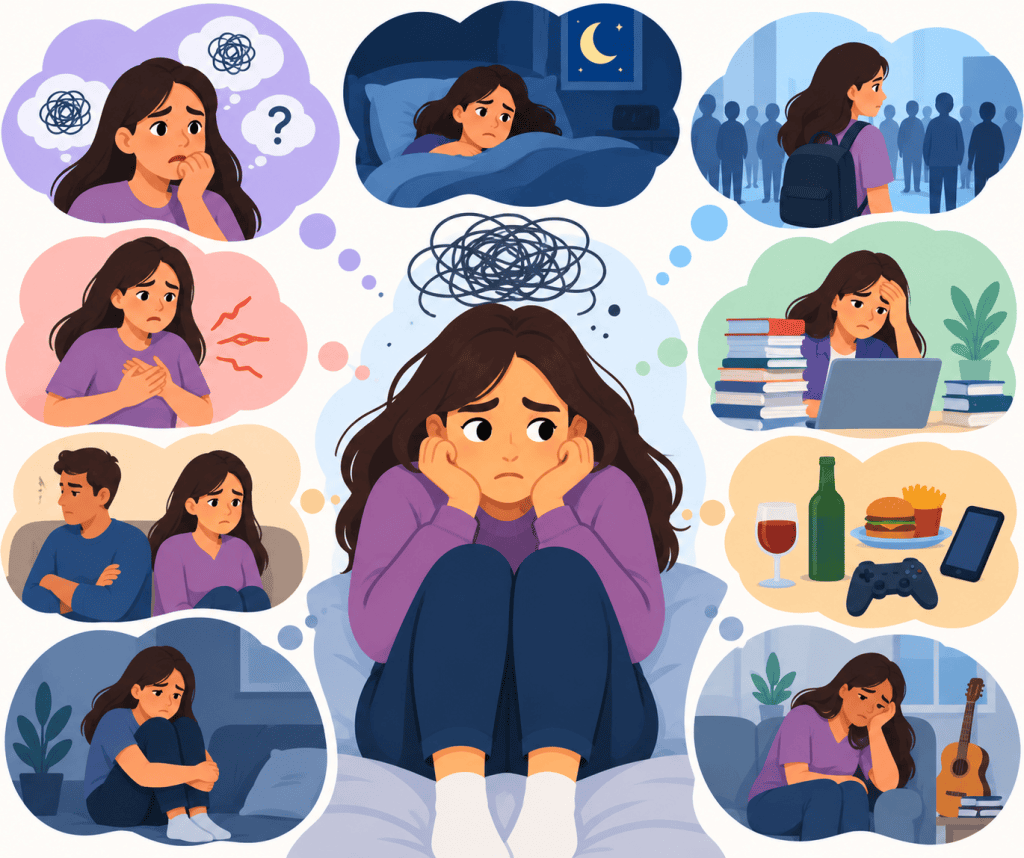
Anxiety is a normal part of life, and most people feel worried or nervous from time to time. You might feel anxious before an important meeting, during financial difficulties, when facing health concerns or when dealing with a major life change.
But anxiety can become a problem when it starts to affect your ability to live your everyday life.
Sometimes this happens gradually. You may not immediately realise how much anxiety is influencing your sleep, relationships, work, confidence or daily routines.
Recognising the signs anxiety is affecting your daily life can help you understand when it may be time to seek additional support.
Here are eight common signs that anxiety may be having a bigger impact than you realise.
1. You Are Constantly Overthinking
One of the most common signs of anxiety is persistent overthinking.
You may replay conversations in your head, worry about things that have not happened yet or spend hours trying to predict every possible outcome.
Thoughts may include:
- “What if something goes wrong?”
- “Did I say the wrong thing?”
- “What if they are upset with me?”
- “What if I make a mistake?”
- “What if I cannot cope?”
Overthinking can make it difficult to concentrate on what is happening in the present.
It can also leave you feeling mentally exhausted.
If your thoughts feel difficult to switch off and worry is taking up a large part of your day, anxiety may be affecting your quality of life.
2. Anxiety Is Affecting Your Sleep
Sleep and anxiety are closely connected.
You may find it difficult to fall asleep because your mind becomes busy as soon as you get into bed.
Or you may wake during the night and immediately start worrying.
Anxiety can also cause physical symptoms such as a racing heart, muscle tension and restlessness, all of which can make sleep more difficult.
Poor sleep can then make anxiety worse the following day.
You may become more irritable, emotional or unable to concentrate.
This can create a cycle where anxiety affects sleep and poor sleep increases anxiety.
If this is happening regularly, it may be a sign that you need additional support.
3. You Are Avoiding People, Places or Situations
Avoidance is another common sign that anxiety is beginning to control daily life.
You might avoid:
- Social events
- Public transport
- Driving
- Shops
- Crowded places
- Work meetings
- Telephone calls
- Medical appointments
- Difficult conversations
Avoiding something can provide temporary relief.
However, over time, it can make the situation feel even more frightening.
For example, if social situations make you anxious and you repeatedly avoid them, your confidence may gradually decrease.
The same can happen with travelling, shopping or speaking in front of other people.
If anxiety is stopping you from doing things you previously managed, it may be time to consider getting support.
4. Your Physical Symptoms Are Becoming More Frequent
Anxiety does not only affect the mind.
It can also cause strong physical symptoms.
Common physical symptoms of anxiety include:
- Racing heartbeat
- Chest tightness
- Shortness of breath
- Dizziness
- Headaches
- Sweating
- Shaking
- Nausea
- Stomach problems
- Muscle tension
- Feeling exhausted
These symptoms can sometimes make people believe something is physically wrong.
In some cases, worrying about the symptoms can create even more anxiety.
If you experience new, severe or unexplained physical symptoms, it is important to speak to a healthcare professional rather than assuming anxiety is the cause.
However, if medical problems have been ruled out and physical symptoms continue during periods of stress, anxiety may be playing a significant role.
5. Anxiety Is Affecting Your Work or Education
Anxiety can make everyday responsibilities feel much harder.
At work or college, you may struggle to concentrate, remember information or make decisions.
You may constantly worry about making mistakes or being judged by other people.
This can lead to:
- Procrastination
- Missing deadlines
- Avoiding meetings
- Calling in sick
- Feeling overwhelmed by simple tasks
- Constantly checking your work
- Difficulty speaking in groups
Some people become perfectionists because they are frightened of getting something wrong.
Others avoid starting tasks because the pressure feels too intense.
If anxiety is affecting your ability to work, study or manage responsibilities, professional support may help.
6. Your Relationships Are Being Affected
Anxiety can influence relationships in ways that are not always obvious.
You may need frequent reassurance from people close to you.
You might worry that someone is angry, losing interest or planning to leave, even when there is little evidence.
Anxiety can also cause irritability.
When someone feels constantly tense or overwhelmed, they may become frustrated more easily.
You may withdraw from friends and family because you do not feel like socialising.
Or you may avoid talking about how you feel because you do not want to burden anyone.
Over time, these patterns can create distance in relationships.
If anxiety is affecting the way you communicate or connect with other people, counselling may help you understand what is happening.
7. You Are Relying on Unhealthy Coping Strategies
People often develop ways of coping with anxiety without realising that those strategies may create additional problems.
For example, you might rely on:
- Alcohol
- Recreational drugs
- Excessive eating
- Constant social media use
- Gambling
- Avoiding responsibilities
- Working excessively
- Staying constantly busy
These behaviours may provide temporary distraction from anxiety.
However, they usually do not address the underlying problem.
Some can actually make anxiety worse over time.
For example, alcohol may initially feel relaxing, but it can affect sleep and mood and increase anxiety the following day.
If you feel that you need substances or certain behaviours to manage your emotions, consider speaking to a professional.
8. You No Longer Feel Like Yourself
Sometimes the clearest sign that anxiety is affecting your daily life is simply feeling that you have changed.
You may remember being more confident, relaxed or sociable.
Now you might feel constantly tense, tired or worried.
You may stop enjoying hobbies.
You might withdraw from friends.
You may lose confidence in situations you previously managed without difficulty.
You might think:
“I just don’t feel like myself anymore.”
This feeling is worth paying attention to.
Mental health problems do not always arrive suddenly.
Sometimes they develop gradually until a new way of feeling starts to seem normal.
If you have noticed a significant change in your mood, behaviour or confidence, consider talking to someone.
When Does Anxiety Become a Problem?
Anxiety becomes a problem when it begins interfering with everyday life.
A useful question to ask yourself is:
“Is anxiety stopping me from doing things I want or need to do?”
If the answer is yes, it may be time to seek help.
You may also benefit from support if anxiety:
- Happens most days
- Has continued for several weeks or months
- Feels difficult to control
- Causes panic attacks
- Affects your sleep
- Affects relationships
- Makes work difficult
- Causes you to avoid situations
- Leaves you feeling exhausted
You do not need to wait until anxiety becomes severe before asking for help.
How Can Counselling Help With Anxiety?
Counselling can give you a confidential space to explore your anxiety and understand where it may be coming from.
A counsellor can help you identify:
- Anxiety triggers
- Negative thinking patterns
- Avoidance behaviours
- Difficult life experiences
- Relationship problems
- Stress
- Low confidence
- Unhelpful coping strategies
You can then begin developing healthier ways of managing difficult thoughts and situations.
Some people may also benefit from cognitive behavioural therapy, mindfulness techniques, relaxation strategies or medication prescribed by a healthcare professional.
Different approaches work for different people.
Practical Ways to Reduce Everyday Anxiety
Alongside professional support, small lifestyle changes can help reduce anxiety.
These may include:
- Regular physical activity
- Going outdoors
- Keeping a consistent sleep routine
- Reducing caffeine
- Limiting alcohol
- Eating regularly
- Practising slow breathing
- Taking breaks from social media
- Talking to people you trust
- Breaking large tasks into smaller steps
The goal is not to eliminate every anxious feeling.
Anxiety is a normal emotion.
Instead, the goal is to prevent anxiety from controlling your choices and restricting your life.
When to Seek Urgent Help
Severe anxiety can sometimes occur alongside depression, hopelessness or other mental health difficulties.
If you feel unable to keep yourself safe, believe you may harm yourself or someone else, or are experiencing an immediate mental health crisis, seek urgent help.
In the UK, call 999 or go to your nearest A&E department if there is immediate danger.
You can also contact NHS 111 and select the mental health option where available for urgent support.
Final Thoughts
Anxiety can affect daily life in many different ways.
Constant overthinking, poor sleep, physical symptoms, avoidance, relationship difficulties and changes in confidence can all be signs that anxiety is becoming more than temporary worry.
The important thing is not to ignore the impact it is having.
If several of these eight signs anxiety is affecting your daily life sound familiar, consider speaking to your GP, a counsellor or another qualified mental health professional.
Getting help early can make it easier to understand what is happening and develop practical strategies for managing anxiety before it becomes more restrictive.